Water solenoid valves are essential components in industrial automation, irrigation systems, water treatment plants, HVAC equipment, and fluid control systems. This comprehensive guide explains how water solenoid valves work, their main types, advantages, applications, and how to select the right valve for your system.
What Is a Water Solenoid Valve?
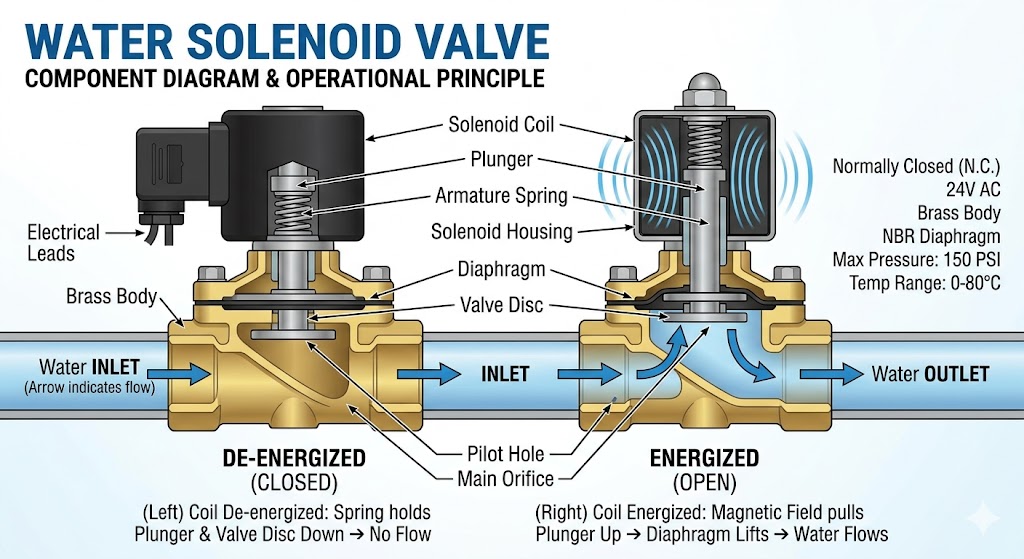
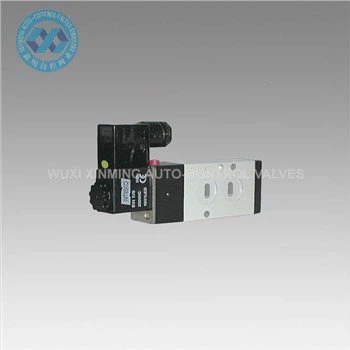
A water solenoid valve is an electromechanical valve designed to control the flow of water automatically. It uses an electric coil, known as a solenoid, to open or close the valve when electrical power is applied.
These valves are widely used in automated systems where remote control, rapid response, and reliable water flow management are required. Water solenoid valves can operate with clean water, hot water, cold water, or treated liquids depending on the valve material and design.
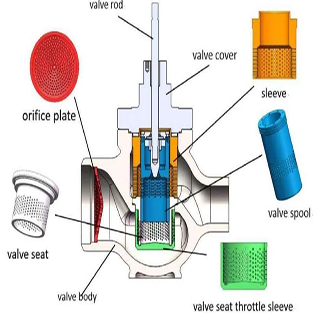
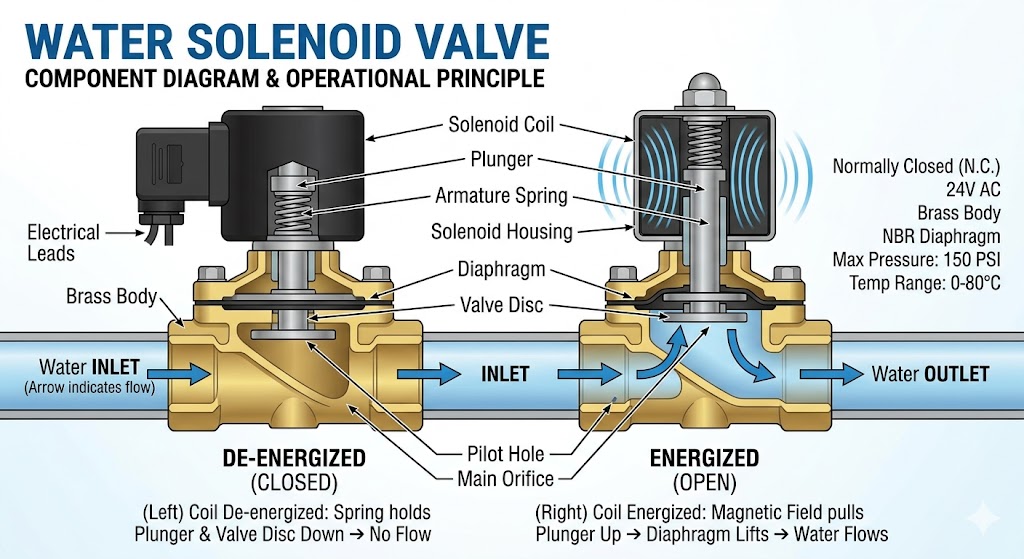
Main Components of a Water Solenoid Valve
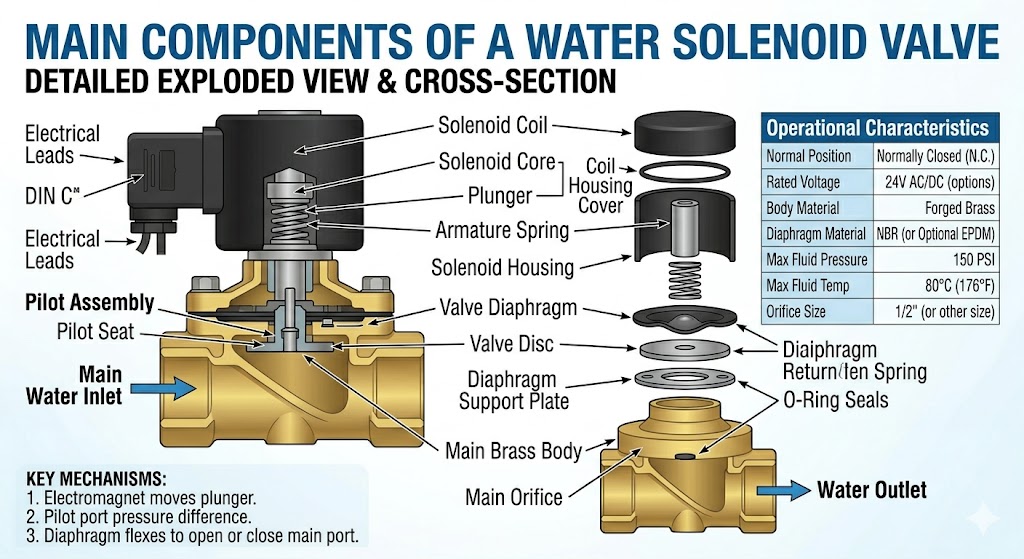
- Solenoid coil
- Valve body
- Plunger or armature
- Spring mechanism
- Seal or diaphragm
- Inlet and outlet ports
How Does a Water Solenoid Valve Work?
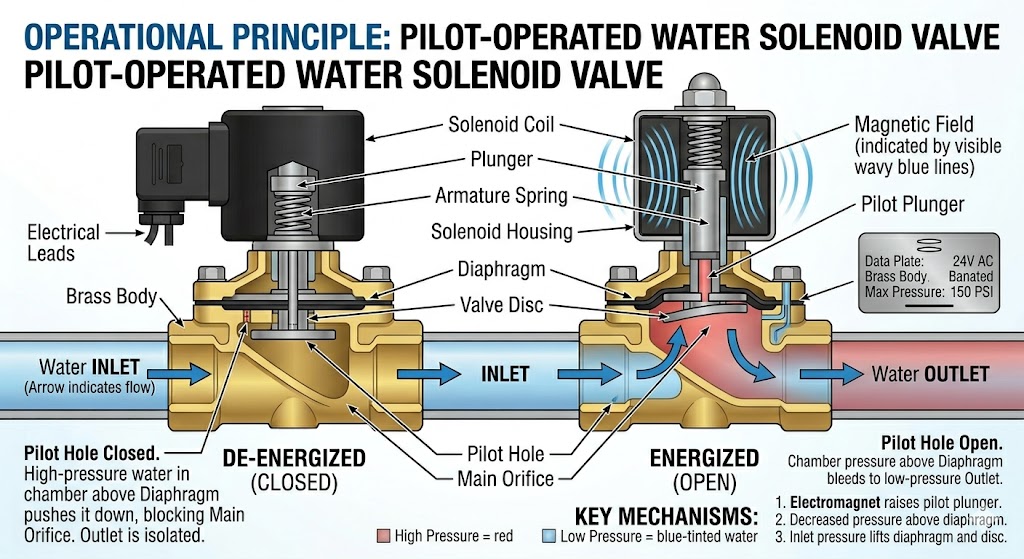
The operating principle of a water solenoid valve is based on electromagnetic force. When electrical current passes through the solenoid coil, it creates a magnetic field that moves the internal plunger.
Normally Closed Operation
In a normally closed water solenoid valve, the valve remains closed when no power is applied. Once energized, the magnetic field lifts the plunger and allows water to flow through the valve.
Normally Open Operation
A normally open valve works in the opposite way. The valve stays open without power and closes when energized.
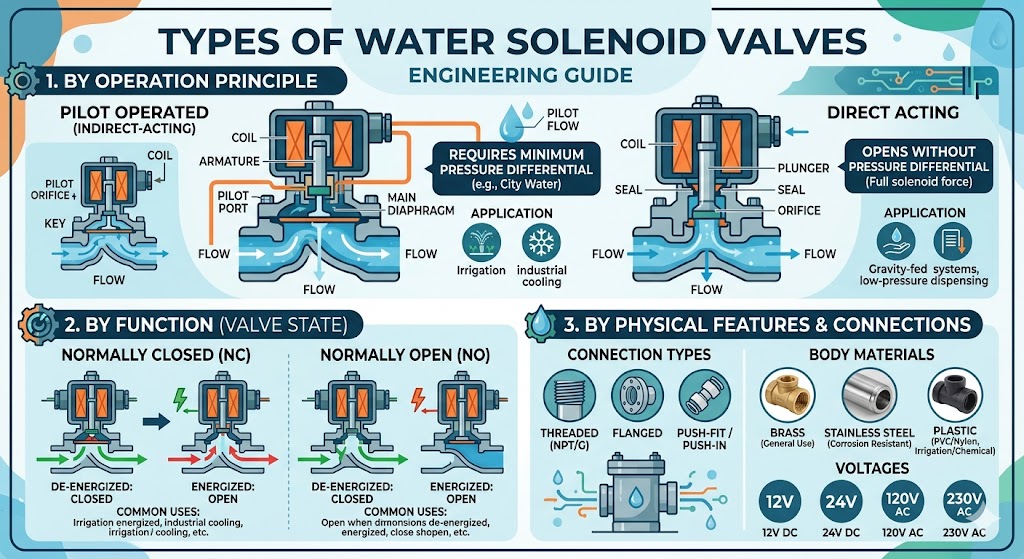
Direct Acting vs Pilot Operated
| Valve Type | Working Principle | Best For |
|---|---|---|
| Direct Acting | Solenoid directly opens or closes the orifice | Low flow and low pressure systems |
| Pilot Operated | Uses system pressure to assist operation | High flow and larger pipe sizes |
Types of Water Solenoid Valves
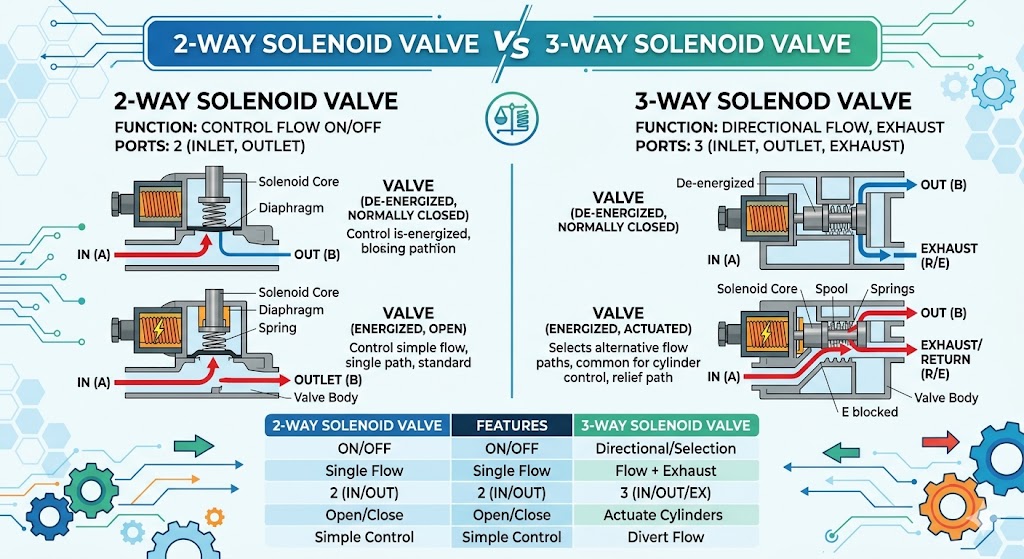
2-Way Water Solenoid Valve
A 2-way valve has one inlet and one outlet. It is mainly used for simple ON/OFF water flow control applications.
3-Way Water Solenoid Valve
A 3-way valve has three ports and is commonly used for diverting or mixing water flow in automation systems.
Plastic Water Solenoid Valve
Plastic valves are lightweight, corrosion-resistant, and ideal for water purification systems, irrigation, and low-pressure applications.
Brass Water Solenoid Valve
Brass valves are durable and suitable for industrial water systems, HVAC, and general-purpose applications.
Stainless Steel Water Solenoid Valve
Stainless steel valves offer excellent corrosion resistance and are widely used in food processing, pharmaceutical, and chemical industries.
Applications of Water Solenoid Valves
Water solenoid valves are used in numerous industries and automation systems because of their reliability and fast switching performance.
- Automatic irrigation systems
- Water treatment equipment
- Industrial fluid control systems
- HVAC systems
- Boilers and steam systems
- RO water purification systems
- Washing machines
- Commercial coffee machines
- Cooling systems
- Smart home water control systems
Advantages of Water Solenoid Valves
| Advantage | Description |
|---|---|
| Fast Response | Quick opening and closing action improves system efficiency |
| Automation Ready | Easily integrated into PLC and control systems |
| Compact Design | Saves installation space |
| Low Maintenance | Simple internal structure reduces maintenance needs |
| Energy Efficient | Consumes low electrical power |
| Reliable Operation | Suitable for continuous industrial use |
How to Choose the Right Water Solenoid Valve
1. Working Pressure
Check the minimum and maximum operating pressure of the system. Pilot-operated valves typically require a minimum pressure differential.
2. Flow Rate
Select the appropriate valve size and Cv value to ensure sufficient water flow capacity.
3. Voltage Requirements
Water solenoid valves are available in various voltages including 12V DC, 24V DC, 24V AC, 110V AC, and 220V AC.
4. Valve Material
Choose valve body materials based on water quality, corrosion resistance, and temperature requirements.
5. Temperature Range
Ensure the valve seals and materials are compatible with the operating temperature.
6. Installation Environment
Consider indoor or outdoor installation conditions, waterproof protection ratings, and environmental exposure.
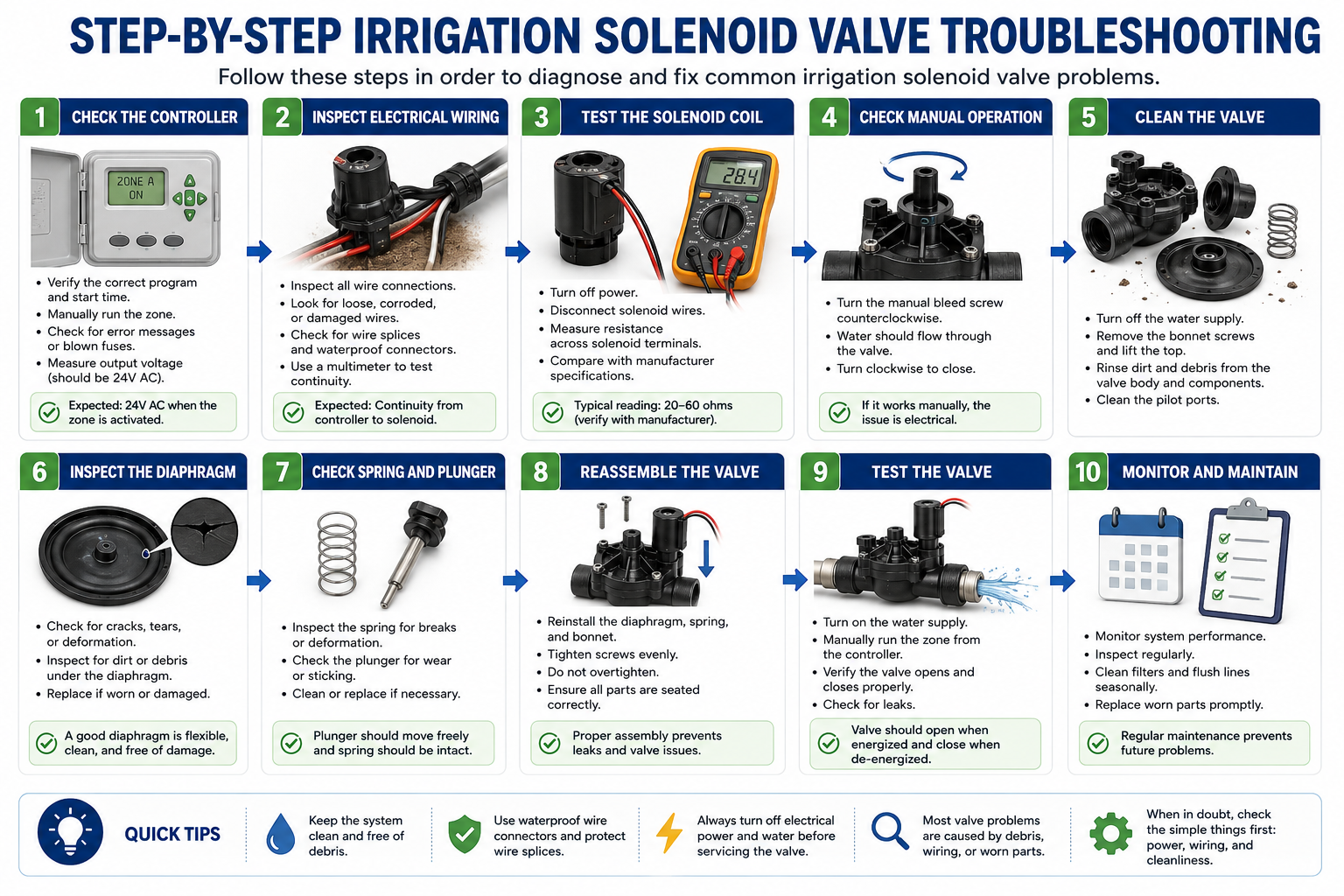
Common Problems and Troubleshooting
| Problem | Possible Cause | Solution |
|---|---|---|
| Valve Not Opening | No power or damaged coil | Check electrical supply and coil condition |
| Water Leakage | Worn seals or debris | Clean or replace seals |
| Buzzing Noise | Incorrect voltage or loose components | Verify voltage and tighten parts |
| Slow Response | Clogged pilot port | Clean internal passages |
Water Solenoid Valve Maintenance Tips
- Inspect the valve regularly for leaks
- Clean filters and internal components
- Check electrical connections periodically
- Prevent dirt or sediment buildup
- Replace damaged diaphragms or seals promptly
- Use compatible voltage and pressure ranges
Frequently Asked Questions
Can a water solenoid valve be installed vertically?
Most water solenoid valves are recommended for horizontal installation with the coil facing upward for optimal performance.
What is the difference between AC and DC solenoid valves?
AC solenoid valves are commonly used for industrial applications, while DC valves are preferred for battery-powered and portable systems.
Are water solenoid valves waterproof?
Many models offer waterproof or weather-resistant coil protection, but the protection rating should always be verified before outdoor installation.
How long does a water solenoid valve last?
With proper maintenance and correct operating conditions, high-quality water solenoid valves can operate reliably for millions of cycles.
Conclusion
Water solenoid valves play a vital role in modern fluid automation systems by providing fast, reliable, and efficient water flow control. Whether used in industrial automation, irrigation, HVAC, or water treatment systems, selecting the correct solenoid valve ensures long-term operational stability and energy efficiency.
When choosing a water solenoid valve, it is important to consider pressure range, valve material, voltage, flow requirements, and installation environment. High-quality valves combined with proper maintenance can significantly improve system performance and reliability.
If you want to learn more about low-priced products, please visit the following website: www.xm-valveactuator.com