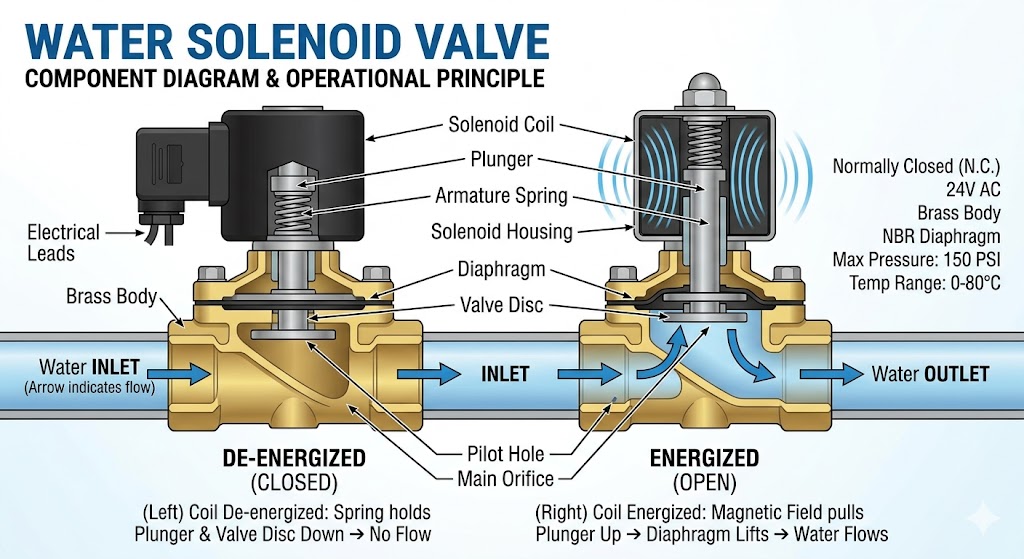
Correctly wiring a solenoid valve is critical for system reliability and safety. Whether you are automating a factory line or setting up an irrigation system, understanding the solenoid valve wiring diagram ensures you don't burn out your coil or trigger a short circuit.
In this guide, we break down the most common wiring configurations for both Direct Current (DC) and Alternating Current (AC) solenoid valves.
1. Basic 2-Wire Solenoid Valve Wiring (DC & AC)
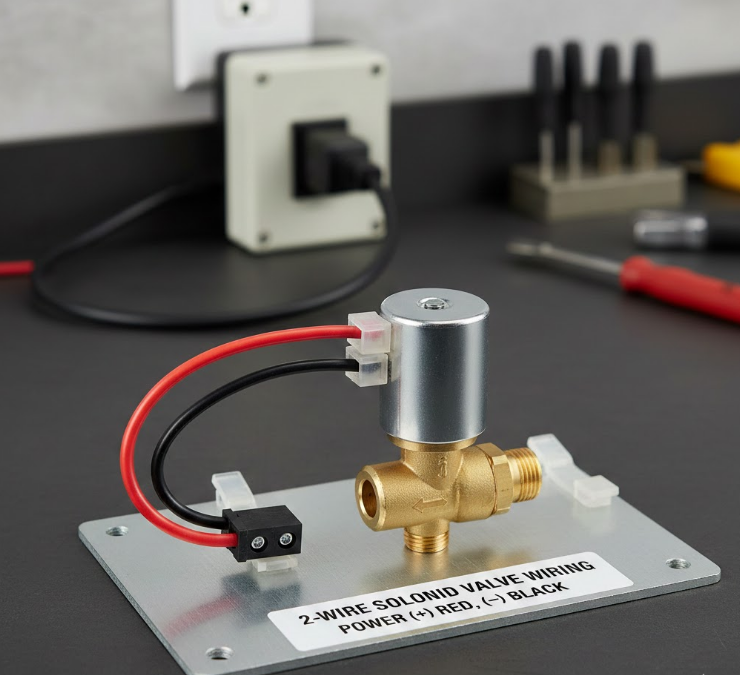
Most standard solenoid valves come with two wires or two main terminals. These are non-polarized in many cases, but you should always verify the coil type.
DC Wiring (e.g., 12V/24V DC)
In a DC system, you typically have a Positive (+) and a Negative (-) wire.
-
Positive (Red/Live): Connects to the power source through a switch or PLC output.
-
Negative (Black/Ground): Returns to the power supply.
AC Wiring (e.g., 110V/220V AC)
For AC valves, the two wires are:
-
Line (Hot/Live): Usually brown or black.
-
Neutral: Usually blue or white.
-
Note: Polarity is generally not an issue for simple AC coils, but a ground wire (green/yellow) is often required for safety.
2. DIN 43650 Connector Pinout (The Industrial Standard)
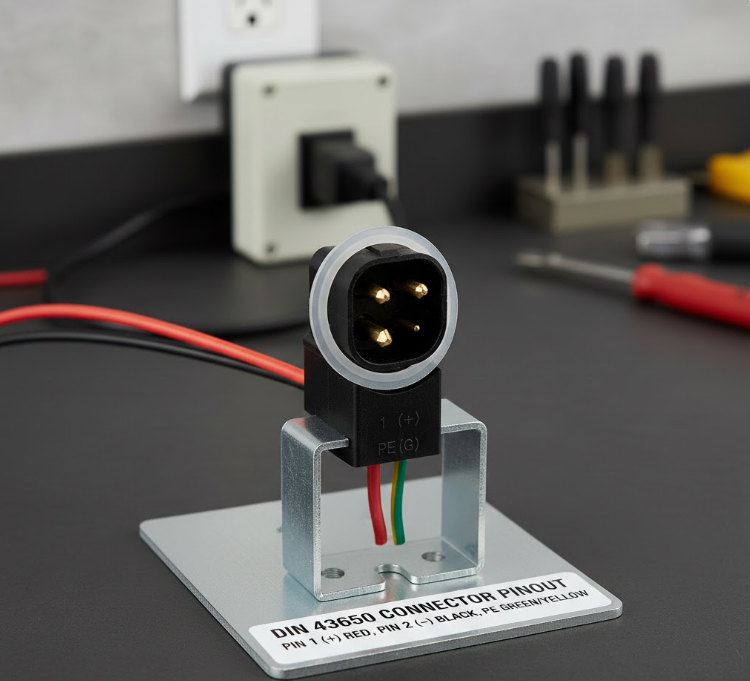
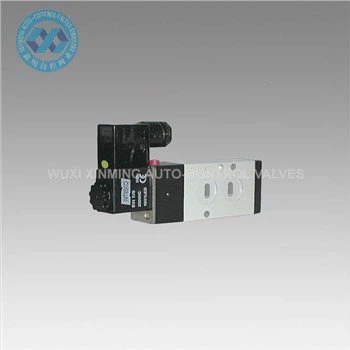
Most industrial solenoid valves use a DIN 43650 connector (Form A, B, or C). These square plugs usually have three pins.
-
Pin 1: Power (Positive for DC / Hot for AC).
-
Pin 2: Neutral/Return (Negative for DC / Neutral for AC).
-
Pin 3/Flat Pin: Ground (Earth). This pin is essential for preventing electrical shock and protecting sensitive control electronics.
Pro Tip: Always ensure the rubber gasket is in place when plugging in a DIN connector to maintain the IP65/IP67 waterproof rating.
3. 3-Wire Solenoid Valve Wiring Diagram
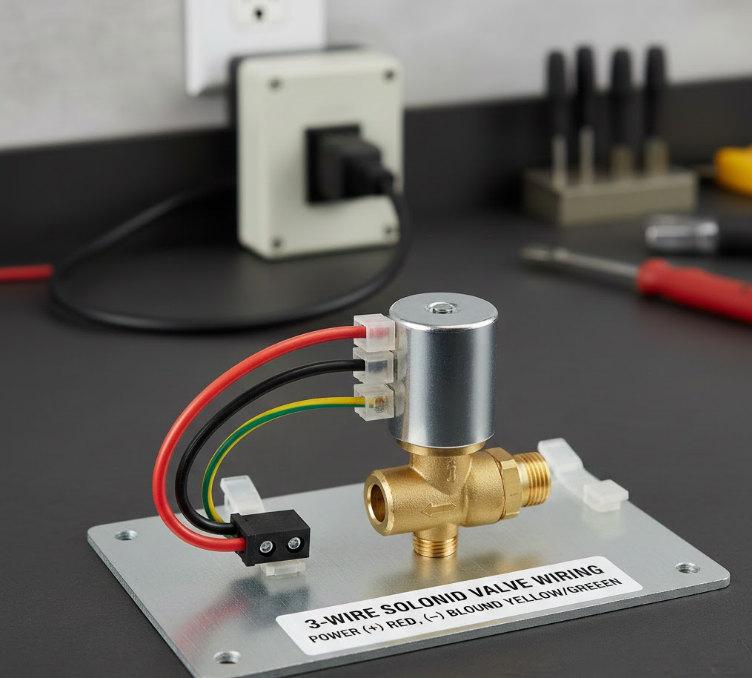
Some specialized valves, such as latching solenoid valves or those with status feedback, use a 3-wire configuration.
-
Common Wire (Black): The shared return path.
-
Open Wire (Red): Energizing this wire opens the valve.
-
Close Wire (White/Green): Energizing this wire closes the valve.
This setup is common in battery-powered systems where you only need a pulse of electricity to change the valve's state, saving significant energy.
4. Wiring a Solenoid Valve to a PLC or Arduino
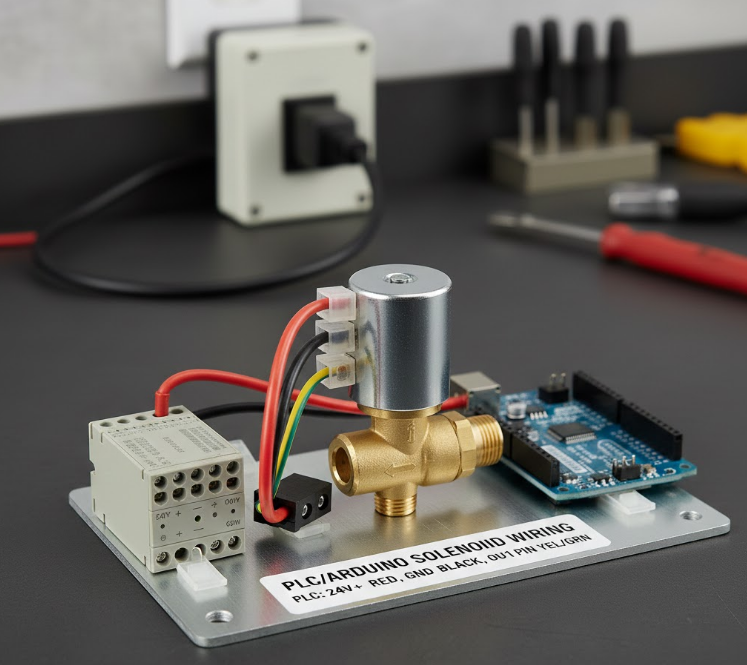
When controlling a valve via a micro-controller or PLC, you cannot usually power the valve directly from the I/O pin due to high current draw.
-
Using a Relay: The PLC triggers a relay, which then closes the high-power circuit for the solenoid.
-
Using a Flyback Diode (Crucial for DC): When a DC solenoid is turned off, it creates a high-voltage spike (back EMF). Always place a diode (e.g., 1N4007) across the coil terminals to protect your electronics.
Summary Table: Wire Color Coding
| Wire Type | DC Standard | AC Standard | Function |
| Power/Signal | Red | Brown / Black | Activates the coil |
| Return | Black | Blue / White | Completes the circuit |
| Ground | Green / Yellow | Green / Yellow | Safety / Earth |
Common Mistakes to Avoid
-
Mixing Voltages: Connecting a 12V DC coil to a 24V DC supply will cause the coil to overheat and fail within minutes.
-
Ignoring the Ground: Especially in AC applications, failing to connect the ground pin can be a serious safety hazard.
-
Undersized Wiring: Ensure your wire gauge (AWG) can handle the "inrush current" of the solenoid, especially for larger AC valves.
Conclusion
Following the correct solenoid valve wiring diagram is the first step toward a trouble-free installation. Always consult the label on your specific coil for voltage and wattage requirements before applying power.
If you want to learn more about low-priced products, please visit the following website: www.xm-valveactuator.com