Learn the differences between 2 way and 3 way solenoid valves, including working principles, port configurations, advantages, disadvantages, and industrial applications. This comprehensive guide helps engineers and buyers choose the right solenoid valve for automation systems.
Solenoid valves are critical components in industrial automation, pneumatic systems, hydraulic systems, water treatment equipment, and fluid control applications. Among the most common configurations are the 2 way solenoid valve and the 3 way solenoid valve. While both perform flow control functions, their operating methods and applications are significantly different.
Choosing the correct valve configuration directly affects system efficiency, pressure control, energy consumption, and operational reliability. In this article, we will explore the major differences between 2 way and 3 way solenoid valves in detail.
What Is a 2 Way Solenoid Valve?
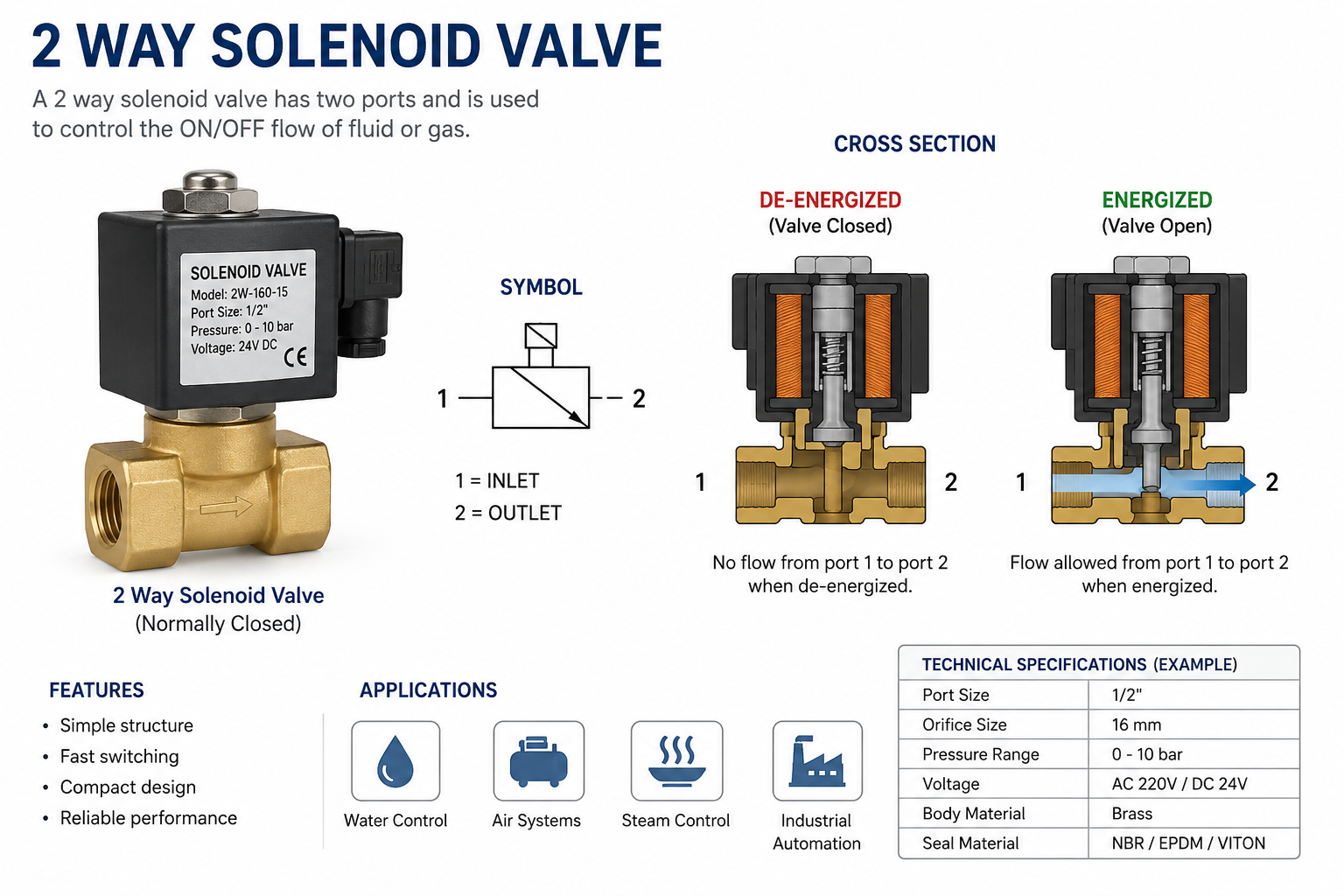
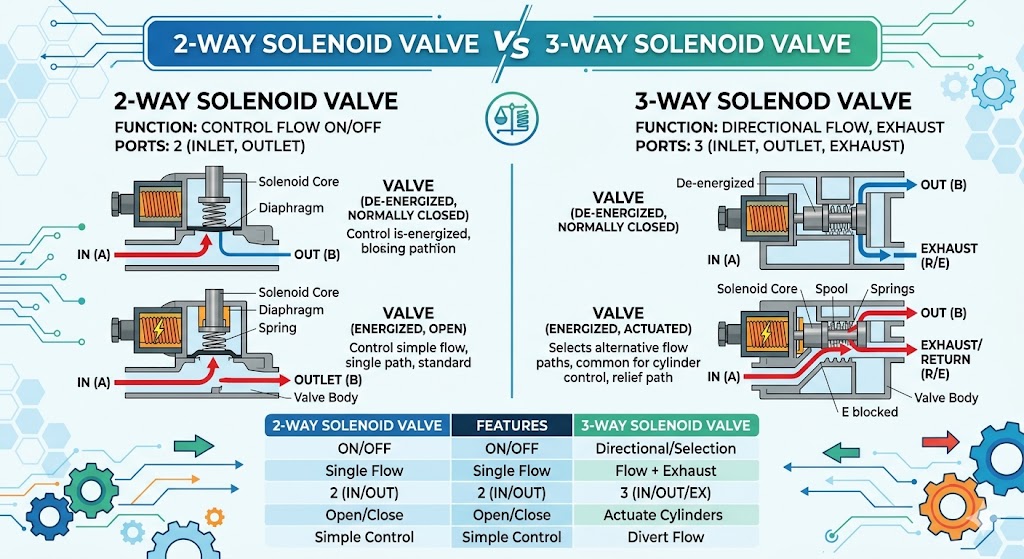
A 2 way solenoid valve is a valve with two ports: one inlet and one outlet. Its primary function is to either allow or stop the flow of fluid or gas through the system.
When the solenoid coil is energized, the valve opens or closes depending on the valve design. These valves are commonly used for simple ON/OFF fluid control applications.
Main Characteristics of 2 Way Solenoid Valves
- Two ports: inlet and outlet
- Simple open/close operation
- Compact structure
- Low maintenance requirements
- Suitable for water, air, oil, steam, and gas applications
Common Applications
Water Control Systems
Widely used in irrigation systems, water dispensers, and industrial water treatment equipment.
Pneumatic Systems
Used for simple airflow shutoff and compressed air control applications.
Steam Equipment
Ideal for controlling steam flow in boilers and heating systems.
What Is a 3 Way Solenoid Valve?
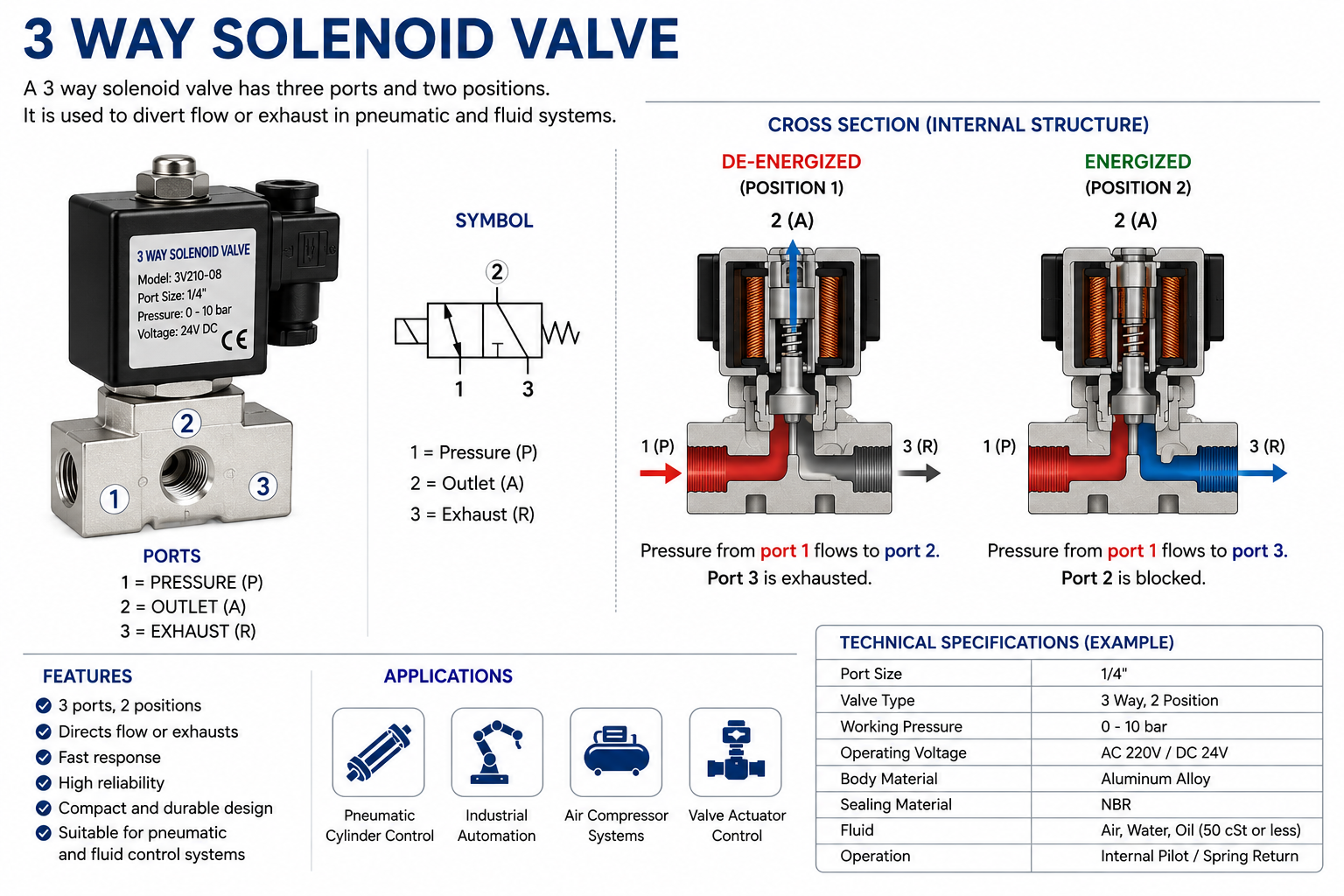
A 3 way solenoid valve has three ports and two flow positions. It can direct flow between different channels, making it suitable for more complex pneumatic and fluid control systems.
Typically, a 3 way valve can switch flow from one outlet to another or exhaust pressure from a system. This makes it ideal for actuator control and directional flow applications.
Main Characteristics of 3 Way Solenoid Valves
- Three ports with two switching positions
- Can divert or exhaust fluid/air
- Supports directional control functions
- Common in pneumatic actuator systems
- Provides better control flexibility
2 Way Solenoid Valve vs 3 Way Solenoid Valve
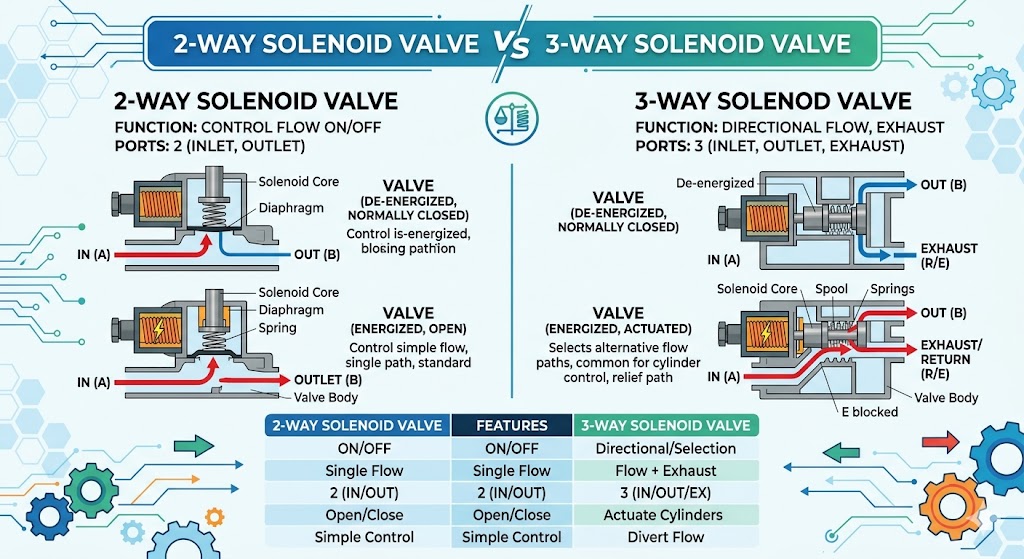
| Feature | 2 Way Solenoid Valve | 3 Way Solenoid Valve |
|---|---|---|
| Number of Ports | 2 Ports | 3 Ports |
| Main Function | ON/OFF Flow Control | Flow Diversion or Exhaust Control |
| Complexity | Simple Structure | More Complex Structure |
| Typical Applications | Water, Gas, Steam Shutoff | Pneumatic Cylinder Control |
| Flow Direction | Single Flow Path | Multiple Flow Paths |
| Installation Cost | Lower | Higher |
| Control Flexibility | Limited | High |
| Maintenance | Easier | Moderate |
Working Principle Comparison
How a 2 Way Solenoid Valve Works
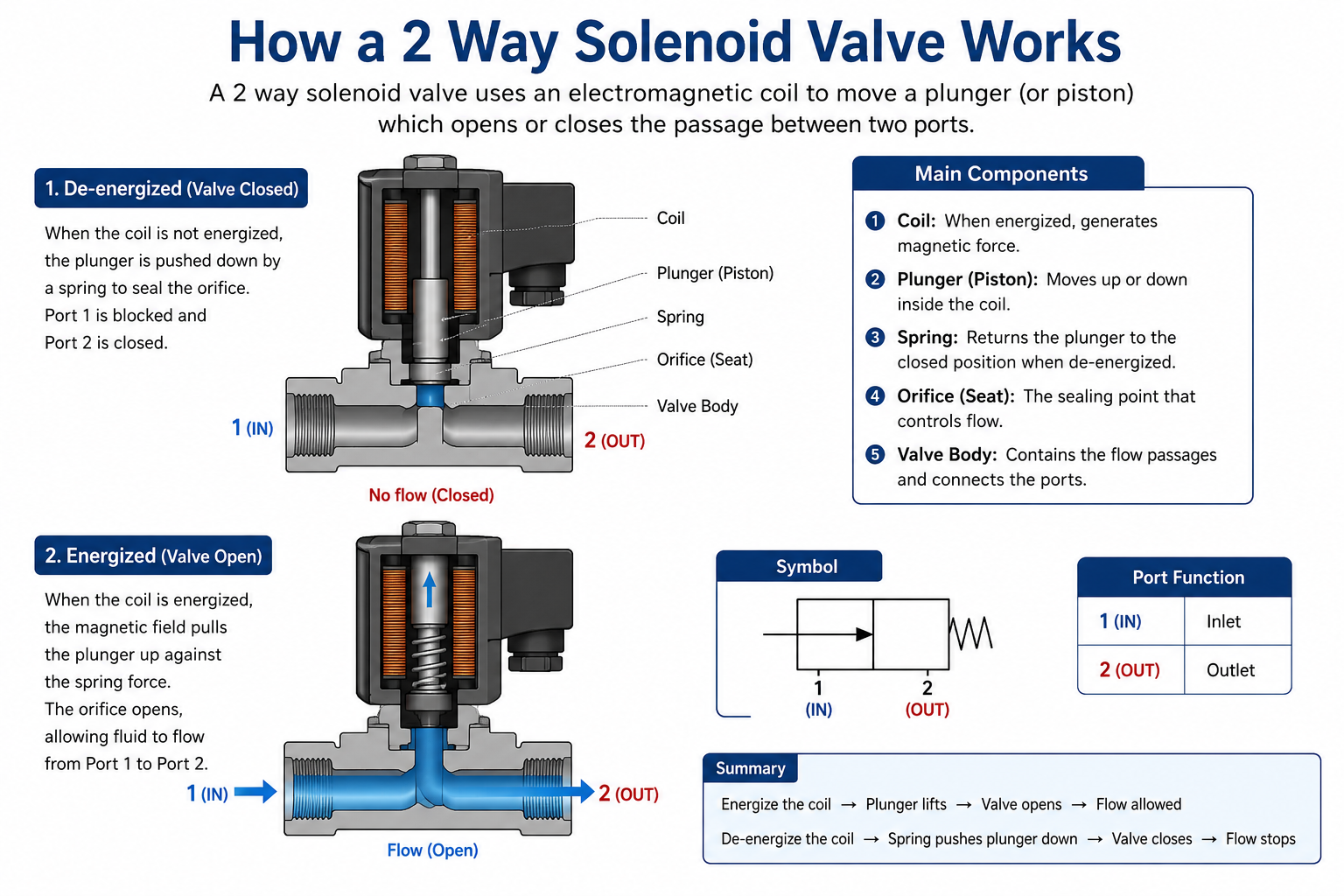
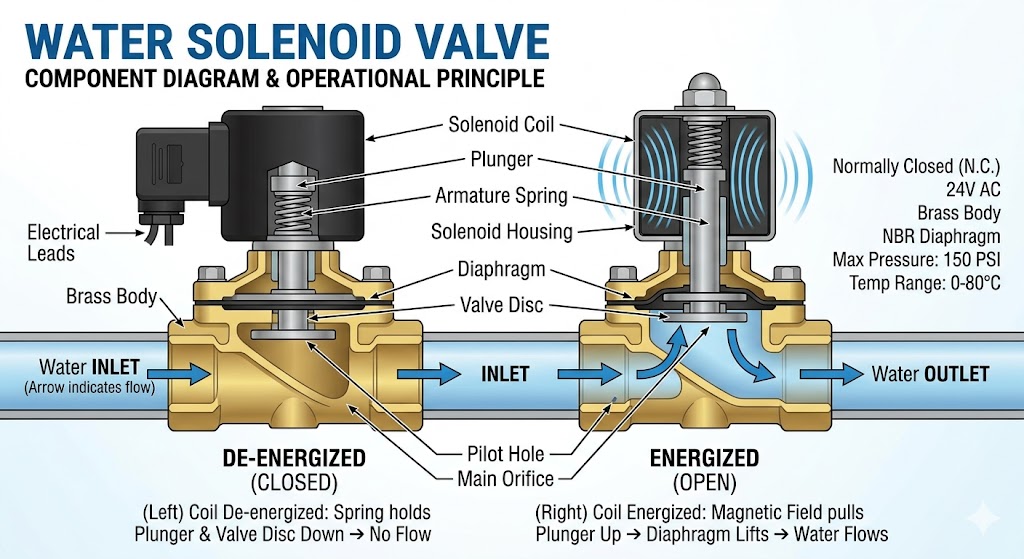
A 2 way solenoid valve operates by opening or closing a single fluid path. When energized, the electromagnetic coil moves the plunger, changing the valve state.
How a 3 Way Solenoid Valve Works
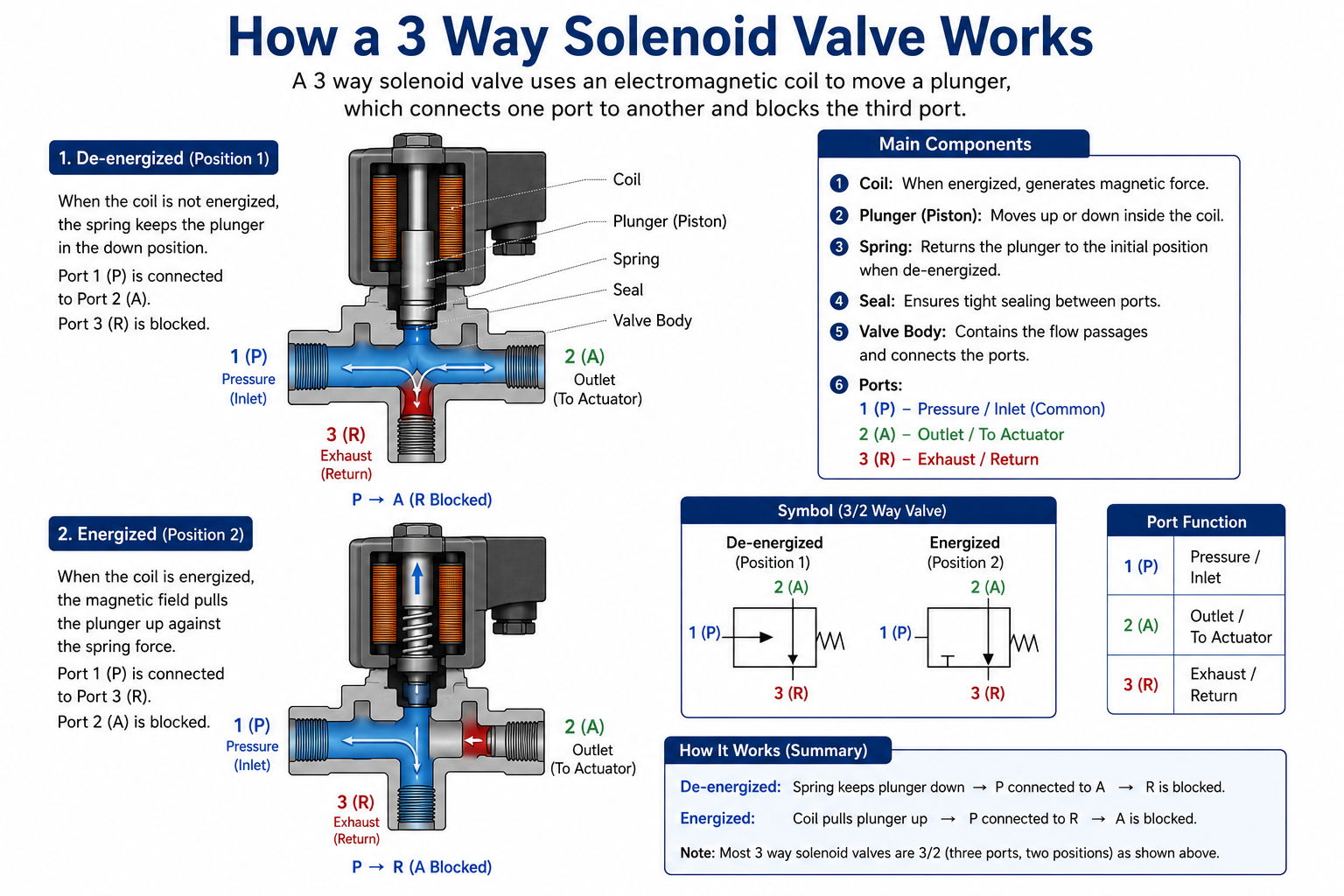
A 3 way solenoid valve redirects media between multiple ports. In pneumatic systems, one port is often connected to the pressure source, one to the actuator, and one to exhaust.
When energized, the valve changes the flow direction, allowing pressure buildup or release inside the actuator system.
Advantages of 2 Way Solenoid Valves
Simple Design
Easy to install, operate, and maintain in industrial systems.
Lower Cost
Generally more affordable than multi-port valve configurations.
Reliable Performance
Excellent for straightforward shutoff applications with fewer moving parts.
Advantages of 3 Way Solenoid Valves
Directional Control
Can switch flow paths and control pneumatic actuator movement efficiently.
Improved Automation
Supports advanced automation and process control systems.
Pressure Exhaust Function
Allows automatic release of pressure from cylinders and equipment.
Industrial Applications
Industries Using 2 Way Solenoid Valves
- Water treatment plants
- Food and beverage systems
- Steam control equipment
- Medical equipment
- Chemical processing systems
Industries Using 3 Way Solenoid Valves
- Pneumatic automation systems
- Industrial robotics
- Air compressor systems
- Pneumatic cylinder control
- Valve actuator automation
How to Choose Between a 2 Way and 3 Way Solenoid Valve
Selecting the right valve depends on system requirements, pressure conditions, media type, and operational goals.
You only need simple ON/OFF control for liquids, gases, or steam.
Your application requires directional control, actuator movement, or pressure exhaust functions.
Frequently Asked Questions
Can a 3 way solenoid valve replace a 2 way valve?
In some applications, yes. However, using a 3 way valve for simple shutoff control may increase cost and complexity unnecessarily.
Which valve is better for pneumatic actuators?
A 3 way solenoid valve is generally better for pneumatic actuator control because it can manage both pressure supply and exhaust functions.
Are 2 way valves more energy efficient?
Since 2 way valves have simpler designs and fewer operational functions, they can offer lower power consumption in basic applications.
Conclusion
Understanding the differences between 2 way solenoid valves and 3 way solenoid valves is essential for designing efficient industrial fluid control systems.
A 2 way solenoid valve is ideal for basic ON/OFF flow control, while a 3 way solenoid valve offers greater flexibility for pneumatic automation and directional control applications.
By selecting the correct valve type based on system requirements, industries can improve automation efficiency, reduce maintenance costs, and enhance operational reliability.
If you want to learn more about low-priced products, please visit the following website: www.xm-valveactuator.com