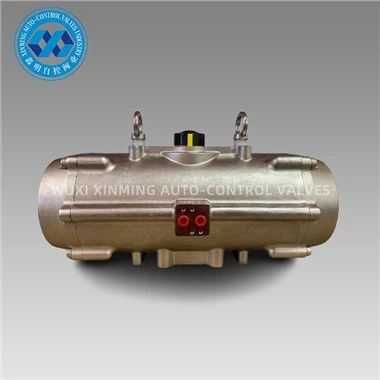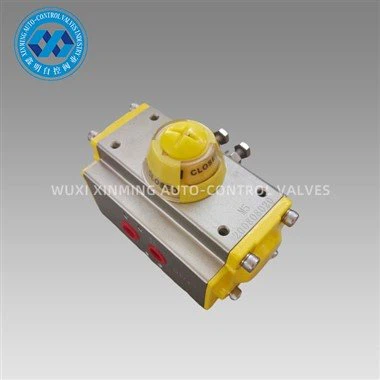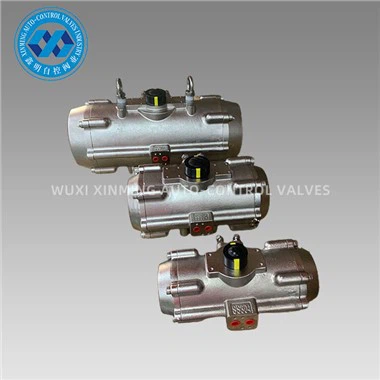
Solenoid valves are key components in fluid control systems, widely used in industrial automation, water treatment, and HVAC systems. Visualizing the different solenoid valve types can help engineers and technicians make better choices for specific applications.
1. Direct-Acting Solenoid Valves
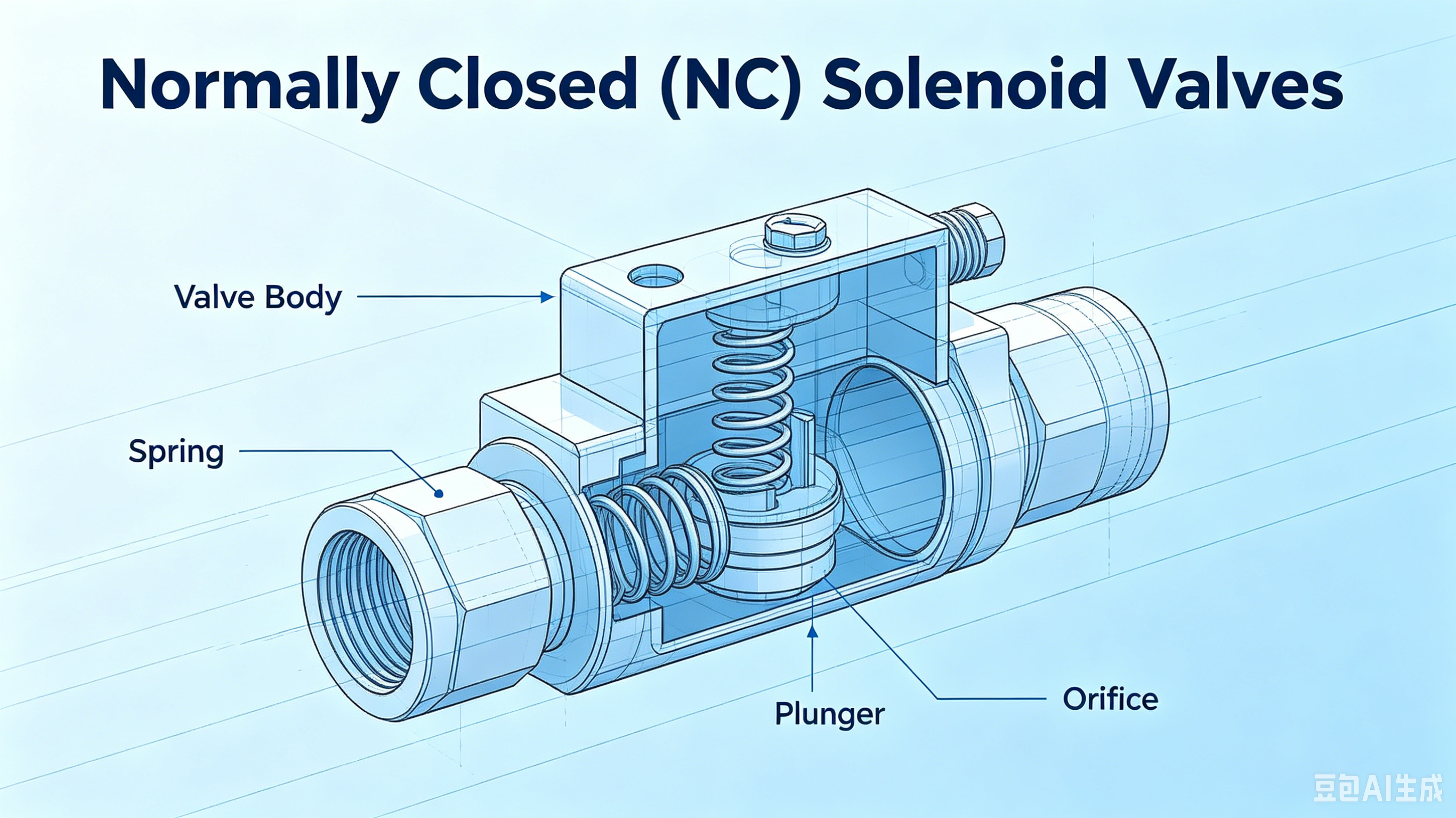
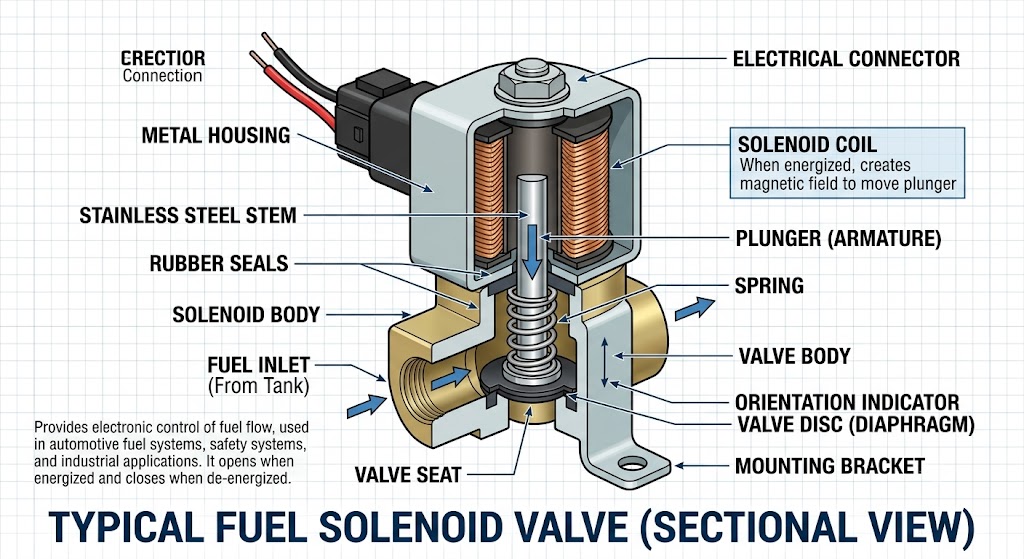
Direct-acting solenoid valves operate by directly opening or closing the valve orifice using electromagnetic force. Ideal for low flow rates and low-pressure systems.
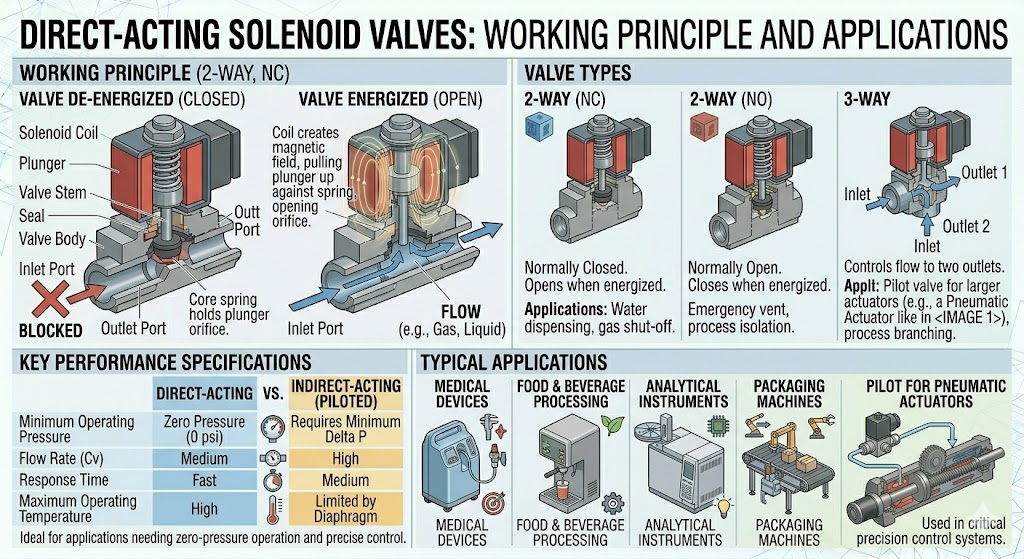
Figure 1: Direct-Acting Solenoid Valve
- Simple design and compact size
- Fast response time
- Operates without differential pressure
2. Pilot-Operated (Indirect) Solenoid Valves
Pilot-operated solenoid valves use system pressure to open/close the main valve. The solenoid only controls a small pilot port.
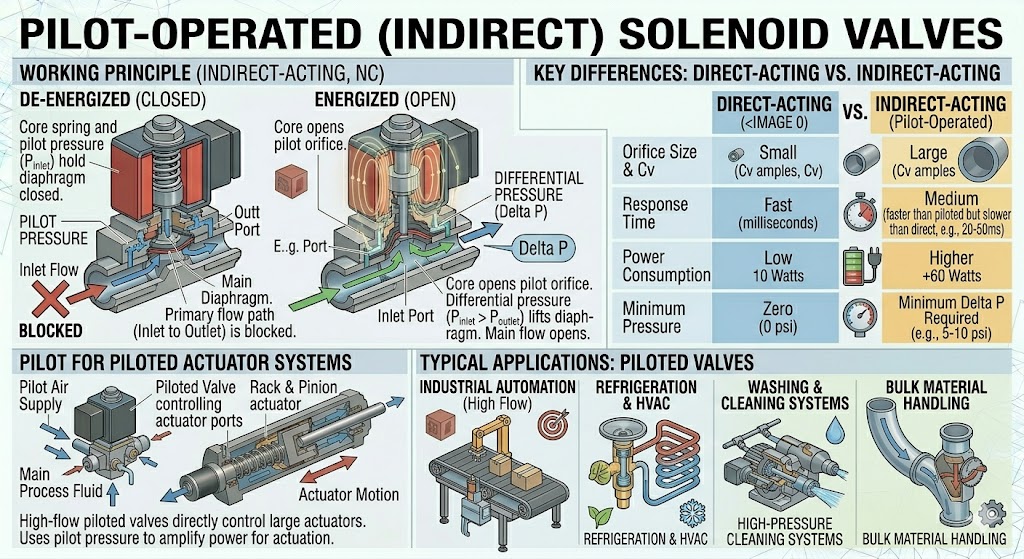
Figure 2: Pilot-Operated Solenoid Valve
- Suitable for high flow rates and high-pressure systems
- Lower power consumption
- Durable for heavy-duty applications
3. Two-Way Solenoid Valves
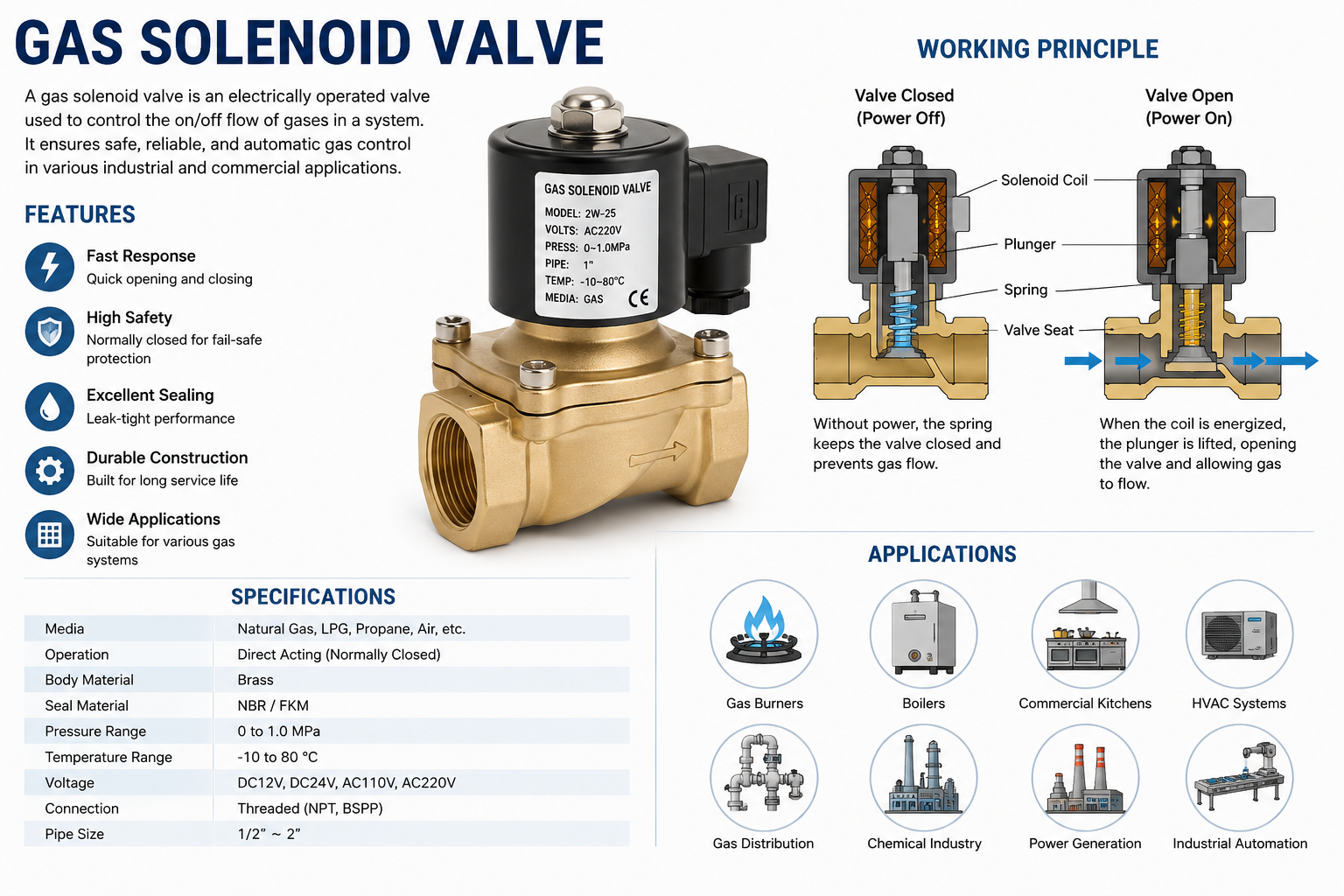
Two-way solenoid valves have two ports (inlet & outlet) and are used for on/off flow control.
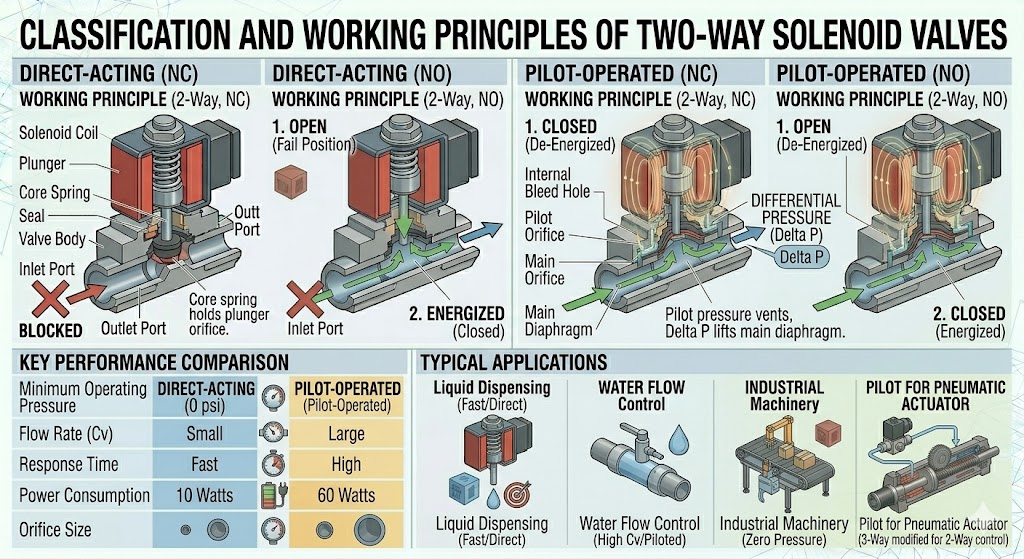
Figure 3: Two-Way Solenoid Valve
4. Three-Way Solenoid Valves
Three-way solenoid valves have three ports to divert or mix flows, allowing fluid to switch between different paths.
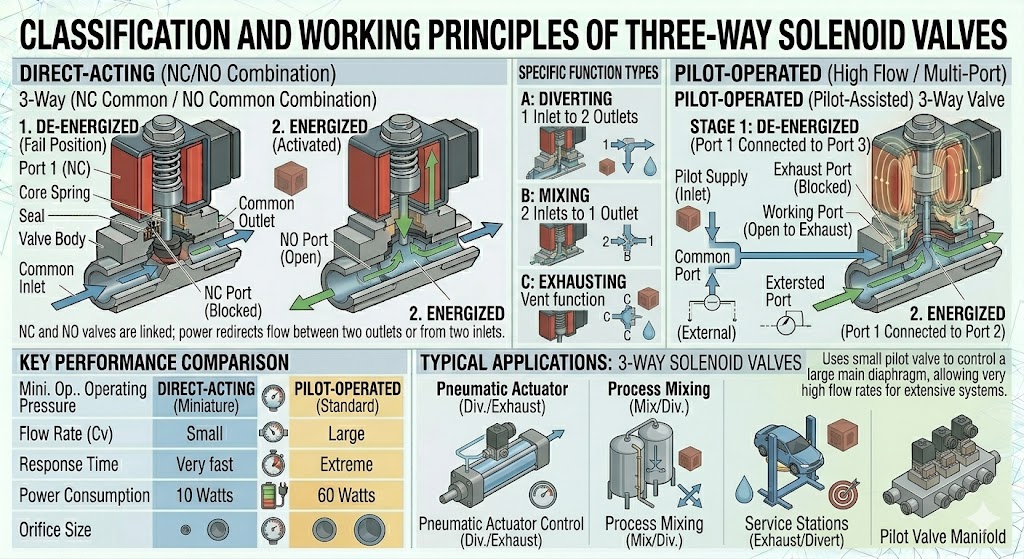
Figure 4: Three-Way Solenoid Valve
5. Four-Way Solenoid Valves
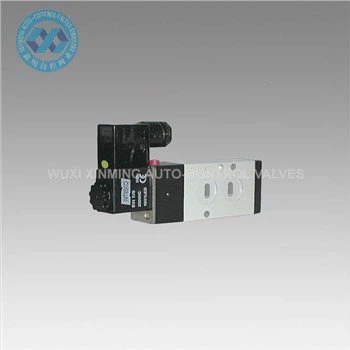
Four-way solenoid valves are mainly used in pneumatic systems to control double-acting cylinders with four ports.
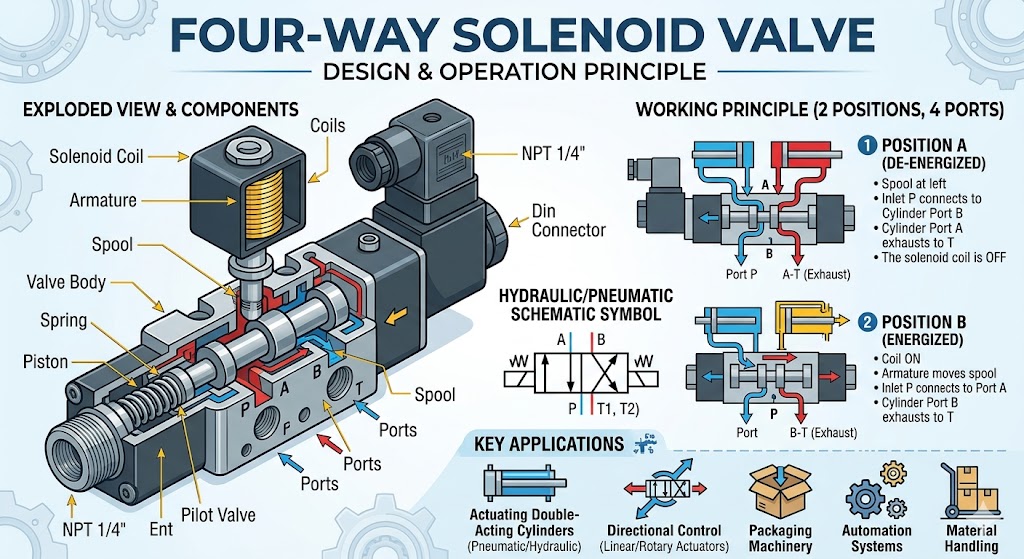
Figure 5: Four-Way Solenoid Valve
6. Special Solenoid Valve Types
- Explosion-proof Valves: For hazardous environments
- High-Pressure Direct-Acting Valves: For hydraulic applications
- Vacuum Valves: For scientific and industrial vacuum systems
Applications
- Industrial automation and machinery
- HVAC and refrigeration systems
- Water and wastewater treatment plants
- Oil & gas industry
- Medical and laboratory equipment
Conclusion
Understanding solenoid valve types through diagrams improves system design and reliability. Selecting the correct type—direct-acting, pilot-operated, two-way, three-way, or four-way—ensures optimal performance for fluid control systems.
If you want to learn more about low-priced products, please visit the following website: www.xm-valveactuator.com