Replacing a ball valve is a common plumbing and industrial maintenance task that helps restore reliable flow control and prevents leaks caused by worn or damaged valves. Whether you're replacing a residential water shut-off valve, an HVAC valve, or an industrial stainless steel ball valve, following the correct installation procedure ensures safety, long service life, and leak-free performance.
This comprehensive guide explains how to replace a ball valve, what tools are required, how to choose the correct replacement valve, and the most common installation mistakes to avoid.
Why Replace a Ball Valve?
Ball valves are known for their durability, but continuous operation, corrosion, water quality, or improper installation can eventually cause failure.
- Persistent water or fluid leakage
- Valve handle becomes difficult to turn
- Internal seal wear causing poor shutoff
- Corrosion or damaged valve body
- Cracked housing due to freezing
- Upgrading to higher-quality stainless steel or brass valves
- Replacing old gate valves with quarter-turn ball valves
Tools and Materials You'll Need
- Replacement ball valve
- Adjustable wrench or pipe wrench
- Pipe cutter (for copper, PVC, or PEX)
- Thread seal tape (PTFE/Teflon tape)
- Pipe joint compound (if required)
- Bucket or towels
- Safety gloves and safety glasses
- Deburring tool
- Soldering equipment (for sweat connections)
- Compression fittings or press tools if applicable
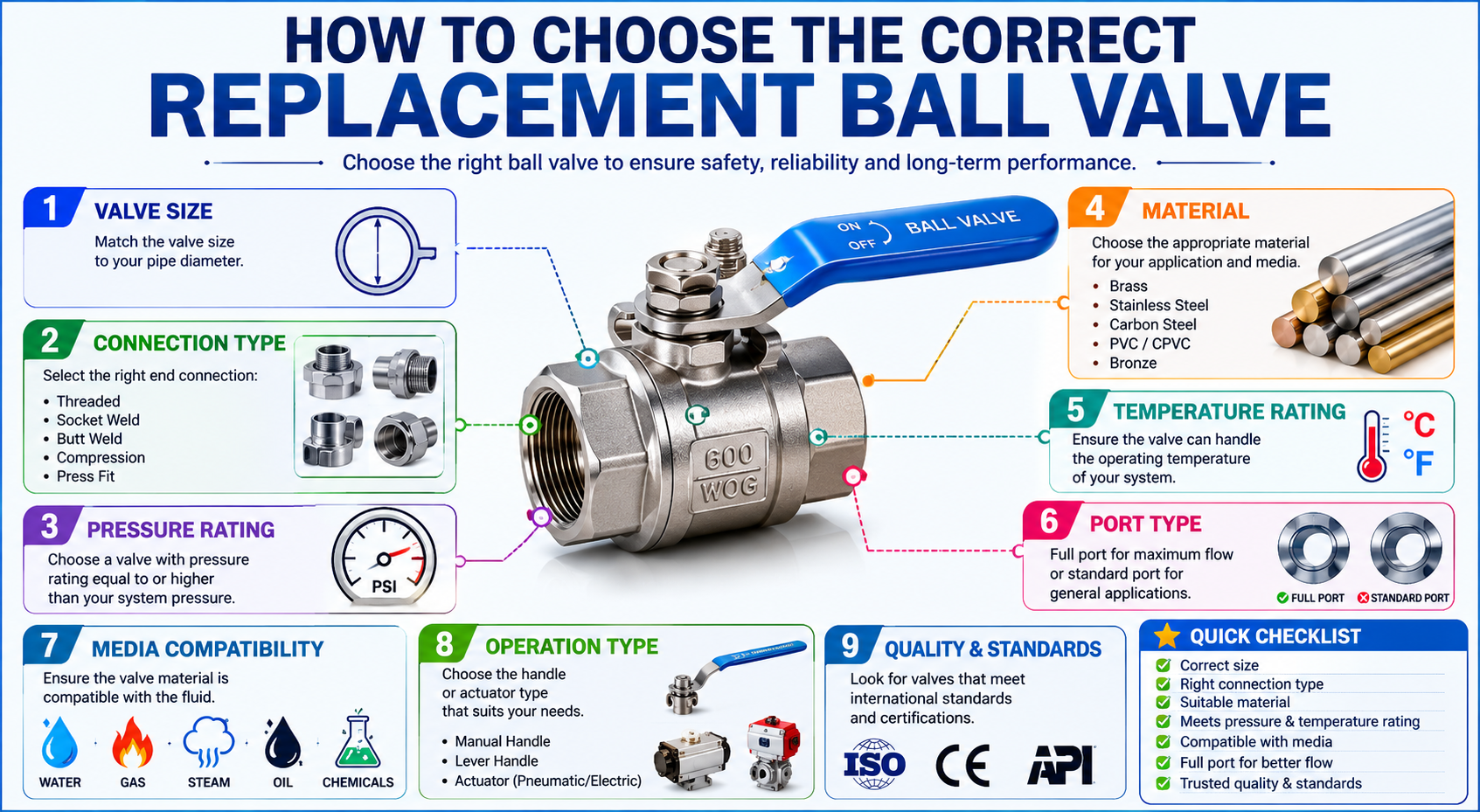
How to Choose the Correct Replacement Ball Valve
| Selection Factor | Recommendation |
|---|---|
| Valve Size | Match existing pipe diameter |
| Connection Type | Threaded, socket weld, butt weld, compression, press, solder, PVC cement |
| Pressure Rating | Select equal or higher than system pressure |
| Material | Brass, stainless steel, PVC, CPVC depending on media |
| Temperature Rating | Suitable for operating conditions |
| Port Type | Full port preferred for maximum flow |
| Media Compatibility | Water, gas, steam, oil, chemicals |
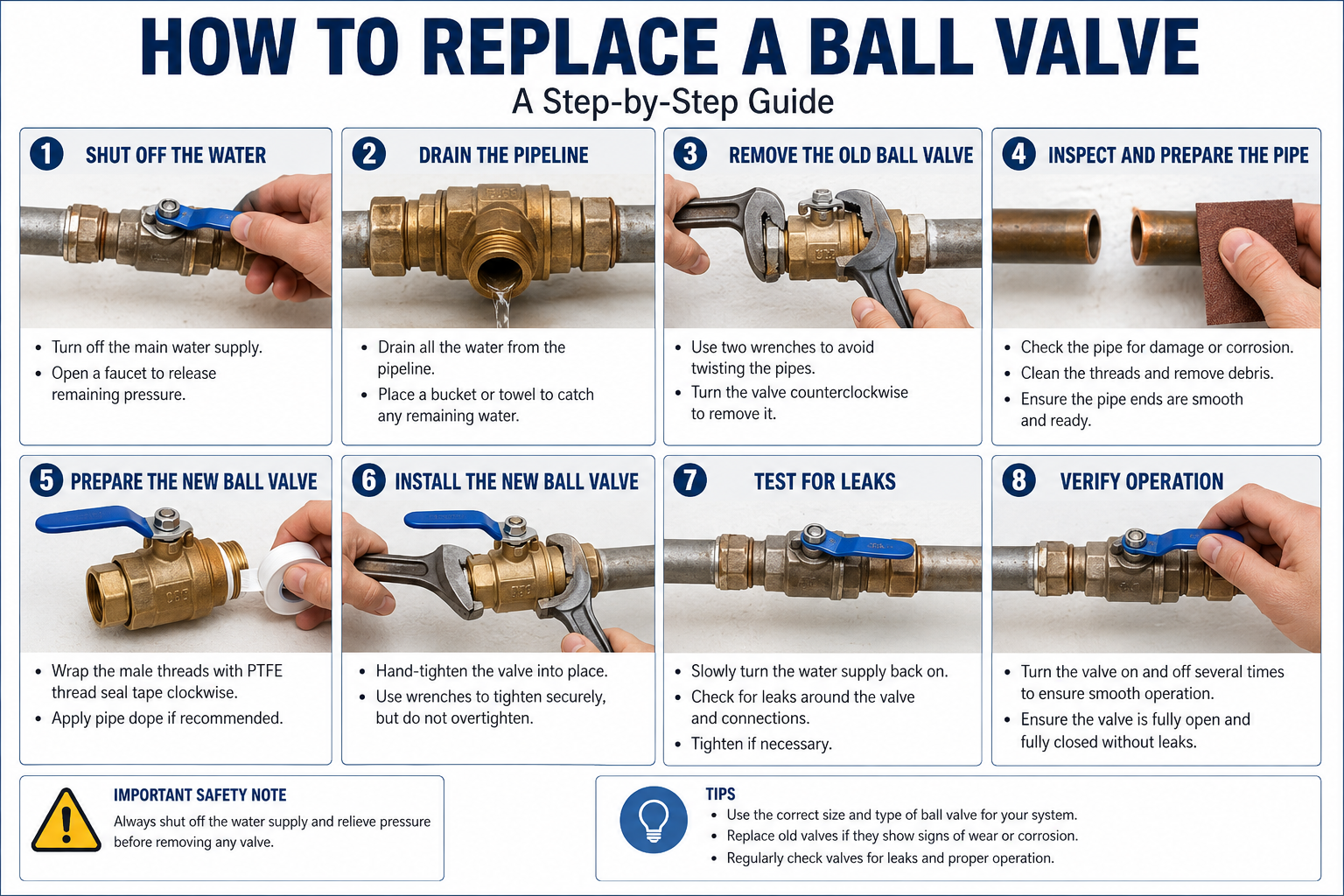
Step 1: Shut Off the Water or Process Fluid
Locate the upstream shutoff valve and completely stop the flow. If replacing the main shutoff valve, turn off the building's water supply.
Open nearby faucets or drain valves to release pressure from the system before beginning work.
Step 2: Drain the Pipeline
Allow all remaining water or process fluid to drain completely. Place a bucket beneath the valve to collect any residual liquid.
Industrial systems may require additional pressure verification using gauges before maintenance begins.
Step 3: Remove the Old Ball Valve
Threaded Ball Valve
- Use two wrenches to avoid twisting connected piping.
- Hold one side of the pipe firmly.
- Rotate the valve counterclockwise.
- Clean all threaded connections.
Soldered Ball Valve
- Heat the joint evenly.
- Remove the valve carefully.
- Clean excess solder.
- Prepare the pipe ends.
PVC Ball Valve
- Cut the pipe using a PVC cutter.
- Remove damaged fittings.
- Clean the pipe ends.
Step 4: Inspect the Pipe
Before installing the new valve, inspect the pipeline carefully.
- Check for corrosion
- Inspect damaged threads
- Remove burrs
- Clean debris
- Verify pipe alignment
Proper pipe preparation significantly reduces the chance of leaks after installation.
Step 5: Install the New Ball Valve
For Threaded Connections
- Wrap PTFE thread seal tape clockwise.
- Apply pipe sealant if recommended.
- Hand-tighten the valve.
- Finish tightening with a wrench.
- Avoid overtightening.
For Solder Connections
- Apply flux.
- Insert pipe fully.
- Heat evenly.
- Apply solder around the joint.
- Allow to cool naturally.
For PVC Connections
- Apply primer.
- Apply PVC cement.
- Insert quickly with a quarter-turn.
- Hold for several seconds.
- Allow adequate curing time.
Step 6: Verify Valve Orientation
Although standard ball valves generally allow bidirectional flow, some specialized valves have directional requirements.
Check:
- Flow direction arrow if present
- Handle clearance
- Easy maintenance access
- Proper support for heavy valves
Step 7: Test for Leaks
Slowly restore system pressure while observing the valve.
- Open the upstream supply slowly.
- Inspect threaded joints.
- Check valve body.
- Operate the valve several times.
- Verify complete shutoff.
If leaks are detected, depressurize the system before making adjustments.
Common Ball Valve Replacement Mistakes
| Mistake | Result |
|---|---|
| Wrong valve size | Poor sealing and installation issues |
| Overtightening threads | Cracked valve body |
| No thread seal tape | Thread leakage |
| Installing under pressure | Serious safety hazard |
| Using incompatible materials | Corrosion or chemical damage |
| Poor pipe alignment | Mechanical stress and leaks |
Maintenance Tips After Replacement
- Operate the valve periodically to prevent sticking.
- Inspect for leaks during routine maintenance.
- Avoid excessive force on the handle.
- Protect outdoor valves from freezing.
- Lubricate stem components if recommended by the manufacturer.
Frequently Asked Questions
Can I replace a ball valve without shutting off the water?
No. The pipeline must always be completely depressurized before removing any valve.
How long does it take to replace a ball valve?
Most residential threaded ball valves can be replaced in 30 to 60 minutes. Industrial installations may require additional isolation and testing.
Should I use brass or stainless steel ball valves?
Brass is ideal for potable water and general plumbing, while stainless steel offers superior corrosion resistance for industrial, marine, food processing, and chemical applications.
Do ball valves have a flow direction?
Standard two-way floating ball valves are typically bidirectional, but always check the manufacturer's specifications because some trunnion-mounted or specialty valves have directional requirements.
How often should ball valves be replaced?
High-quality ball valves often last 10 to 30 years depending on operating pressure, temperature, fluid type, cycling frequency, and maintenance practices.
Conclusion
Knowing how to replace a ball valve correctly helps prevent leaks, improve system reliability, and extend the life of your piping system. The key steps include isolating the system, safely removing the old valve, selecting a properly rated replacement, installing it using the correct sealing method, and thoroughly pressure-testing the installation.
Whether you're maintaining residential plumbing, commercial HVAC systems, or industrial process lines, using high-quality ball valves that match your application's pressure, temperature, and media requirements will ensure dependable long-term performance.
If you want to learn more about low-priced products, please visit the following website: www.xm-valveactuator.com