In modern fluid power and automation systems, precise control is everything. While standard on/off solenoid valves are excellent for simple stop-and-go operations, complex applications require a more nuanced touch. Enter the proportional solenoid valve—the cornerstone of advanced fluid dynamics and precise flow control.
Whether you are designing medical equipment, optimizing automotive fuel systems, or upgrading industrial manufacturing lines, understanding how a proportional solenoid valve works is essential. This comprehensive guide explores its mechanics, key applications, and how to choose the right one for your system.
What is a Proportional Solenoid Valve?
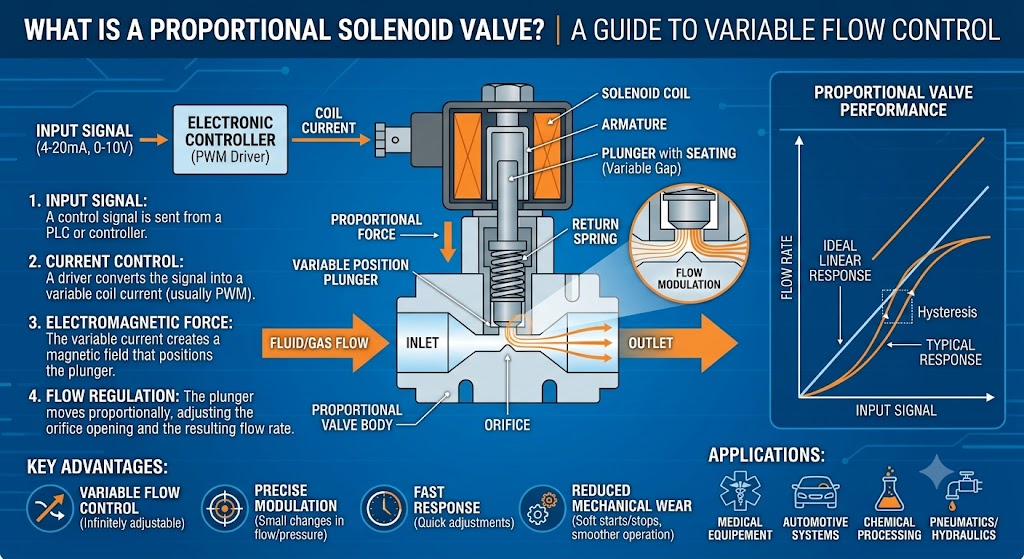
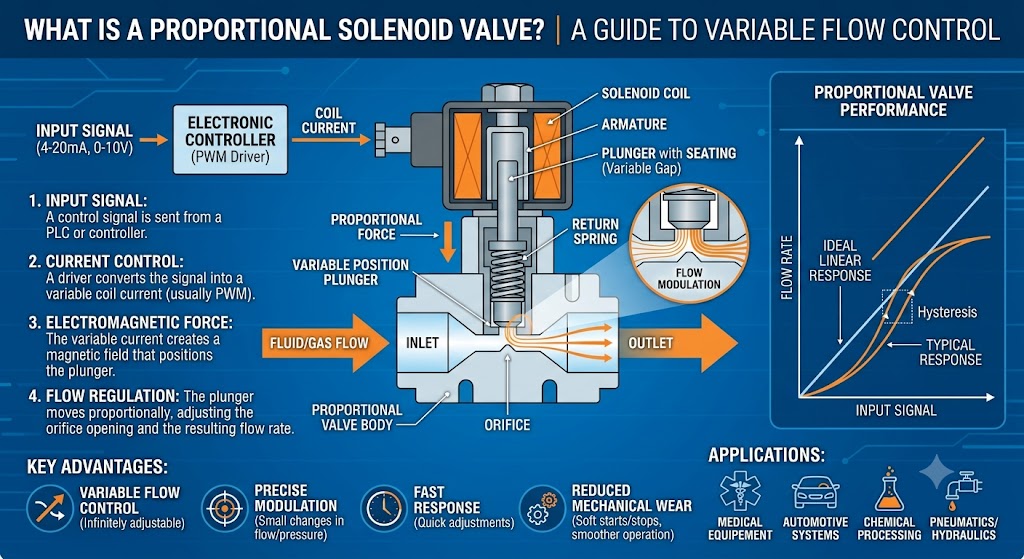
A proportional solenoid valve is an advanced valve designed to control fluid flow, pressure, or direction in a manner that is directly proportional to an electrical input signal. Unlike traditional digital valves that are either fully open or completely closed, a proportional valve can position its internal plunger anywhere within its stroke limits, allowing for infinitely variable flow rates.
How Does a Proportional Solenoid Valve Work?
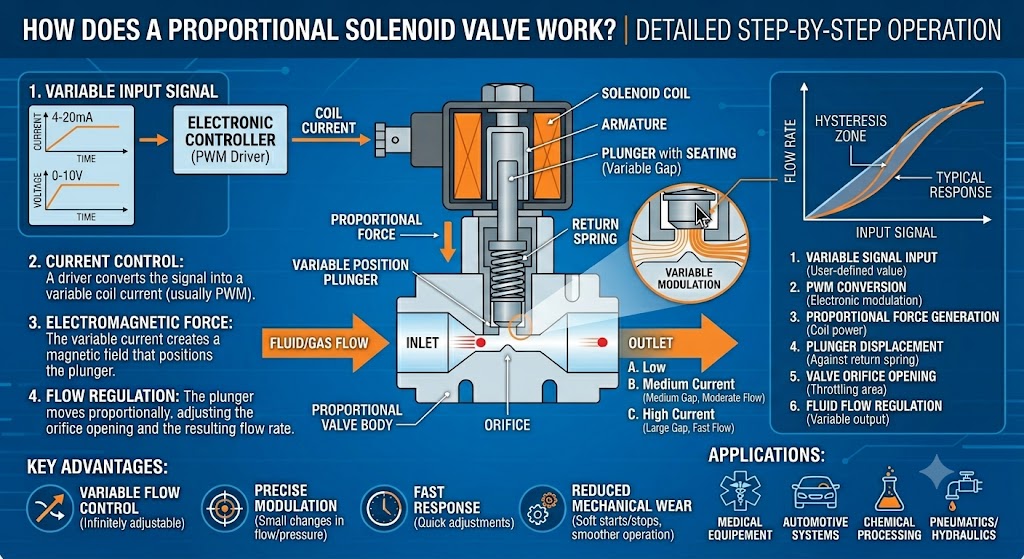
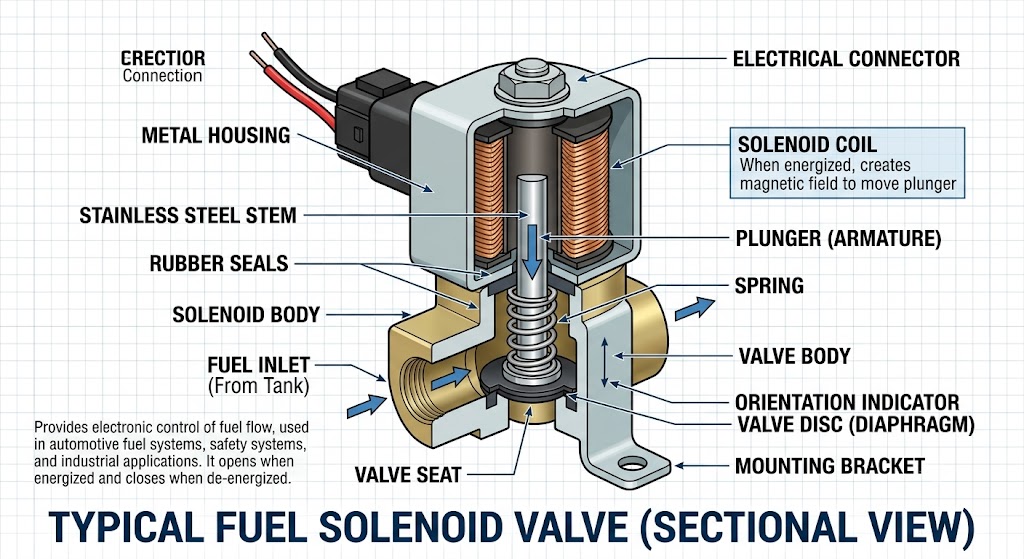
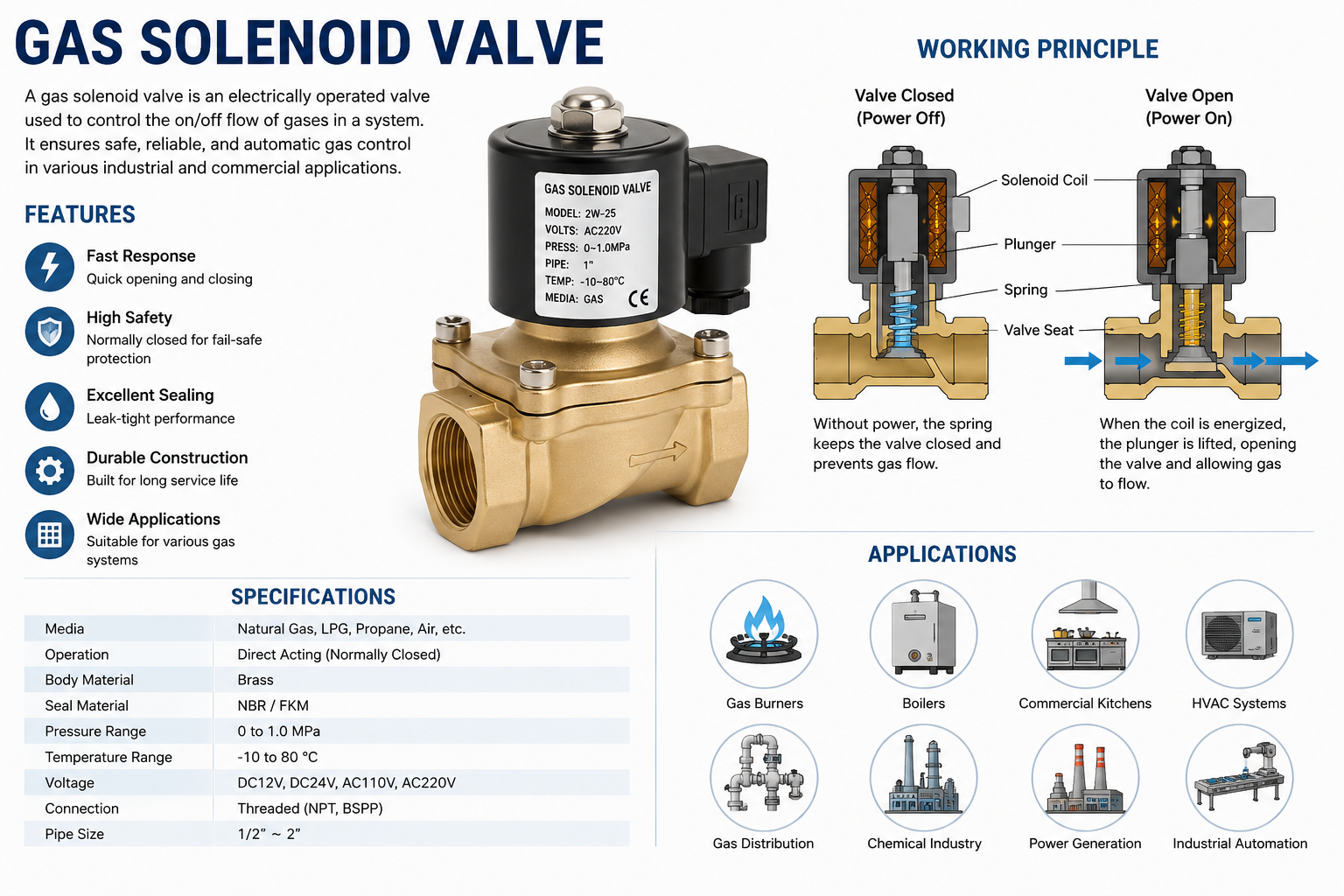
The core magic of a proportional solenoid valve lies in the balance of electromagnetic force and mechanical spring resistance. Here is a step-by-step breakdown of its operation:
- Variable Current Input: A variable electrical current (typically 0-10V, 4-20mA, or a Pulse Width Modulation / PWM signal) is sent to the valve's solenoid coil.
- Electromagnetic Force: As the current changes, the strength of the magnetic field generated by the coil changes proportionally.
- Balanced Plunger Movement: This magnetic force pulls the plunger against a heavy-duty, calibrated return spring. If you increase the current, the plunger moves further; if you decrease it, the spring pushes the plunger back.
- Throttling the Flow: The movement of the plunger changes the size of the valve orifice, seamlessly restricting or opening the passage for the fluid or gas.
Note on PWM Control: Most modern industrial applications use Pulse Width Modulation (PWM) instead of steady DC voltage. PWM rapidly switches the current on and off, reducing friction (hysteresis) and ensuring smoother plunger adjustments.
Key Technical Specifications to Consider
When integrating a proportional solenoid valve into your engineering project, you must analyze several technical parameters:
| Specification | Definition & Importance |
|---|---|
| Hysteresis | The maximum difference in valve output for the same input signal depending on whether the signal is increasing or decreasing. Lower hysteresis means higher precision. |
| Repeatability | The ability of the valve to return to the exact same flow rate when identical electrical signals are applied repeatedly. |
| Response Time | The speed at which the valve adjusts from its initial state to the target flow rate after a change in the input signal. Critical for dynamic systems. |
| Flow Range (Kv/Cv) | Defines the minimum and maximum volume of fluid the valve can handle under specific pressure drop conditions. |
Common Applications of Proportional Solenoid Valves
Thanks to their high precision and adaptability, these valves are utilized across a wide array of demanding industries:
- Medical Technology: Used in ventilators and anesthesia machines to meter exact oxygen and gas mixtures delivered to patients.
- Chemical Processing: Controls the precise dosing of chemicals in mixing chambers to ensure recipe consistency and safety.
- Automotive Systems: Manages fuel injection systems, transmission fluid cooling, and turbocharger control for optimized vehicle efficiency.
- Pneumatic and Hydraulic Machinery: Regulates cylinder speeds and maintains precise holding pressures in automated assembly lines.
How to Choose the Right Proportional Solenoid Valve
Selecting the correct valve avoids costly system failures and guarantees peak performance. Keep the following checklist in mind during selection:
- Media Compatibility: Ensure the valve body material (e.g., brass, stainless steel, aluminum) and seal material (e.g., FKM, NBR, EPDM) are chemically compatible with your gas or liquid.
- Pressure and Differential Pressure: Check both the maximum operating pressure and the minimum pressure drop required across the valve to function efficiently.
- Environmental Conditions: For harsh or hazardous environments, select valves with appropriate IP ratings or explosion-proof certifications (e.g., ATEX, IECEx).
If you want to learn more about low-priced products, please visit the following website: www.xm-valveactuator.com