Introduction to PVC Ball Valves
PVC ball valves represent one of the most versatile and widely used components in modern plumbing systems. Constructed from polyvinyl chloride, these valves offer exceptional durability, chemical resistance, and ease of installation, making them the preferred choice for both residential and commercial applications. Whether you are working on water distribution systems, irrigation projects, or industrial fluid handling, understanding PVC ball valves is essential for successful plumbing installations.
The ball valve design, featuring a spherical disc with a hole through its center, provides exceptional flow control capabilities. When the valve handle is aligned with the pipe, the hole allows unobstructed flow; rotating the handle ninety degrees blocks the flow completely. This simple yet effective mechanism has made ball valves the go-to solution for applications requiring reliable on-off control.
Understanding PVC Ball Valve Construction
PVC ball valves are manufactured using high-quality polyvinyl chloride compounds that meet strict industry standards for pressure and temperature ratings. The construction typically includes a body, ball, stem, seats, and handles, each component designed to work together seamlessly for optimal performance.
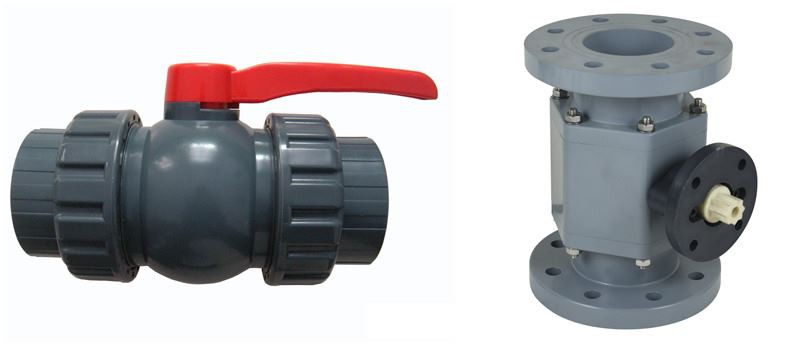
valve Body
The main housing constructed from Schedule 40 or Schedule 80 PVC, providing the structural integrity needed for various pressure ratings and installation environments.
Ball Component
A precision-machined PVC ball with a central bore that controls flow direction. The smooth surface ensures tight sealing and minimal wear over extended service life.
PTFE Seats
Polytetrafluoroethylene seat rings provide excellent chemical resistance and maintain sealing integrity across a wide temperature range.
Stem Design
The operating stem connects the handle to the ball, featuring double O-ring seals to prevent leakage at the handle connection point.
Handle Options
Standard lever handles in vibrant colors provide easy operation, while butterfly handles offer compact solutions for space-constrained installations.
Connection Ends
Socket, threaded, or flanged connection options ensure compatibility with various piping systems and installation requirements.
Types of PVC Ball Valves
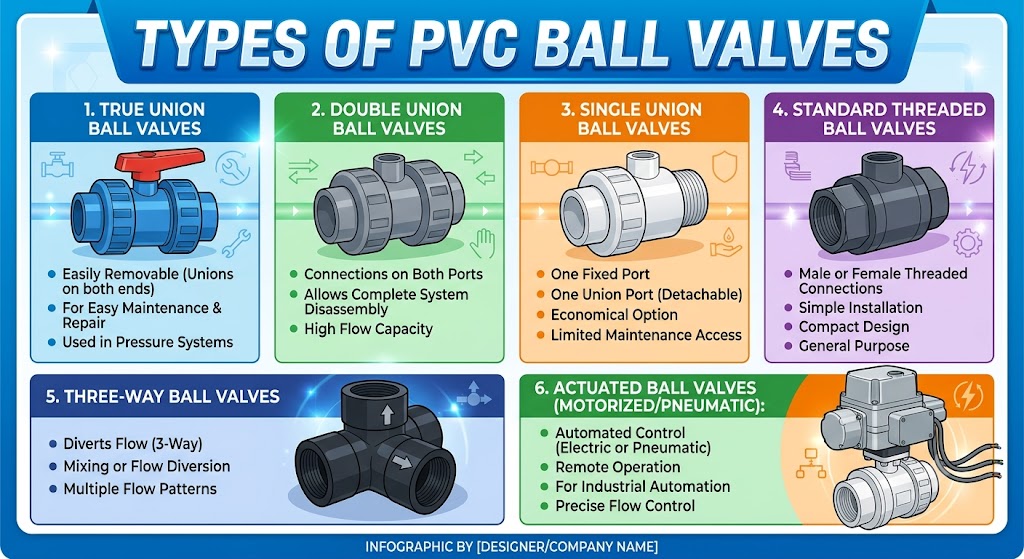
Selecting the appropriate PVC ball valve type depends on your specific application requirements, including pressure ratings, temperature conditions, and installation constraints. Understanding the differences between valve types helps ensure optimal performance and longevity.
Standard PVC Ball Valve Categories
Pressure and Temperature Specifications
Understanding the operational limits of PVC ball valves is critical for safe and reliable system performance. Different PVC formulations and schedules offer varying capabilities that must be matched to your application requirements.
| Valve Type | Pressure Rating | Temperature Range | Typical Applications |
|---|---|---|---|
| Schedule 40 PVC Ball Valve | 150 PSI at 73°F | 32°F to 140°F | Residential water, irrigation |
| Schedule 80 PVC Ball Valve | 235 PSI at 73°F | 32°F to 140°F | Commercial, industrial |
| CPVC Ball Valve | 150 PSI at 180°F | 32°F to 200°F | Hot water systems |
| Corzan CPVC Ball Valve | 100 PSI at 200°F | 0°F to 200°F | High-temp industrial |
Advantages of PVC Ball Valves
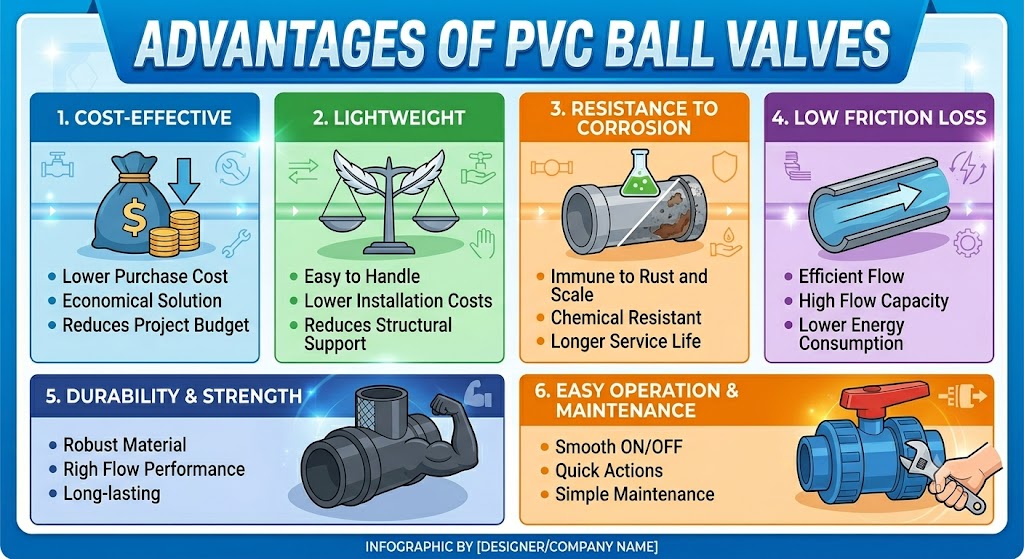
PVC ball valves offer numerous benefits that have made them increasingly popular in plumbing applications worldwide. From cost-effectiveness to exceptional chemical resistance, these valves provide solutions for diverse fluid handling challenges.
Key Benefits
- Outstanding chemical resistance to acids, alkalis, and saltwater
- Lightweight construction for easy handling and installation
- Smooth internal surfaces prevent scale buildup
- Low friction loss for efficient flow characteristics
- Cost-effective alternative to metal valves
- Easy quarter-turn operation for quick isolation
- Excellent electrical insulation properties
- Minimal maintenance requirements
Limitations to Consider
- Not suitable for potable hot water above 140°F
- Limited UV resistance without special formulations
- Cannot be used with certain organic solvents
- Pressure ratings decrease at elevated temperatures
- Threaded connections require careful assembly
- Not recommended for compressed air or gases
Applications in Modern Plumbing Systems
PVC ball valves serve essential functions across a wide range of plumbing and fluid handling applications. Their versatility and reliability have established them as fundamental components in both new construction and renovation projects.
Residential Applications
In residential settings, PVC ball valves commonly appear in main water shutoff applications, branch line isolation, irrigation systems, and swimming pool equipment. Homeowners appreciate their simple operation and the peace of mind that comes with having reliable shutoff capability at critical points in the plumbing system.
Commercial and Industrial Uses
Commercial buildings rely on PVC ball valves for water distribution, process cooling systems, chemical processing, and wastewater handling. Industrial facilities value the valves for their chemical resistance and ability to handle aggressive fluids that would damage metal alternatives.
Professional Tip
When specifying PVC ball valves for commercial applications, always account for a safety factor of 2:1 or greater between the valve rating and maximum system pressure. This practice ensures reliable operation and extends service life in demanding environments.
Installation Best Practices
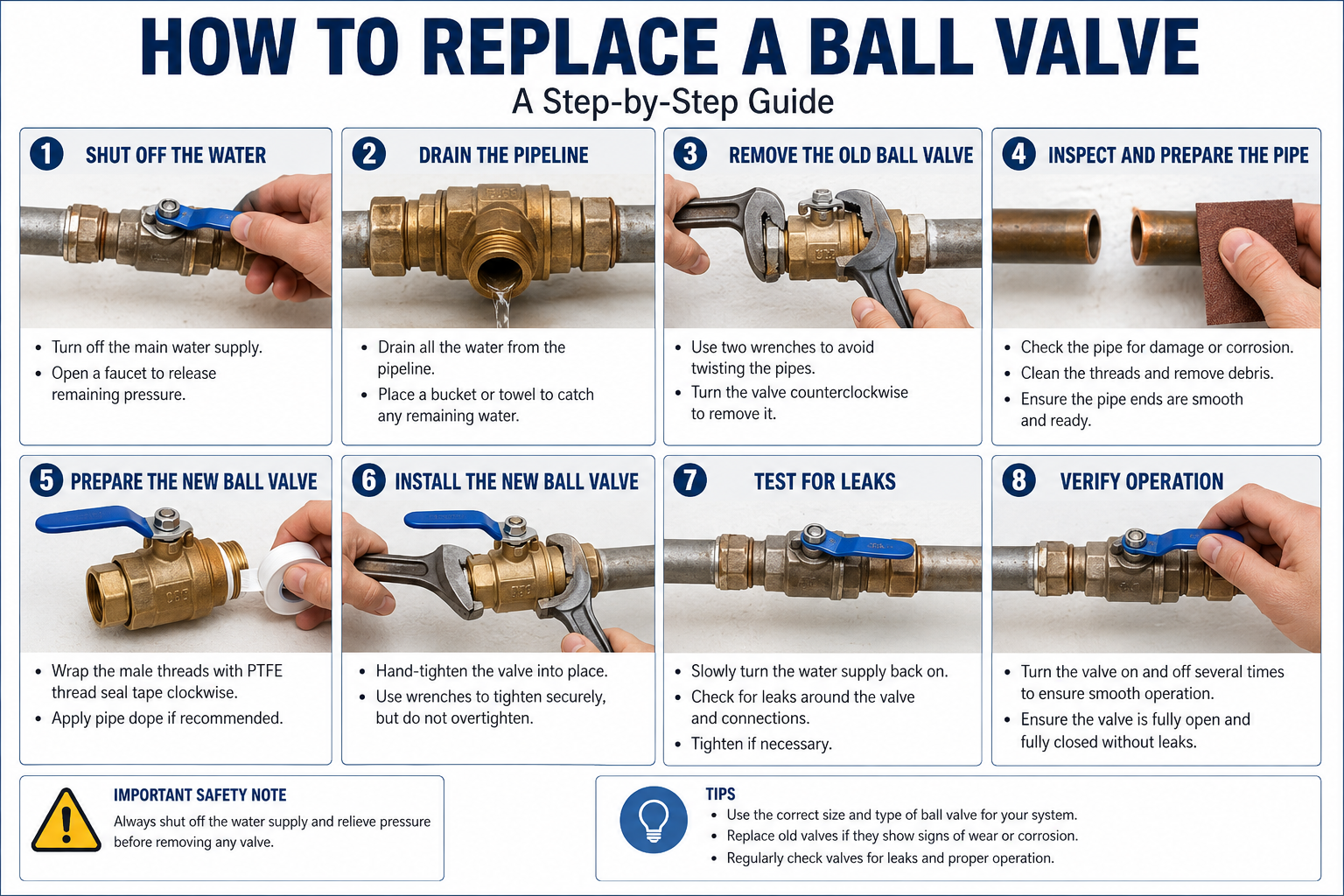
Proper installation of PVC ball valves is essential for achieving leak-free, reliable performance. Following established guidelines helps prevent common issues and ensures optimal valve operation throughout the system lifespan.
Installation Guidelines
Maintenance and Troubleshooting
While PVC ball valves are known for their reliability and minimal maintenance requirements, understanding common issues and their solutions helps ensure long-term performance. Regular inspection and prompt attention to problems prevent small issues from becoming major system failures.
Common Issues and Solutions
Stem leakage typically occurs when the O-ring seals wear out, and can usually be resolved by tightening the stem nut or replacing the O-rings. If the valve fails to seal completely, the seats may be worn or damaged and require replacement. For valves that become difficult to operate, internal debris or mineral buildup may be the culprit, often resolved by cycling the valve several times or flushing the system.
Selecting the Right PVC Ball Valve
Choosing the appropriate PVC ball valve for your application requires careful consideration of several factors. Taking time to evaluate these requirements ensures you select a valve that will perform reliably in your specific conditions.
Selection Criteria Checklist
Related Plumbing Components
PVC ball valves work as part of comprehensive plumbing systems that include various complementary components. Understanding how these components interact helps create efficient, reliable installations.
Fittings such as elbows, tees, couplings, and adapters connect PVC ball valves to the piping system. PVC pipe provides the conduit for fluid transport, whilePVC cement and primer create permanent, leak-free joints. Additional components like strainers, check valves, and pressure regulators often accompany ball valves in complete system designs.
Environmental Considerations
PVC materials offer several environmental advantages that contribute to sustainable building practices. The longevity and durability of PVC ball valves reduce the need for frequent replacements, while the material itself is fully recyclable at the end of its service life.
PVC production requires less energy than many metal alternatives, and the lightweight nature of PVC components reduces transportation emissions. These factors make PVC ball valves an environmentally responsible choice for green building projects and sustainability-focused installations.
Conclusion
PVC ball valves have established themselves as essential components in modern plumbing systems, offering an ideal combination of performance, durability, and cost-effectiveness. Their versatility spans applications from residential water supply to complex industrial processes, making them a reliable choice for professionals and homeowners alike.
By understanding the various types, specifications, and installation requirements of PVC ball valves, you can make informed decisions that ensure optimal system performance and longevity. Whether you are planning a new installation, upgrading existing equipment, or performing routine maintenance, PVC ball valves provide the reliability and efficiency that modern plumbing systems demand.
Invest in quality PVC ball valves from reputable manufacturers, follow proper installation practices, and maintain your system according to manufacturer guidelines. These simple steps will ensure years of trouble-free service from your PVC plumbing components.