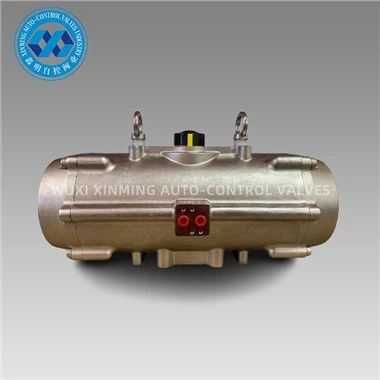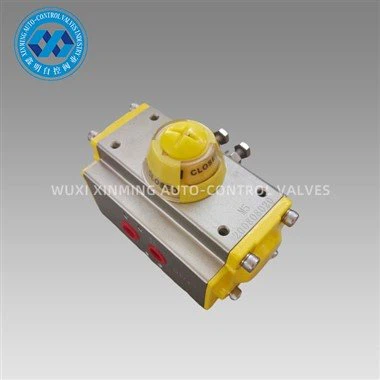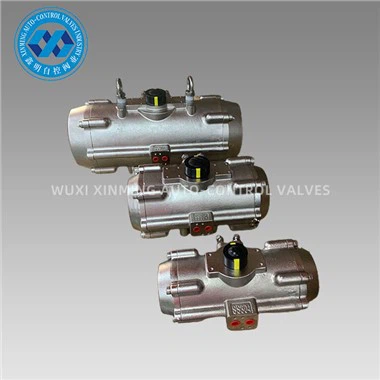
Process control valves are essential components in industrial automation systems. They regulate the flow, pressure, temperature, and liquid levels within pipelines to ensure stable and efficient process control across industries such as oil & gas, chemical processing, water treatment, food production, and power generation.
A process control valve is a final control element used in automated systems to precisely control fluid flow. These valves operate based on signals received from controllers or actuators, allowing industries to maintain accurate process conditions and improve operational efficiency.
What Is a Process Control Valve?
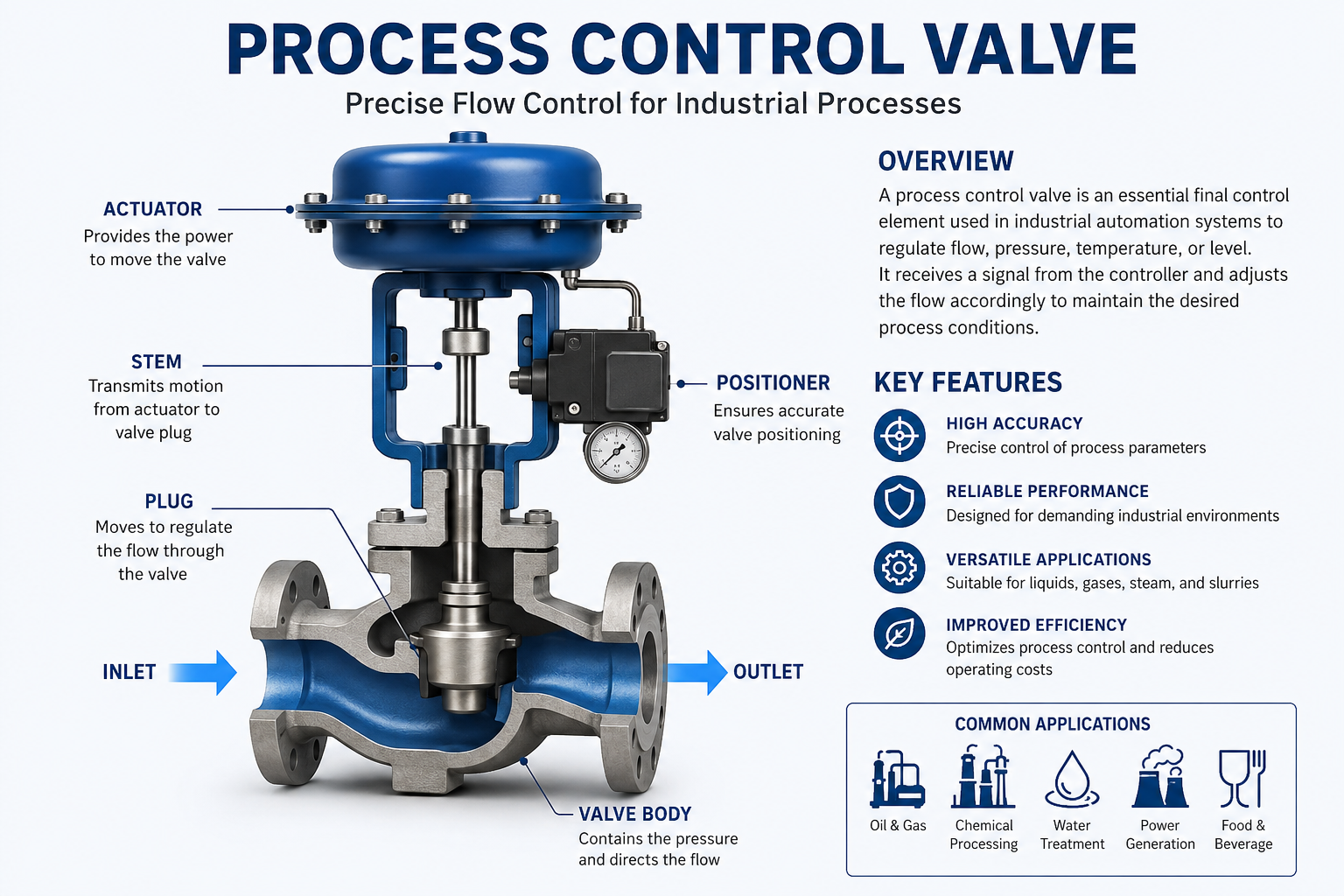
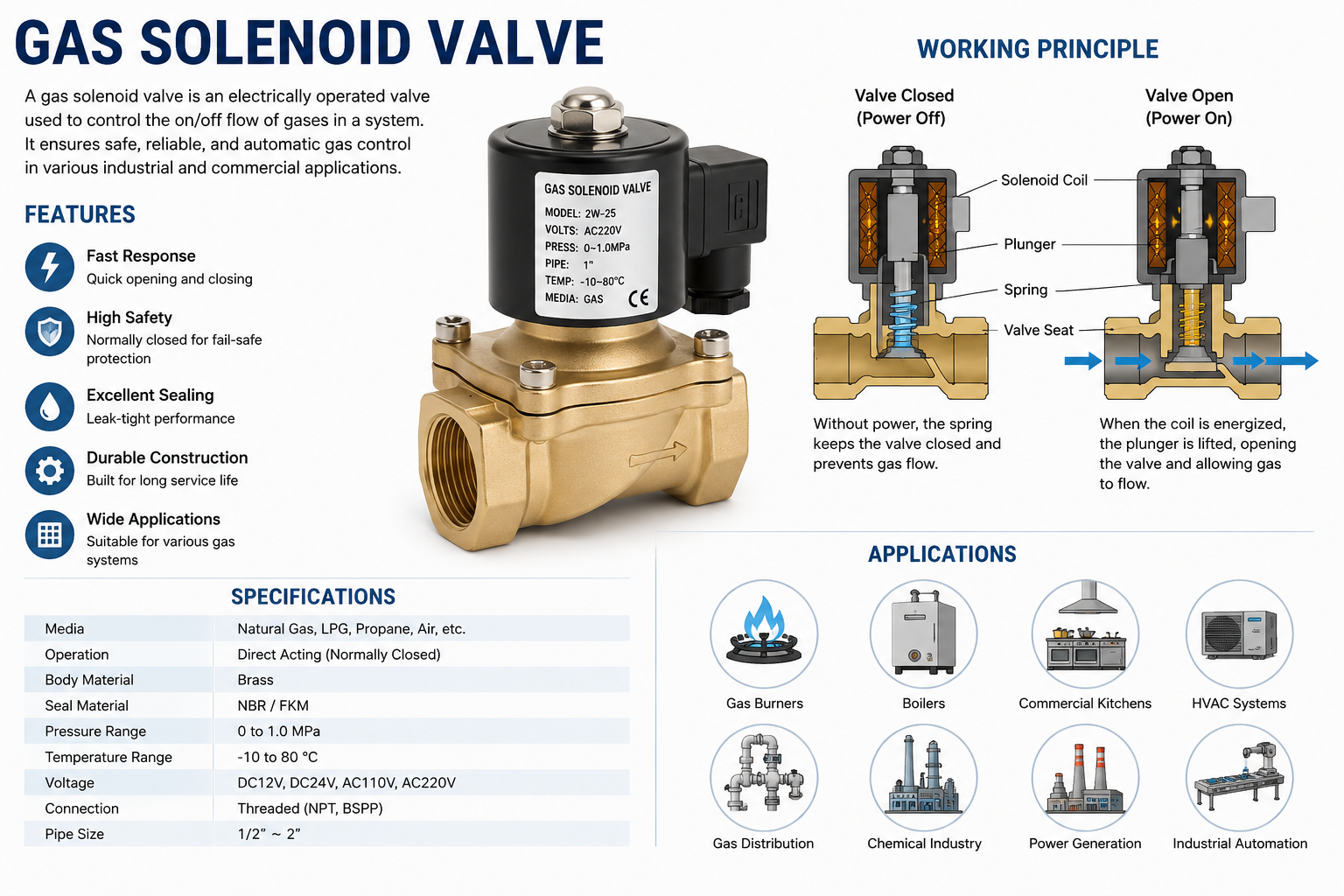
A process control valve is a mechanically operated device designed to regulate the flow rate or pressure of liquids, gases, steam, or slurries within a process system. It responds to signals from a control system, typically through pneumatic, electric, or hydraulic actuators.
How Does a Process Control Valve Work?
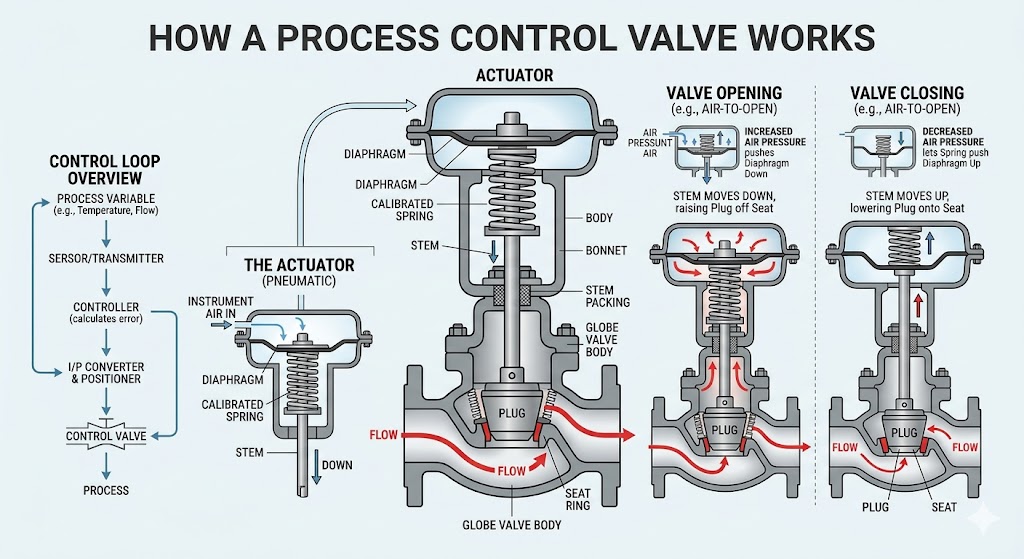
The operation of a process control valve involves several integrated components working together:
- Controller: Sends control signals based on process requirements.
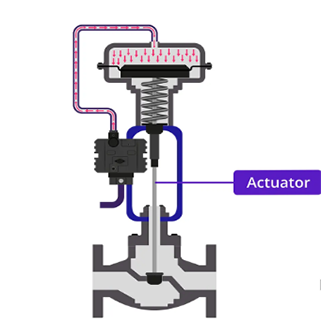
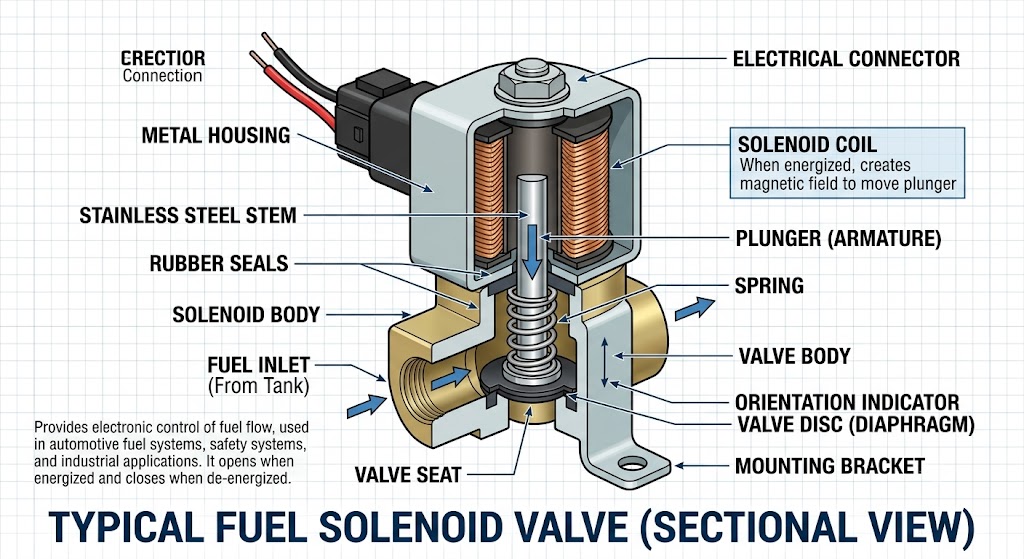
- Actuator: Converts control signals into mechanical motion.
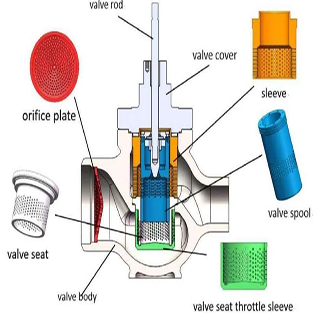
- Valve Body: Directs and regulates fluid flow.
- Positioner: Ensures accurate valve positioning.
When the process variable deviates from the desired setpoint, the controller sends a signal to the actuator. The actuator then moves the valve stem or disc to open, close, or partially regulate the flow passage.
Main Types of Process Control Valves
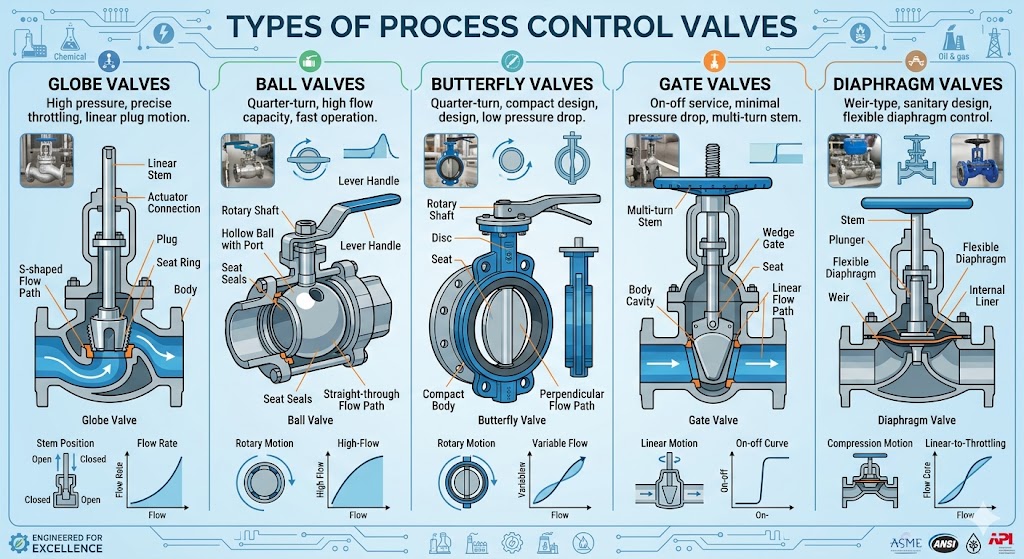
Globe Control Valve
Globe valves provide precise throttling and are widely used in process industries requiring accurate flow regulation.
Ball Control Valve
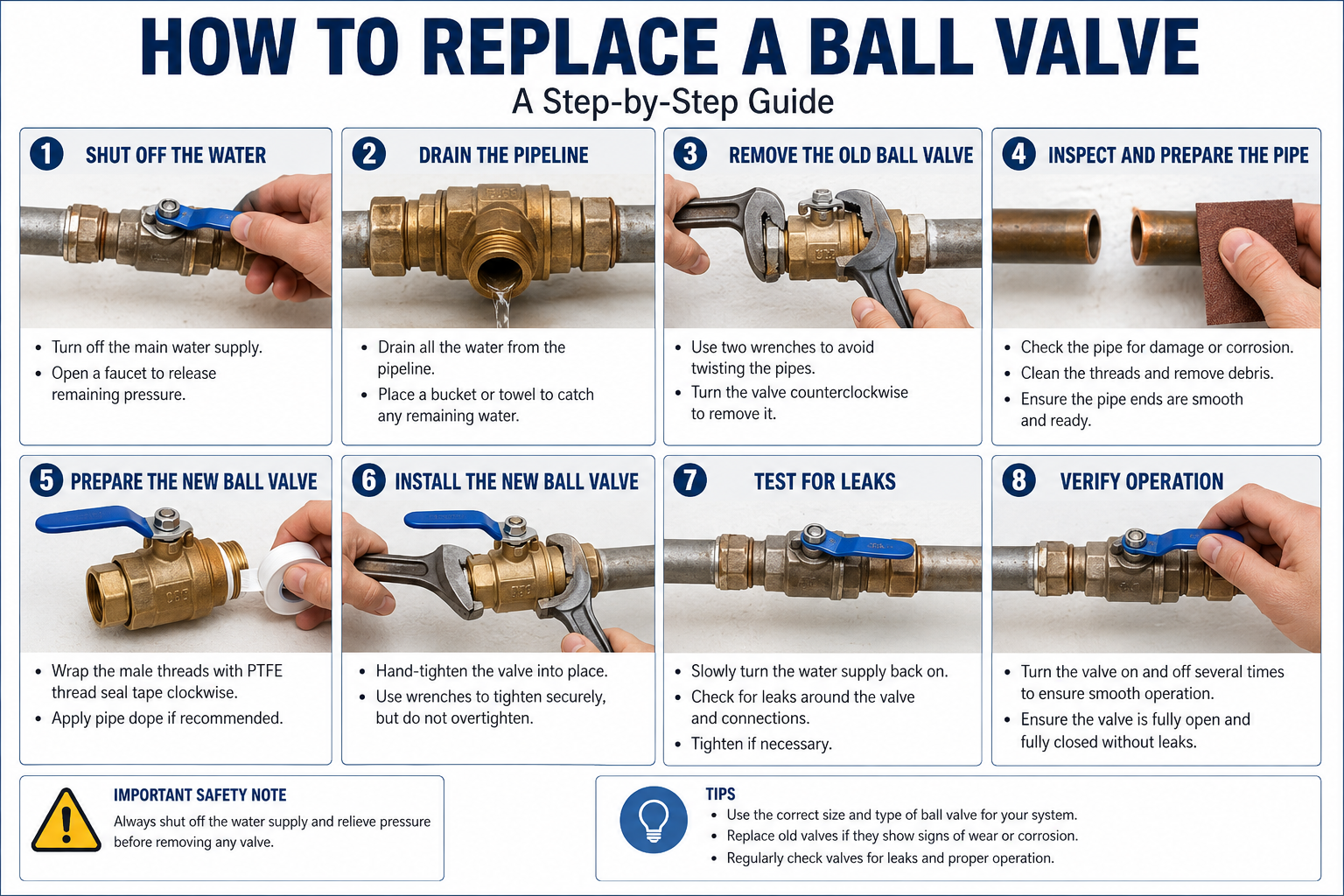
Ball valves offer fast shutoff, low pressure drop, and reliable sealing for liquid and gas applications.
Butterfly Control Valve
Butterfly valves are lightweight and cost-effective for large pipeline systems and low-pressure applications.
Diaphragm Valve
Diaphragm valves are suitable for corrosive fluids and sanitary applications such as pharmaceutical processing.
Comparison of Common Process Control Valves
| Valve Type | Control Accuracy | Pressure Handling | Best Application |
|---|---|---|---|
| Globe Valve | Excellent | High | Precise flow control |
| Ball Valve | Good | Medium to High | Fast shutoff systems |
| Butterfly Valve | Moderate | Medium | Large diameter pipelines |
| Diaphragm Valve | Good | Low to Medium | Corrosive and sanitary media |
Types of Actuators Used in Process Control Valves
Pneumatic Actuators
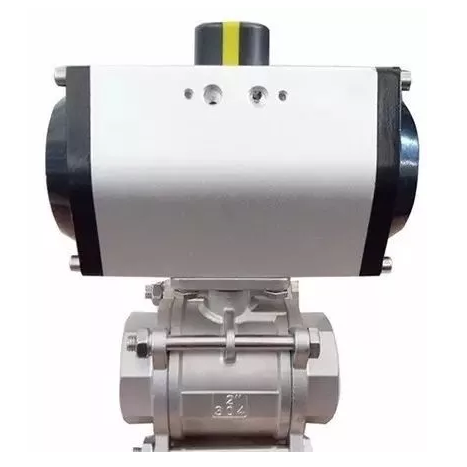
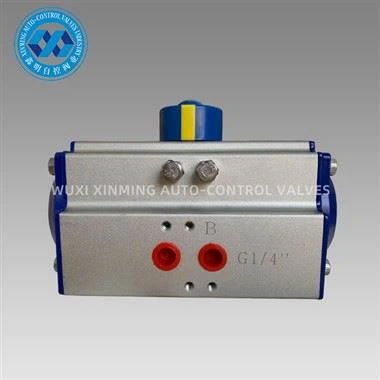
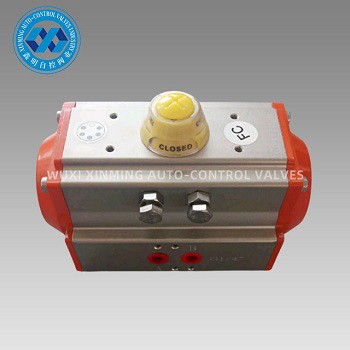
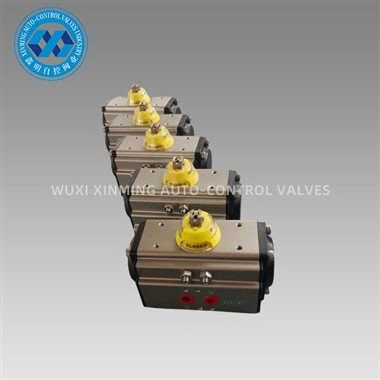
Pneumatic actuators use compressed air to operate valves. They are highly reliable, fast-acting, and commonly used in hazardous industrial environments.
Electric Actuators
Electric actuators provide precise positioning and are ideal for automated systems requiring remote control and monitoring.
Hydraulic Actuators
Hydraulic actuators generate high operating force, making them suitable for large valves and heavy-duty applications.
Applications of Process Control Valves
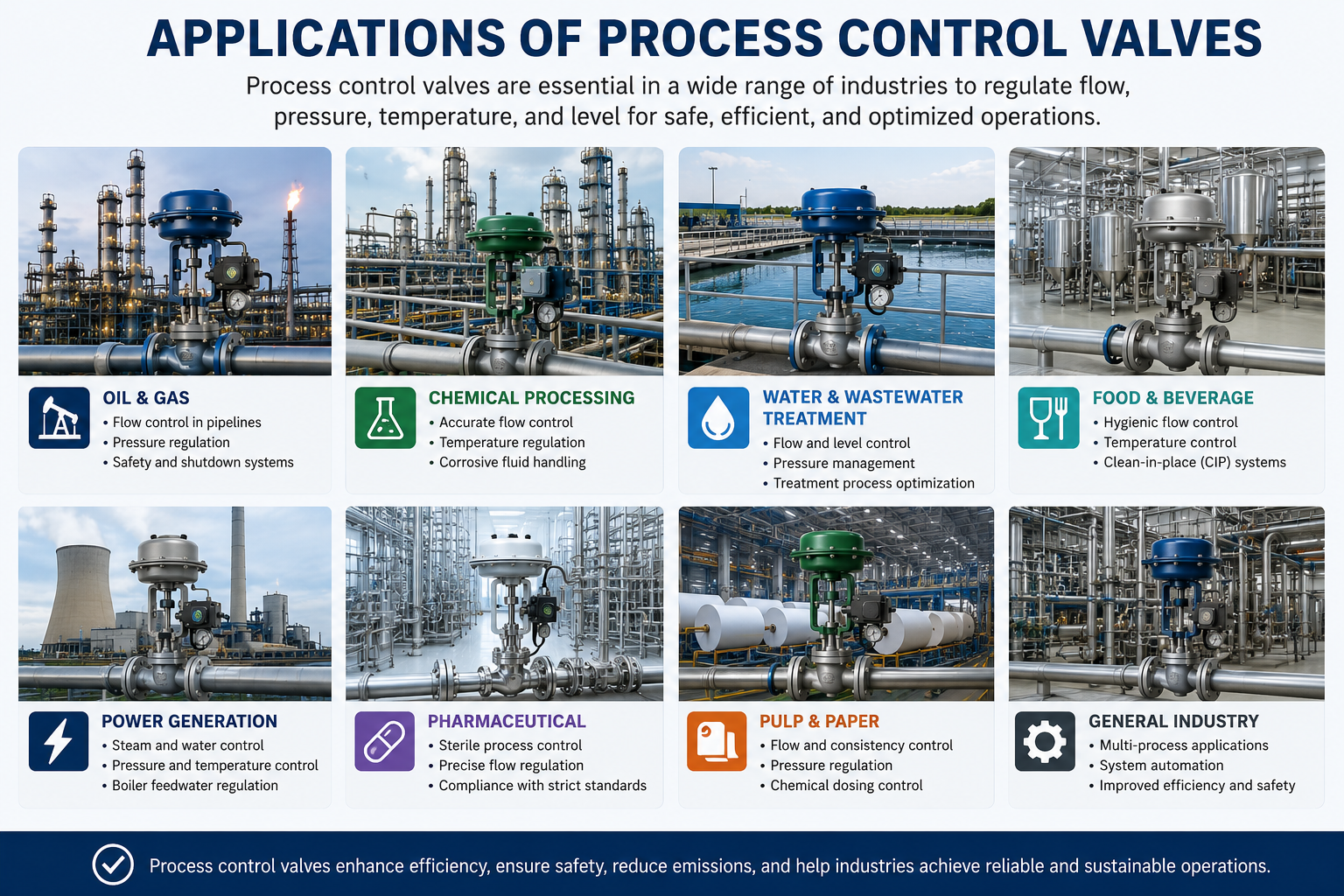
Process control valves are widely used in various industrial sectors:
- Oil and gas processing plants
- Chemical manufacturing facilities
- Water and wastewater treatment systems
- Food and beverage processing
- Power generation plants
- Pharmaceutical production
- Pulp and paper industries
Advantages of Using Process Control Valves
Improved Process Stability
Accurate flow regulation maintains stable operating conditions and reduces fluctuations.
Higher Efficiency
Optimized flow control minimizes energy consumption and operational costs.
Enhanced Safety
Automatic valve control helps prevent overpressure and system failures.
Reduced Maintenance
Modern control valves provide durable performance and lower maintenance requirements.
How to Select the Right Process Control Valve
Choosing the correct process control valve requires evaluating several technical factors:
- Fluid type and chemical compatibility
- Operating temperature and pressure
- Flow rate requirements
- Valve size and pipeline configuration
- Control accuracy requirements
- Actuator type and automation system compatibility
Maintenance Tips for Process Control Valves
- Inspect seals and packing regularly for leakage.
- Calibrate valve positioners periodically.
- Monitor actuator performance and air supply quality.
- Clean internal components to prevent clogging.
- Check for corrosion or wear in harsh environments.
Future Trends in Process Control Valve Technology
Modern industries are increasingly adopting smart process control valves integrated with IoT technology, digital positioners, and predictive maintenance systems. These advanced solutions improve process visibility, reduce downtime, and support Industry 4.0 automation strategies.
Frequently Asked Questions
What is the purpose of a process control valve?
A process control valve regulates fluid flow, pressure, temperature, or level automatically within industrial process systems.
What industries use process control valves?
Industries including oil & gas, chemical processing, water treatment, pharmaceuticals, food processing, and power generation commonly use process control valves.
What is the difference between a control valve and a manual valve?
A control valve operates automatically through actuators and controllers, while a manual valve requires physical operation by an operator.
Conclusion
Process control valves play a critical role in modern industrial automation by ensuring accurate and reliable fluid control. Selecting the right valve type, actuator, and control system can significantly improve operational efficiency, process safety, and long-term performance. Whether used in chemical plants, water systems, or energy facilities, high-quality process control valves are essential for maintaining stable and efficient industrial operations.
If you want to learn more about low-priced products, please visit the following website: www.xm-valveactuator.com