1. EPDM (Ethylene Propylene Diene Monomer)
EPDM is one of the most versatile and cost-effective seat materials available. It is a synthetic rubber that offers excellent resistance to weather, ozone, and heat.
Best Applications:
- Water treatment systems (Potable water, wastewater).
- HVAC systems (Chilled and hot water).
- Phosphate esters and alcohols.
Temperature Range: Typically -30°C to +130°C.
Limitation: EPDM should never be used with petroleum-based oils, fuels, or solvents, as it will swell and degrade rapidly.
2. PTFE (Polytetrafluoroethylene / Teflon)
PTFE is a fluoropolymer known for its exceptional chemical resistance and low friction coefficient. It is often used in "high-performance" or "lined" butterfly valves.
Best Applications:
- Aggressive chemical processing (Acids, bases).
- Food and Beverage industry (FDA compliant).
- High-purity laboratory applications.
Temperature Range: -40°C to +200°C.
Limitation: PTFE is less resilient than EPDM or Viton, meaning it may require higher torque for a tight seal and is more susceptible to "cold flow" or permanent deformation under constant pressure.
3. Viton (FKM / Fluorocarbon)
Viton is a high-performance fluoroelastomer designed for extreme conditions. It is the "gold standard" when dealing with oils, fuels, and high temperatures.
Best Applications:
- Oil and Gas refineries.
- Chemical handling involving hydrocarbons.
- High-temperature industrial processes.
Temperature Range: -20°C to +200°C (Short periods up to 230°C).
Limitation: Viton is significantly more expensive than EPDM and is not recommended for use with ketones or organic acids.
Comparison Summary Table
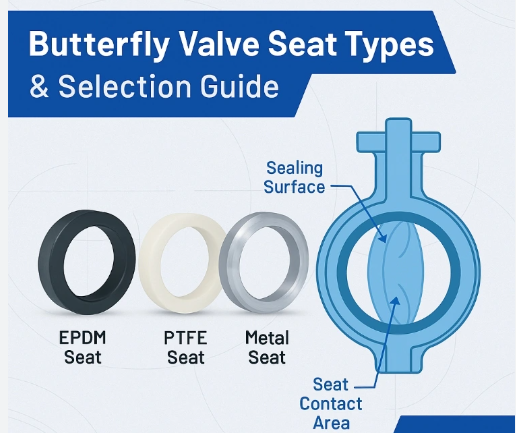
| Feature | EPDM | PTFE | Viton (FKM) |
|---|---|---|---|
| Primary Use | Water & Steam | Corrosive Chemicals | Oils & Hydrocarbons |
| Chemical Resistance | Good for acids/alkalis | Universal (Excellent) | Excellent for fuels/oils |
| Cost | Low (Most Economical) | Medium | High (Premium) |
| Elasticity | Excellent | Poor (Rigid) | Good |
Decision Making Checklist:
Before selecting your butterfly valve seat, answer these three questions:
- What is the medium? (Water = EPDM; Acid = PTFE; Fuel = Viton).
- What is the maximum temperature? (If over 130°C, look at PTFE or Viton).
- Is cost a primary driver? (EPDM is the budget-friendly choice for general water apps).
Final Thoughts
Choosing the right material isn't just about the highest specs; it's about the right specs for your environment. Over-specifying with Viton for a simple water line is a waste of budget, while under-specifying with EPDM in an oil refinery can lead to catastrophic failure.
If you want to learn more about low-priced products, please visit the following website: www.xm-valveactuator.com