While linear pneumatic actuators are celebrated for their speed, durability, and relatively low upfront cost, they aren't a "one-size-fits-all" solution. In the push toward high-precision automation and Industry 4.0, the limitations of air-powered motion are becoming more apparent.
If you are weighing your options for industrial motion control, here is a professional breakdown of the primary disadvantages of linear pneumatic actuators.
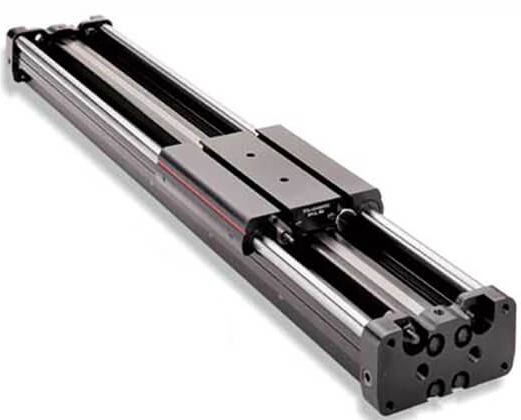
1. Low Precision and "Spongy" Control
The most significant drawback of pneumatic systems is the compressibility of air. Unlike hydraulic fluid (which is nearly incompressible) or electric screws (which are rigid), air acts like a spring.
- Difficult Positioning: Achieving mid-stroke positioning is notoriously difficult. Most pneumatic cylinders are "bang-bang" devices—they go from one end to the other but struggle to stop accurately in between.
- Velocity Fluctuations: Because air compresses, the speed of the actuator can vary based on the load. If the resistance changes, the piston might "stutter" or lurch, a phenomenon often called stick-slip.
2. High Operational Costs and Energy Inefficiency
While a pneumatic cylinder is cheap to buy, it is expensive to run. Pneumatic systems are often cited as one of the least energy-efficient technologies in a factory.
- Energy Conversion Losses: Only about 10% to 15% of the electrical energy used by the compressor is actually converted into useful mechanical work at the actuator. The rest is lost as heat and through friction.
- Constant Leaks: In a typical plant, air leaks can account for 20% to 30% of total compressor capacity. These "silent profit killers" require constant maintenance and monitoring.
3. Bulky Infrastructure Requirements
You don't just "plug in" a pneumatic actuator. They require a massive supporting cast of equipment that takes up valuable floor space:
- Air Compressors: Large, noisy, and maintenance-heavy.
- Preparation Units (FRLs): Filters, Regulators, and Lubricators are needed to keep the air clean and dry.
- Extensive Piping: Running air lines across a facility is labor-intensive and creates more opportunities for pressure drops.
4. Noise Pollution
Pneumatic actuators are loud. The exhaust of compressed air into the atmosphere creates a high-decibel "hissing" or "popping" sound. While silencers and mufflers can help, a floor filled with hundreds of pneumatic valves can easily exceed OSHA noise comfort levels, requiring hearing protection for workers.
5. Environmental Sensitivity
Pneumatic systems are highly sensitive to their environment, specifically regarding moisture and temperature:
- Condensation: As compressed air cools, water droplets form. If not managed by expensive dryers, this moisture causes internal corrosion and washes away essential lubricants.
- Freezing: In cold environments, moisture in the lines can freeze, completely seizing the valves and actuators.
Comparison: Pneumatic vs. Electric vs. Hydraulic
| Feature | Pneumatic | Electric | Hydraulic |
|---|---|---|---|
| Precision | Low (Spongy) | Very High | Moderate/High |
| Energy Efficiency | Low (~15%) | High (~80%) | Moderate (~40%) |
| Force Density | Moderate | Moderate | Very High |
| Initial Cost | Lowest | High | Moderate |
| Cleanliness | Moderate (Air leaks) | Highest | Low (Oil leaks) |
Pro Tip: If your application requires "set and forget" simplicity for basic pushing tasks, pneumatics are great. However, if you need to synchronize multiple axes or require sub-millimeter accuracy, the long-term ROI usually favors Electric Linear Actuators.
If you want to learn more about low-priced products, please visit the following website: www.xm-valveactuator.com