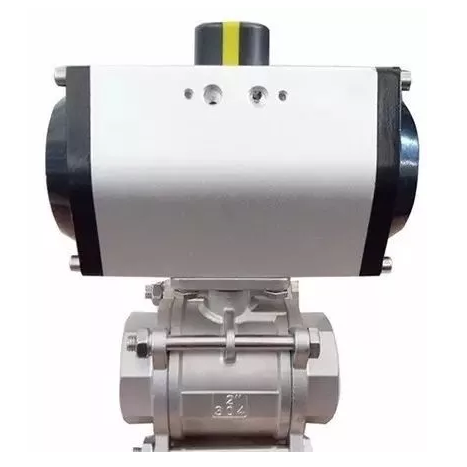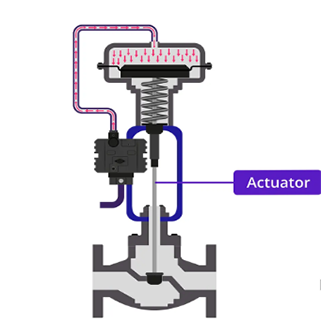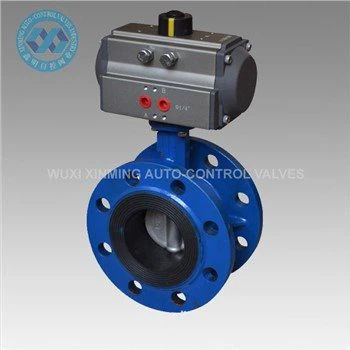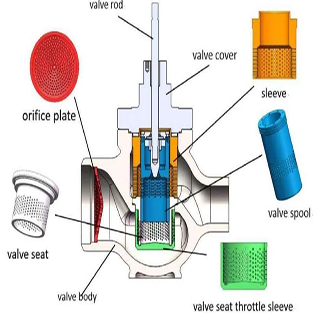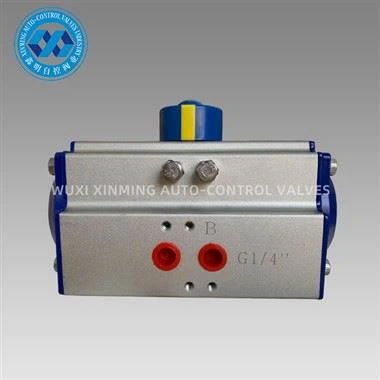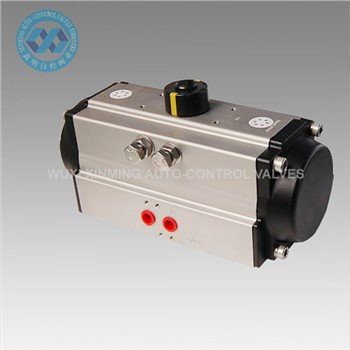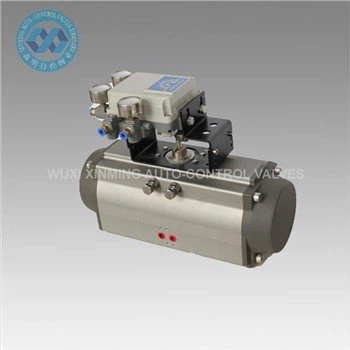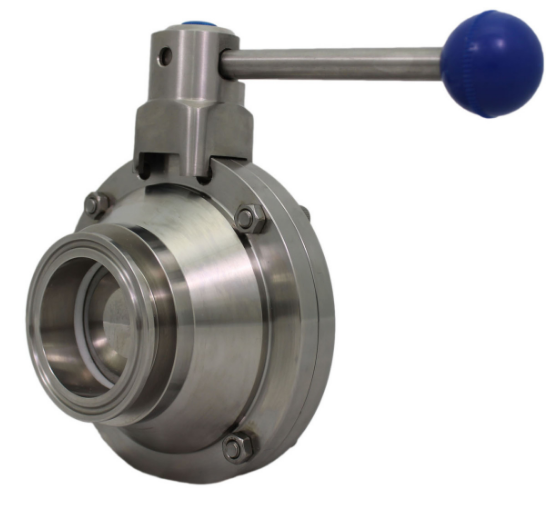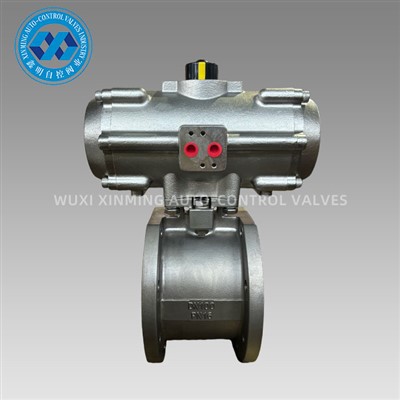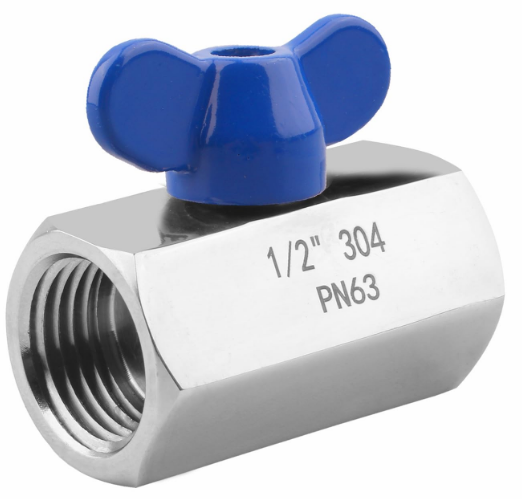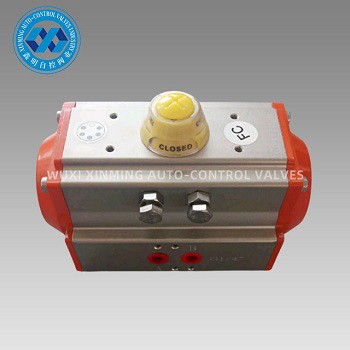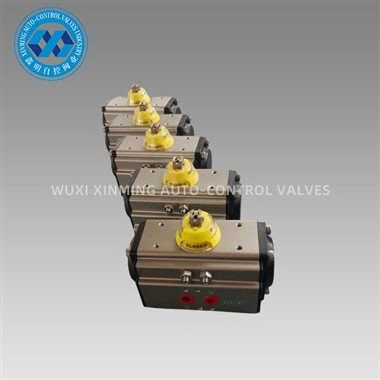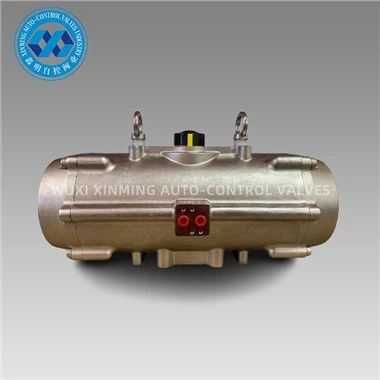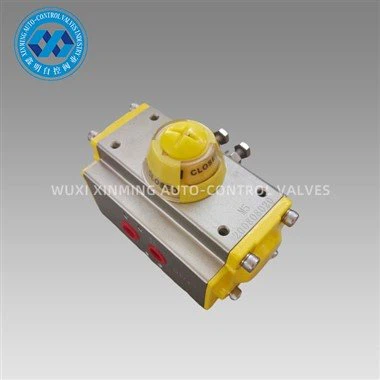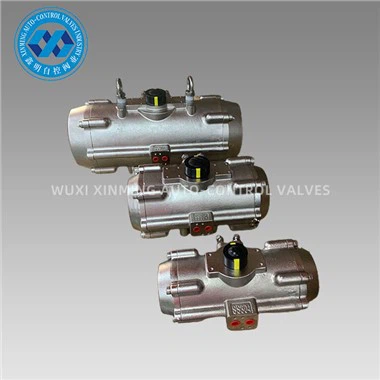
In the world of industrial process control, pneumatic actuators are the workhorses that drive automation. Whether you are managing a water treatment plant, an oil refinery, or a food processing line, the efficiency and safety of your system often hinge on the performance of your valves.
When selecting a pneumatic actuator, the first and most critical decision you will face is choosing between a Double Acting and a Single Acting (Spring Return) configuration. While they may look similar on the outside, their internal mechanisms and operational behaviors are fundamentally different.
This guide explores the mechanics, advantages, and drawbacks of each type to help you make the right engineering decision.
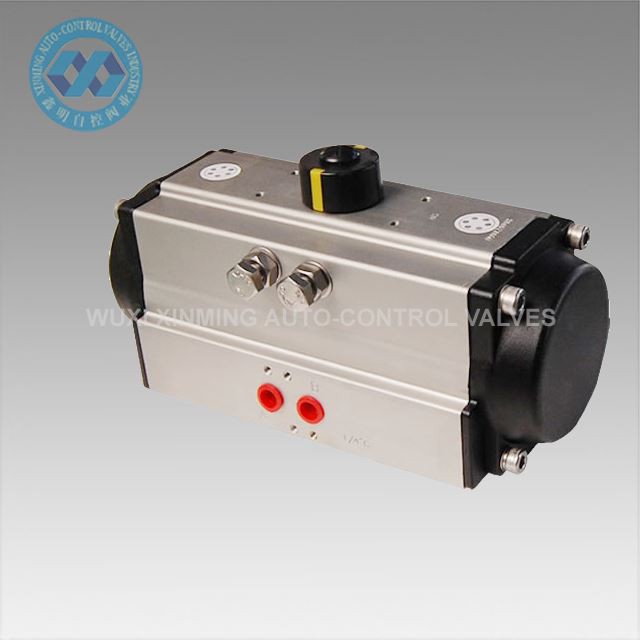
1. What is a Pneumatic Actuator?
Before diving into the differences, it is important to understand the common ground. Pneumatic actuators convert energy (compressed air) into mechanical motion (rotary or linear) to control a valve. They are preferred in many industries over electric actuators because they are fast, durable, and intrinsically safe in hazardous environments.
2. Double Acting Pneumatic Actuators
How They Work
A Double Acting (DA) actuator requires compressed air to move the valve in both directions.
-
To Open: Air is supplied to one port to push the pistons apart (or together, depending on design), rotating the pinion to open the valve.
-
To Close: Air is supplied to a second port to force the pistons back to their original position, closing the valve.
Key Characteristics
-
Configuration: Air-to-Open / Air-to-Close.
-
Torque Output: Delivers constant torque throughout the entire stroke (rotation).
-
Failure Mode: If the air supply fails, the valve remains in its last known position.
Advantages
-
Cost-Effective: Generally 15–25% cheaper than single acting units because they lack complex spring mechanisms.
-
Compact Size: Without bulky springs inside, DA actuators are smaller and lighter, making them ideal for tight spaces.
-
Longevity: Less internal friction and fatigue compared to spring-loaded units often results in a longer cycle life.
Disadvantages
-
No Fail-Safe: This is the primary drawback. In the event of a power or air loss, the valve will not automatically close or open. This can be dangerous in critical applications.
3. Single Acting (Spring Return) Pneumatic Actuators
How They Work
A Single Acting (SA) actuator uses compressed air to move the valve in one direction and a mechanical spring to move it in the opposite direction.
-
To Operate: Air pressure compresses the springs and operates the valve.
-
To Return: When the air supply is cut off (intentionally or accidentally), the stored energy in the compressed springs pushes the pistons back to the starting position.
Key Characteristics
-
Configuration: Usually "Normally Closed" (NC) or "Normally Open" (NO).
-
Torque Output: Variable torque. The torque is highest at the start of the stroke and decreases as the spring compresses (or vice versa).
-
Failure Mode: If air supply fails, the spring forces the valve into a pre-determined safe position (either fully open or fully closed).
Advantages
-
Fail-Safe Protection: Essential for safety-critical systems. For example, if a fire melts the air lines, the springs will automatically close a fuel line to prevent an explosion.
-
Simple Control: Requires less complex solenoid valving (often a 3/2-way valve compared to a 5/2-way for double acting).
Disadvantages
-
Size and Weight: Springs require space and add significant weight to the unit.
-
Cost: More expensive due to the larger housing and spring components.
-
Spring Fatigue: Over millions of cycles, springs can lose tension, requiring maintenance or replacement.
4. Head-to-Head Comparison
To simplify your selection process, here is a direct comparison of the two technologies:
| Feature | Double Acting (DA) | Single Acting (SA) |
| Power Source | Air required for both Open & Close | Air for one direction; Spring for return |
| Safety (Fail-Safe) | No (Stays in last position) | Yes (Returns to safe position) |
| Torque Profile | Constant / Balanced | Variable (Decreases as spring extends) |
| Size & Weight | Compact & Lightweight | Larger & Heavier |
| Initial Cost | Lower | Higher |
| Air Consumption | Consumes air on both strokes | Consumes air only on drive stroke |
5. Selection Guide: Which Should You Choose?
The choice between single and double acting usually comes down to one question: What happens if the air supply fails?
Choose Single Acting if:
-
Safety is Paramount: You are handling hazardous chemicals, flammable gases, or steam. If power is lost, you need the valve to shut off immediately (Fail-Closed) or open to vent pressure (Fail-Open).
-
Regulation Compliance: Your industry standards (API, ISO) mandate fail-safe mechanisms for specific process lines.
-
Simple Control Logic: You prefer a simpler solenoid setup where de-energizing the coil automatically resets the valve.
Choose Double Acting if:
-
Fail-Safe is Not Required: It is acceptable (or preferred) for the valve to stay in its last position during a power outage.
-
High Cycle Rates: You have a process valve that opens and closes frequently, and you want to minimize wear on spring components.
-
Space Constraints: You are installing valves in a skid or tight machinery where the larger footprint of a spring-return unit won't fit.
-
Budget Constraints: You are looking to lower the initial capital expenditure (CAPEX) of the project.
Conclusion
Neither actuator is universally "better" than the other; they simply serve different purposes.
-
Use Double Acting for general purpose, non-critical applications where cost and size are the driving factors.
-
Use Single Acting for critical applications where the safety of your plant and personnel depends on the valve returning to a specific position during a failure.
If you want to learn more about low-priced products, please visit the following website: www.xm-valveactuator.com