A mini ball valve is a compact shut-off valve designed for applications where space is limited and precise flow control is required. Despite its small size, this valve delivers excellent sealing performance, high durability, and easy operation—making it widely used in plumbing, HVAC, pneumatic systems, chemical pipelines, and manufacturing industries.
This article provides a detailed technical overview of mini ball valves, including structure, materials, functions, advantages, applications, and how to choose the right model for industrial or commercial use.
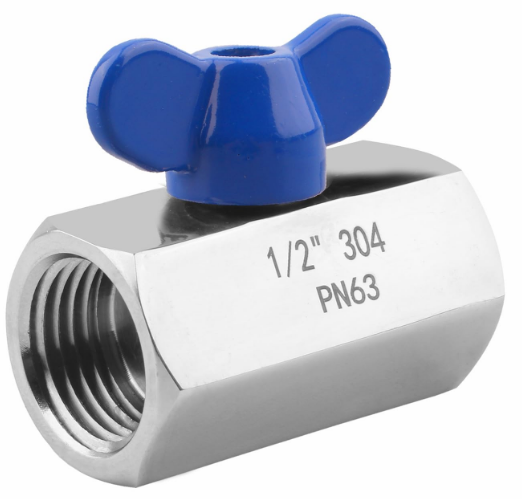
What Is a Mini Ball Valve?
A mini ball valve is a reduced-size quarter-turn ball valve that controls fluid flow using a rotating spherical disc. Its body is typically small and lightweight, enabling installation in tight spaces where standard valves are difficult to operate.
Key Characteristics:
| Specification | Description |
|---|---|
| Size Range | 1/8" to 1/2" (commonly 1/4") |
| Operation | Quarter-turn open/close |
| Media Compatibility | Water, gas, air, oil, chemical liquids |
| Connection Types | Threaded (NPT/BSP/BSPT), compression, push-in |
| Body Materials | Brass, stainless steel, carbon steel, plastic |
| Seal Materials | PTFE, PFA, NBR, EPDM, Viton |
Mini ball valves offer fast shutoff, low operating torque, and minimal internal leakage—ideal for high-precision fluid control systems.
How Does a Mini Ball Valve Work?
The valve operates by rotating the handle 90 degrees.
-
When the ball’s bore aligns with the pipeline, flow is fully open.
-
When turned perpendicular, the flow is completely shut off.
This simple but effective mechanism ensures stable performance with minimal wear. The small design allows for quick adjustments with high reliability even under frequent operation.
Benefits of Using Mini Ball Valves
Mini ball valves provide several performance and operational advantages:
✔ Compact Size for Limited Space
Perfect for narrow pipelines, instrumentation panels, laboratory equipment, and small-scale machinery.
✔ Easy Installation and Maintenance
Threaded end connections enable quick assembly and replacement.
✔ Excellent Sealing Performance
PTFE seals and precision-machined balls minimize leakage to near zero.
✔ Long Service Life
Corrosion-resistant bodies and durable seals provide stable operation across long cycles.
✔ Versatile Media Compatibility
Suitable for air, water, gas, oil, and low-corrosive chemicals.
Common Applications of Mini Ball Valves
Because of their compact structure and reliable flow control, mini ball valves are widely used across many sectors:
| Industry / System | Typical Usage |
|---|---|
| HVAC & Plumbing | Water line shutoff & system control |
| Pneumatic Equipment | Air pressure regulation & line isolation |
| Gas & Fuel Systems | Natural gas, LPG, and fuel switches |
| Chemical Processing | Low-corrosive fluid handling |
| Laboratory and Medical Equipment | Precision dosing & clean gas supply |
| Beverage & Food Machinery | Liquid dispensing control |
Whether for industrial automation or domestic plumbing, mini ball valves provide efficient control without occupying large installation space.
How to Choose the Right Mini Ball Valve
When selecting a mini ball valve, consider the following parameters to ensure optimal performance:
1. Material Compatibility
-
Brass mini ball valve – economical and durable, preferred for water/air/gas.
-
Stainless steel mini ball valve (304/316) – corrosion-resistant, suitable for chemical and food industries.
-
Plastic mini ball valve (PVC/PP) – lightweight and cost-effective for low-pressure systems.
2. Pressure and Temperature Ratings
-
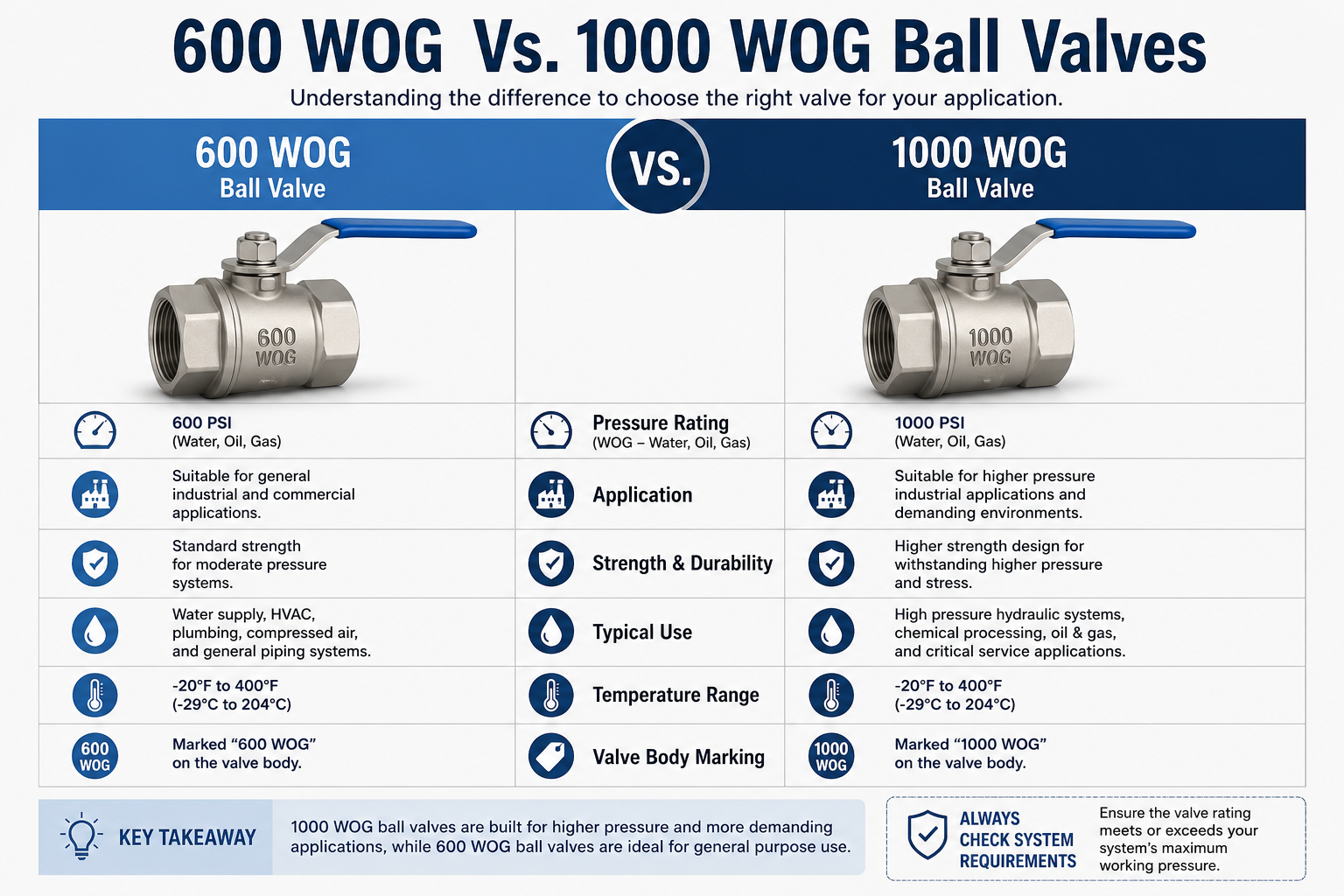
Ensure working pressure matches your system (typically 600–1000 PSI).
-
Check temperature tolerance based on media and environment.
3. Port Size and Flow Requirements
-
Common sizes: 1/8", 1/4", 3/8", 1/2".
-
Larger ports allow higher flow efficiency.
4. Connection Type
Choose based on system requirements:
-
NPT/BSP thread
-
Compression fitting
-
Hose barb
-
Push-to-connect
Mini Ball Valve vs Standard Ball Valve
| Feature | Mini Ball Valve | Standard Ball Valve |
|---|---|---|
| Size | Small and compact | Larger and heavier |
| Flow Capacity | Moderate | Higher |
| Best Application | Confined spaces | High-flow industrial pipelines |
| Cost | Lower | Medium to high |
Mini ball valves are ideal when space, efficiency, and quick shutoff are priority.
Conclusion
A mini ball valve is a compact, efficient, and highly reliable component for controlling flow in small-diameter pipelines and confined installations. With excellent sealing performance, easy manual operation, and compatibility with various fluids, it has become a key choice for plumbing, instrumentation, pneumatic systems, chemical processing, and more.
If you want to learn more about low-priced products, please visit the following website: www.xm-valveactuator.com