In food processing plants, pharmaceutical labs, and beverage factories, one piece of equipment quietly ensures product safety and operational efficiency: the sanitary ball valve. Unlike industrial valves designed for raw materials, sanitary ball valves are engineered to meet strict hygiene standards—eliminating dead zones, resisting corrosion, and enabling thorough cleaning. This article breaks down what makes these valves essential, how they work, and why they’re non-negotiable for sensitive industries.
What Is a Sanitary Ball Valve?
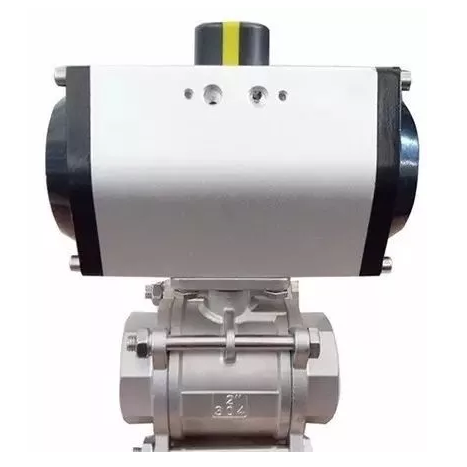
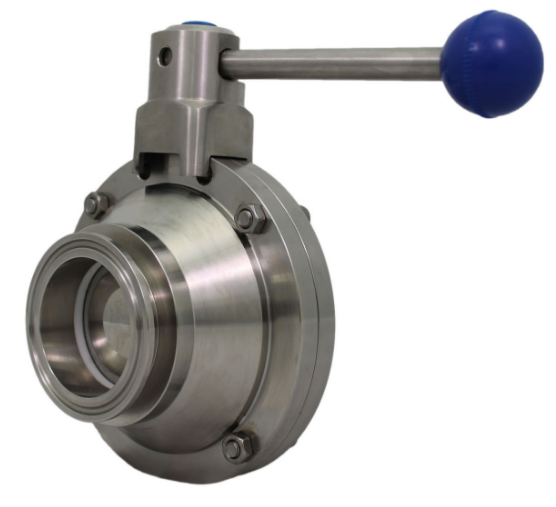
A sanitary ball valve is a quarter-turn valve used to regulate flow in systems where contamination risk is zero-tolerance. Its core design mirrors industrial ball valves (a rotating ball with a central bore), but every component is optimized for hygiene: smooth surfaces, crevice-free construction, and materials that withstand aggressive cleaning.
Think of it as the "stainless steel workhorse" of clean manufacturing—no cracks, no hidden corners, just precision flow control.
Key Hygienic Design Features
Sanitary valves aren’t just "clean-looking"—they’re built to prevent bacterial growth and simplify sanitization:
- Crevice-Free Construction: Welded or clamp-on connections replace threaded joints, eliminating gaps where food particles or bacteria could hide.
- Ra ≤ 0.8 μm Surface Finish: The internal surfaces are polished to a mirror-like smoothness (measured by roughness average, Ra), so residues don’t stick.
- Full-Drain Design: Valves are mounted at an angle or have sloped bodies to ensure complete drainage during cleaning—critical for avoiding cross-contamination between batches.
- 3A & EHEDG Compliance: Certifications from organizations like 3-A Sanitary Standards or the European Hygienic Engineering & Design Group confirm the valve meets global hygiene benchmarks.
How Does It Work?
The operation is intuitive, even for new operators:
- Open Position: Rotating the handle 90° aligns the ball’s bore with the pipeline, letting product flow freely (minimal pressure drop means no energy waste).
- Closed Position: A quarter-turn in the opposite direction rotates the ball perpendicular to the flow, blocking the passage with its solid hemisphere.
- Sealing: Most sanitary valves use live-loaded PTFE seats—spring-loaded seals that press against the ball, ensuring a tight fit even as temperatures or pressures fluctuate.
Material Selection: The Hygiene-First Approach
The right materials prevent corrosion, resist cleaning chemicals, and avoid leaching into products:
| Component | Common Materials | Why It Matters |
|---|---|---|
| Body | 316L Stainless Steel | Higher nickel content than 304 stainless steel, resisting chloride corrosion (e.g., from salt in food). |
| Ball | 316L Stainless Steel | Polished to Ra ≤ 0.4 μm for ultra-smooth flow and easy cleaning. |
| Seats | PTFE, EPDM, or Silicone | PTFE is chemical-resistant (ideal for CIP/SIP); EPDM handles high temperatures (up to 150°C). |
| Gaskets | Silicone or FKM (Viton) | Silicone is food-safe; FKM resists oils and acids in pharmaceutical applications. |
Critical Note: Avoid carbon steel or uncoated metals—they can rust, flake, and contaminate products.
Where Are Sanitary Ball Valves Used?
Their versatility spans industries where purity is non-negotiable:
- Food & Beverage: Controlling flow of milk, juice, or sauces in pasteurization lines; the full-drain design prevents sour milk buildup.
- Pharmaceuticals: Regulating API (active pharmaceutical ingredient) transfer or sterile water for injection (WFI) systems—compliant with FDA 21 CFR Part 11.
- Biotechnology: Handling cell cultures or fermentation broths; smooth surfaces prevent damage to sensitive microorganisms.
- Cosmetics: Mixing lotions or creams where cross-contamination between scents or ingredients would ruin batches.
In a craft brewery, sanitary ball valves control the flow of wort (unfermented beer) between tanks. After each batch, the valves are cleaned with CIP (Clean-in-place) systems—high-pressure hot water and caustic soda—without disassembly.
Technical Advantages Over Traditional Valves
Sanitary ball valves outperform gate or globe valves in clean environments for three key reasons:
- Faster Cleaning: No disassembly needed for CIP/SIP—saving 2–3 hours per batch changeover.
- Longer Lifespan: 316L stainless steel resists corrosion from acidic products (e.g., tomato sauce) or alkaline cleaners, lasting up to 10 years with proper care.
- Precise Control: Quarter-turn operation means operators can open/close the valve in seconds, reducing human error (e.g., over-tightening that damages seals).
Maintenance Tips for Peak Performance
Even the best valves fail without regular care—here’s how to keep them hygienic:
- Daily: Flush the valve with warm water after use to remove residue (critical for sticky products like honey or syrup).
- Weekly: Inspect seals for wear—cracked PTFE seats can cause micro-leaks that contaminate batches. Replace seats every 6–12 months, depending on usage.
- Quarterly: Check clamp connections for tightness—loose clamps create crevices where bacteria grow.
- Annually: Send valves for a professional polish if the surface finish degrades (Ra > 1.6 μm means residues will start sticking).
Final Thoughts
Sanitary ball valves aren’t just "valves with a polish"—they’re the foundation of safe, efficient clean manufacturing. Whether you’re bottling organic juice or producing life-saving drugs, these valves ensure every batch meets quality standards. The next time you see a stainless steel clamp on a factory line, remember: it’s not just a connection—it’s a promise of purity.
For more insights on hygienic equipment, follow our blog or reach out to our team for custom valve solutions tailored to your process.
If you want to learn more about low-priced products, please visit the following website: www.xm-valveactuator.com