A solenoid valve coil is the electromagnetic component that powers a solenoid valve and enables precise fluid control in industrial automation systems. Whether used in pneumatic systems, hydraulic equipment, water treatment plants, irrigation systems, or process control applications, the solenoid coil is responsible for converting electrical energy into mechanical motion that opens or closes the valve.
Selecting the correct solenoid valve coil is critical for ensuring reliable operation, energy efficiency, long service life, and safe performance under demanding operating conditions. This guide explains how solenoid valve coils work, their construction, types, voltage options, common applications, and key factors to consider when choosing the right coil.
- What is a solenoid valve coil?
- How a solenoid coil works
- Main components and construction
- AC vs DC solenoid valve coils
- Voltage ratings and power consumption
- Industrial applications
- Troubleshooting common coil problems
- How to select the right coil
What Is a Solenoid Valve Coil?
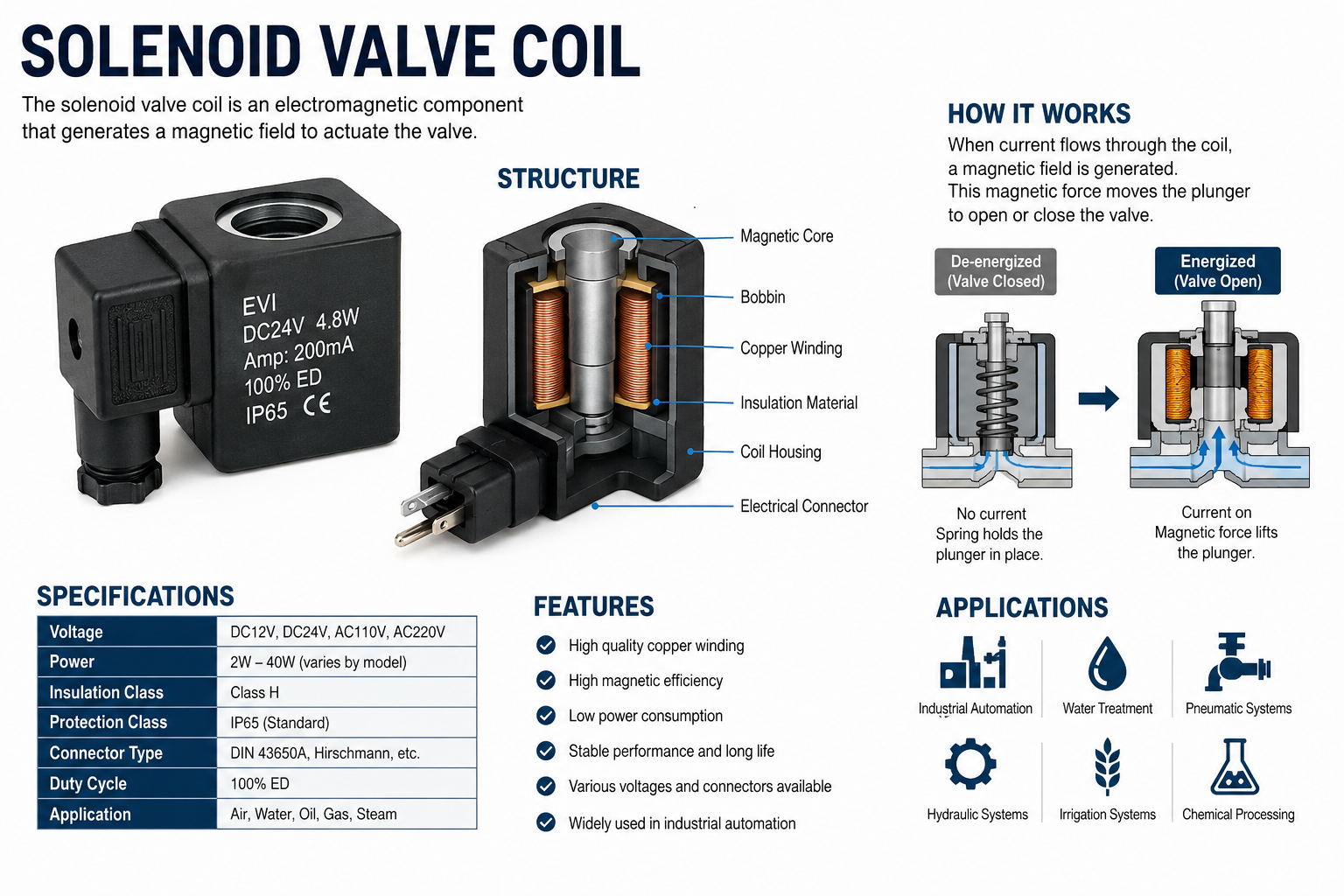
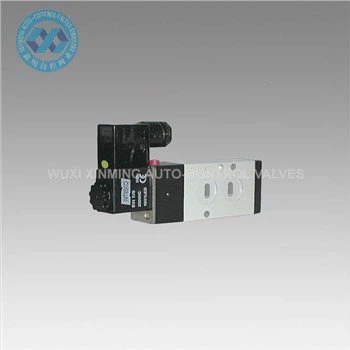
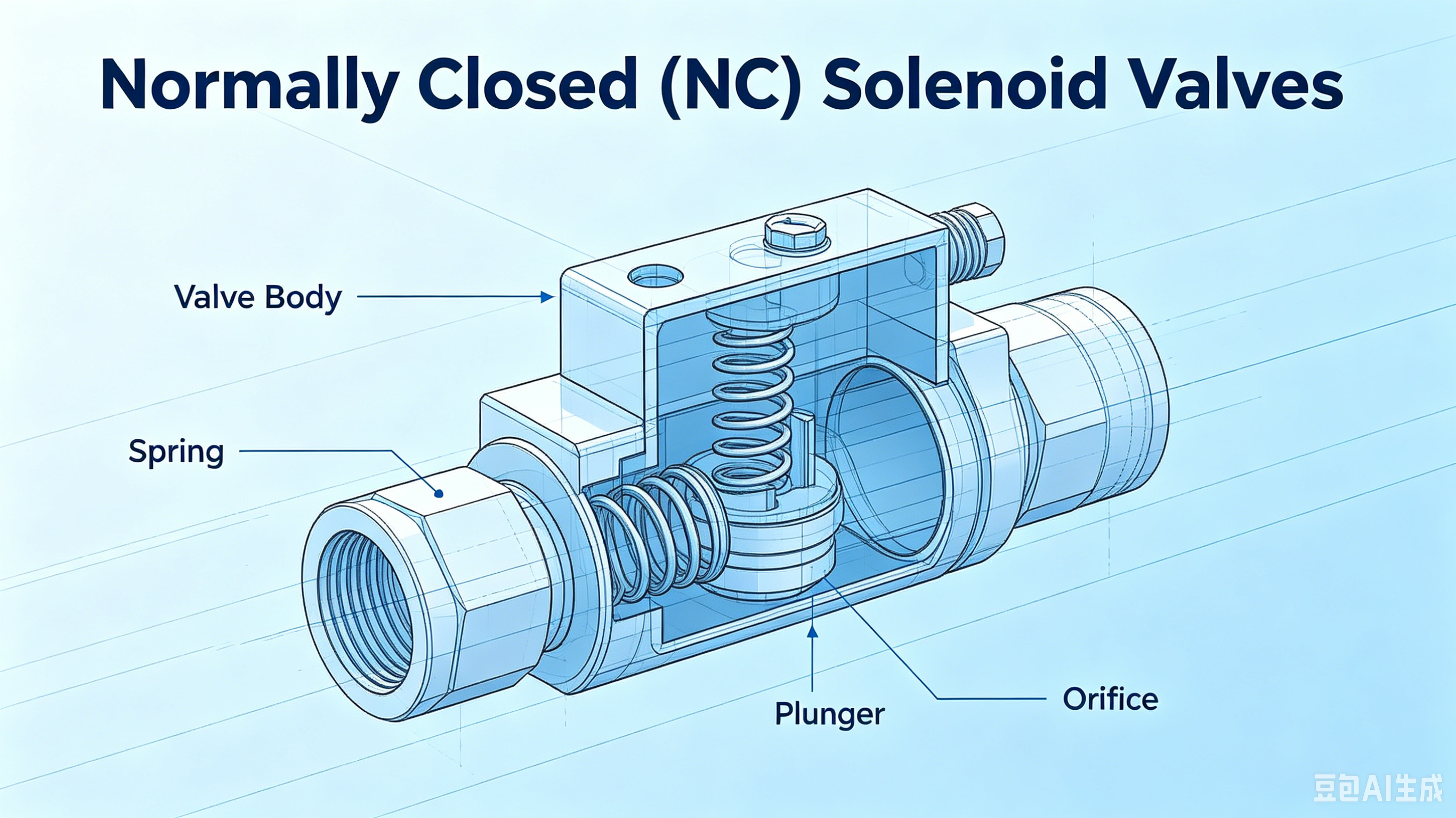
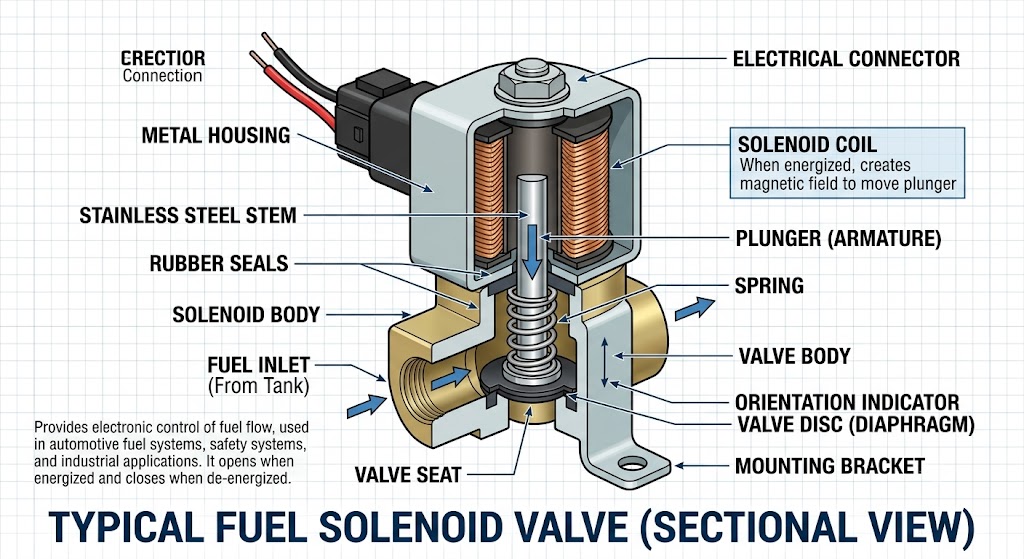
A solenoid valve coil is an electromagnetic winding made of insulated copper wire wrapped around a bobbin. When electrical current passes through the coil, it generates a magnetic field that attracts a movable plunger or armature inside the valve assembly.
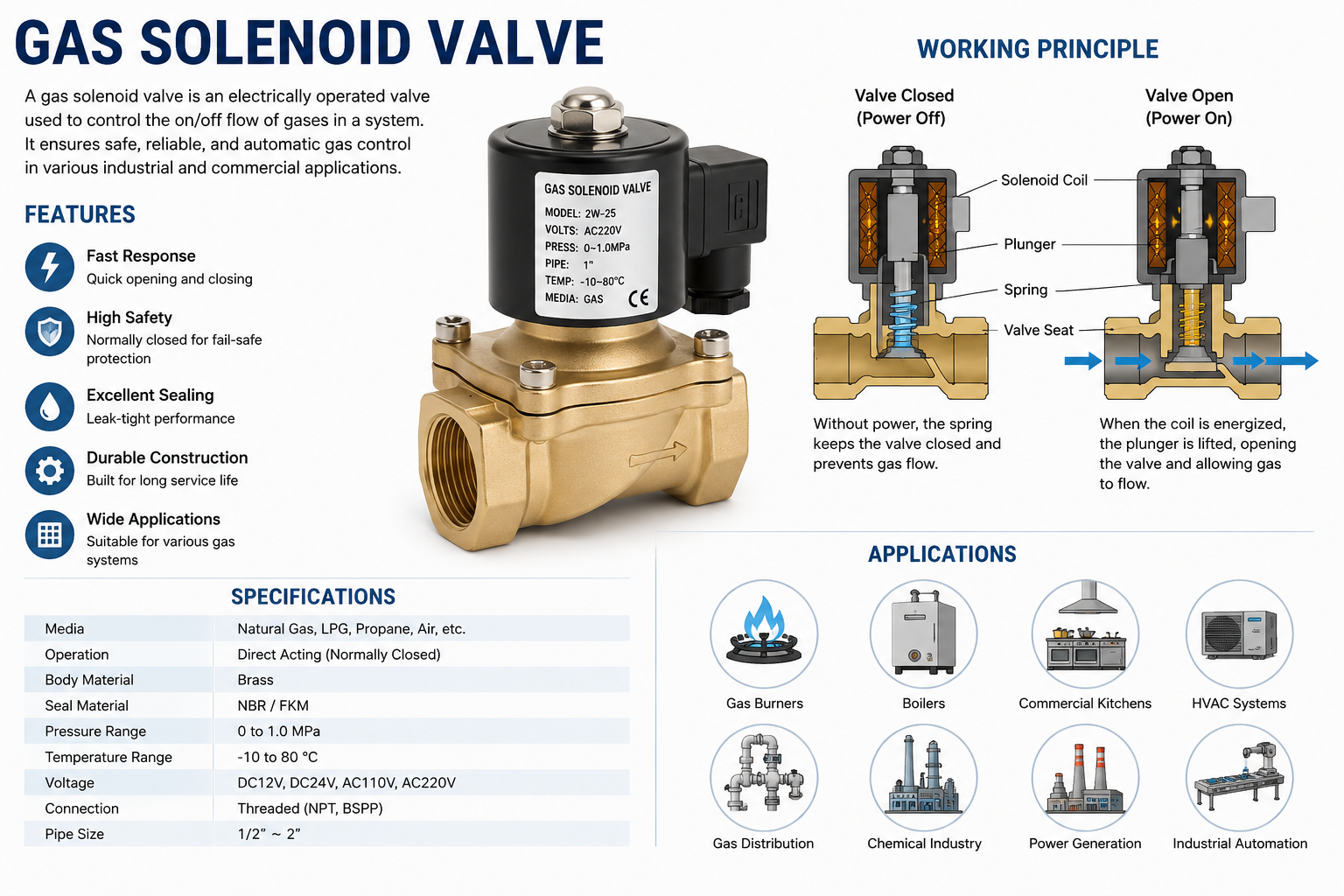
The movement of the plunger changes the valve position, allowing fluid, air, gas, steam, oil, or water to flow through the system. When power is removed, a spring returns the plunger to its original position, restoring the valve's normal state.
The coil itself does not directly control the fluid. Instead, it creates the magnetic force needed to actuate the valve mechanism.
How Does a Solenoid Valve Coil Work?
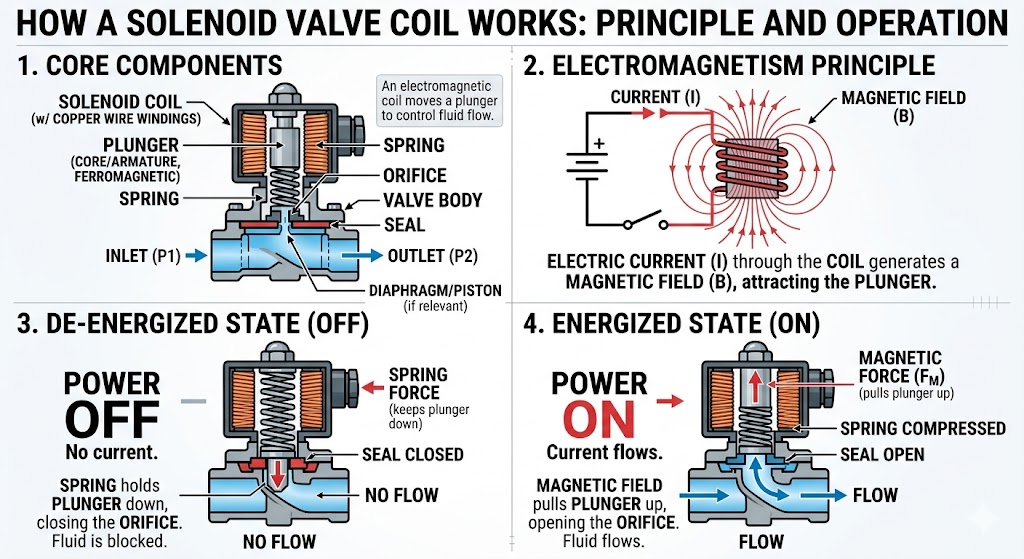
The operating principle of a solenoid valve coil is based on electromagnetism.
- Electrical power is supplied to the coil.
- Current flows through the copper winding.
- A magnetic field is generated around the coil.
- The magnetic force pulls the ferromagnetic plunger upward.
- The valve opens or closes depending on its design.
- When power is disconnected, the spring returns the plunger to its original position.
This simple yet highly effective mechanism allows solenoid valves to provide fast and accurate flow control with minimal moving parts.
Main Components of a Solenoid Valve Coil
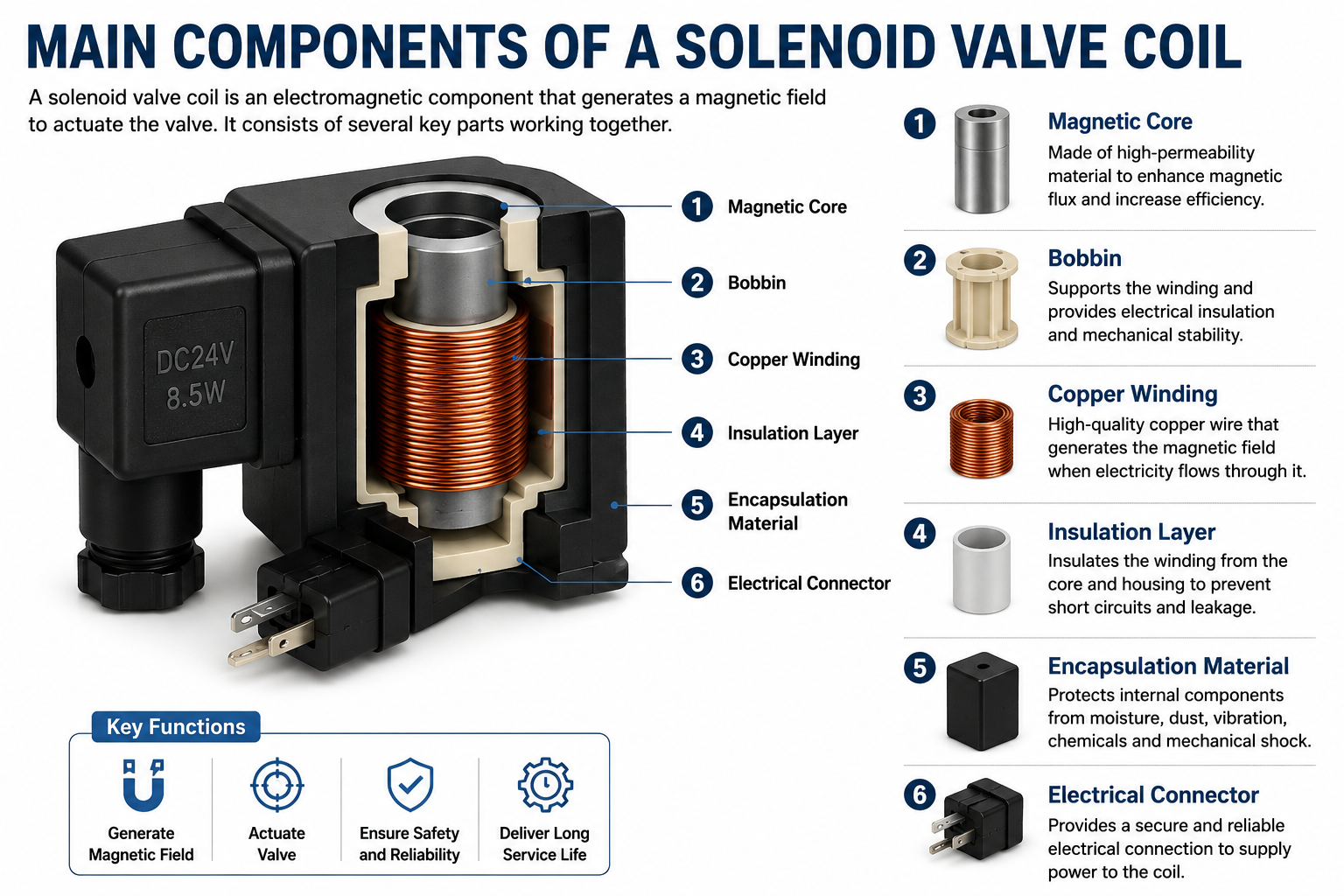
A standard solenoid valve coil consists of several important components:
| Component | Function |
|---|---|
| Copper Winding | Generates the magnetic field when energized |
| Bobbin | Supports and insulates the winding |
| Encapsulation Material | Protects the coil from moisture, dust, and vibration |
| Electrical Connector | Provides power connection to the coil |
| Magnetic Core | Enhances magnetic flux efficiency |
| Insulation Layer | Prevents short circuits and overheating |
Types of Solenoid Valve Coils
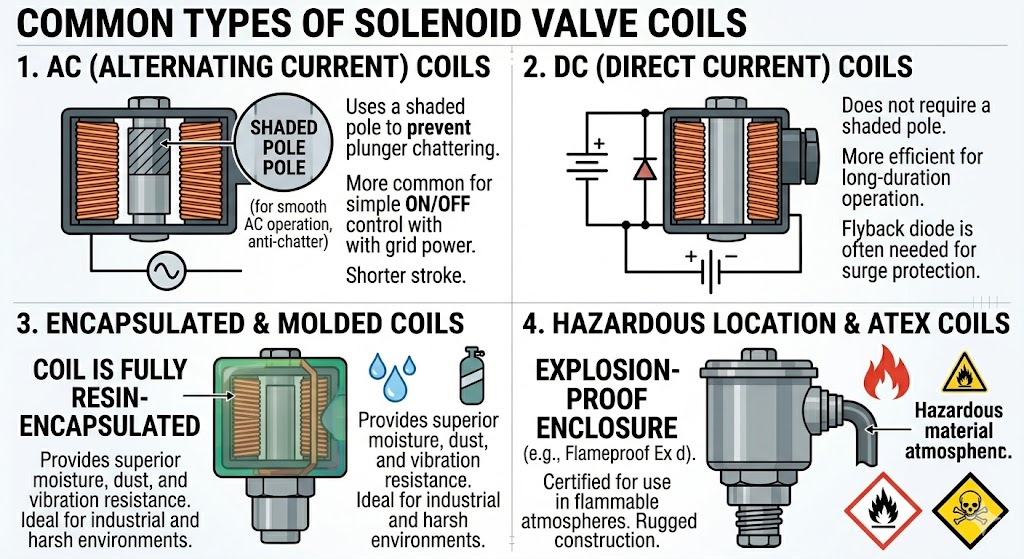
1. AC Solenoid Valve Coil
AC coils operate using alternating current, commonly at 24VAC, 110VAC, 120VAC, 220VAC, or 240VAC.
Advantages:
- High starting force
- Suitable for industrial power systems
- Widely available
Limitations:
- Higher operating temperature
- May generate audible humming
- Sensitive to voltage fluctuations
2. DC Solenoid Valve Coil
DC coils use direct current and are commonly available in 12VDC, 24VDC, and 48VDC versions.
Advantages:
- Low power consumption
- Quiet operation
- Long service life
- Excellent for battery-powered systems
Limitations:
- Slightly lower initial magnetic force
- Requires DC power supply
Common Solenoid Valve Coil Voltage Ratings
| Voltage | Current Type | Typical Application |
|---|---|---|
| 12V | DC | Mobile equipment, vehicles |
| 24V | DC | Industrial automation and PLC systems |
| 48V | DC | Specialized industrial equipment |
| 24V | AC | Irrigation systems and HVAC |
| 110V / 120V | AC | Commercial equipment |
| 220V / 240V | AC | Industrial process systems |
Solenoid Valve Coil Power Consumption
The power consumption of a solenoid valve coil depends on its voltage, resistance, and design.
| Coil Type | Typical Power Range |
|---|---|
| Miniature Solenoid Coil | 2W – 5W |
| Standard Pneumatic Coil | 3W – 8W |
| Water Valve Coil | 6W – 15W |
| Hydraulic Valve Coil | 15W – 40W |
| High-Pressure Industrial Coil | 20W – 60W |
Modern energy-saving coils can significantly reduce power consumption while maintaining sufficient magnetic force.
Industrial Applications of Solenoid Valve Coils
Solenoid valve coils are used across numerous industries due to their reliability and rapid response characteristics.
Pneumatic Automation
- Air cylinders
- Pneumatic actuators
- Compressed air systems
- Valve manifolds
Water Treatment Systems
- Filtration equipment
- Water distribution systems
- Reverse osmosis plants
- Chemical dosing systems
Industrial Process Control
- Chemical processing
- Food and beverage production
- Pharmaceutical manufacturing
- Oil and gas facilities
Irrigation Systems
- Sprinkler control systems
- Agricultural water management
- Landscape irrigation networks
Factors Affecting Solenoid Valve Coil Performance
Several operating conditions influence coil efficiency and lifespan:
- Voltage Stability: Undervoltage may prevent valve operation.
- Ambient Temperature: High temperatures increase coil resistance.
- Duty Cycle: Continuous operation requires proper thermal design.
- Ingress Protection: Moisture and dust protection are essential.
- Frequency: AC coil performance depends on power frequency.
- Ventilation: Adequate cooling prevents overheating.
Common Solenoid Valve Coil Problems and Troubleshooting
Coil Not Energizing
Possible Causes:
- Power supply failure
- Broken wiring
- Burned-out coil winding
- Loose electrical connections
Coil Overheating
Possible Causes:
- Incorrect voltage supply
- Continuous duty overload
- Poor ventilation
- Excessive ambient temperature
Valve Does Not Shift
Possible Causes:
- Stuck plunger
- Contaminated valve internals
- Insufficient magnetic force
- Damaged spring mechanism
Intermittent Operation
Possible Causes:
- Voltage fluctuations
- Loose connectors
- Thermal overload protection activation
- Aging coil insulation
How to Select the Right Solenoid Valve Coil
Choosing the correct solenoid valve coil requires evaluating both electrical and environmental requirements.
- Select the correct voltage rating.
- Verify AC or DC compatibility.
- Check power consumption requirements.
- Match connector type and wiring configuration.
- Confirm duty cycle requirements.
- Choose suitable insulation class.
- Verify IP protection rating.
- Consider ambient temperature conditions.
- Ensure compatibility with the valve body.
Frequently Asked Questions (FAQ)
What causes a solenoid valve coil to burn out?
Common causes include overvoltage, excessive heat, continuous overload, poor ventilation, moisture ingress, and insulation degradation.
Can a solenoid valve coil be replaced?
Yes. Most industrial solenoid valves are designed with replaceable coils, allowing maintenance without replacing the entire valve.
Which is better, AC or DC solenoid coils?
DC coils are generally quieter and more energy-efficient, while AC coils provide stronger initial magnetic force and are commonly used in industrial facilities.
How long does a solenoid valve coil last?
A properly installed and maintained coil can operate reliably for millions of cycles and many years of continuous service.
What is the most common solenoid valve coil voltage?
24VDC is one of the most widely used voltages in industrial automation because it integrates easily with PLC and control systems.
Conclusion
The solenoid valve coil is the heart of any solenoid valve system, providing the electromagnetic force required for rapid and reliable flow control. Understanding coil construction, voltage options, power requirements, and environmental considerations helps engineers select the most suitable solution for industrial automation, pneumatic systems, hydraulic equipment, water treatment plants, and process control applications.
By choosing a properly rated solenoid valve coil and following good maintenance practices, users can maximize system reliability, reduce downtime, improve energy efficiency, and extend equipment service life.
If you want to learn more about low-priced products, please visit the following website: www.xm-valveactuator.com