What Is a Wafer Butterfly Valve?
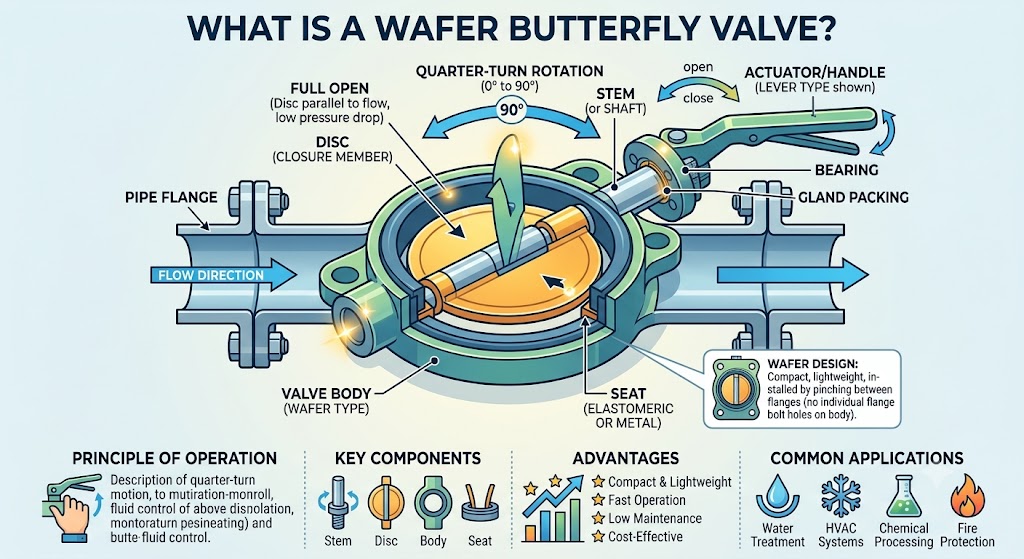
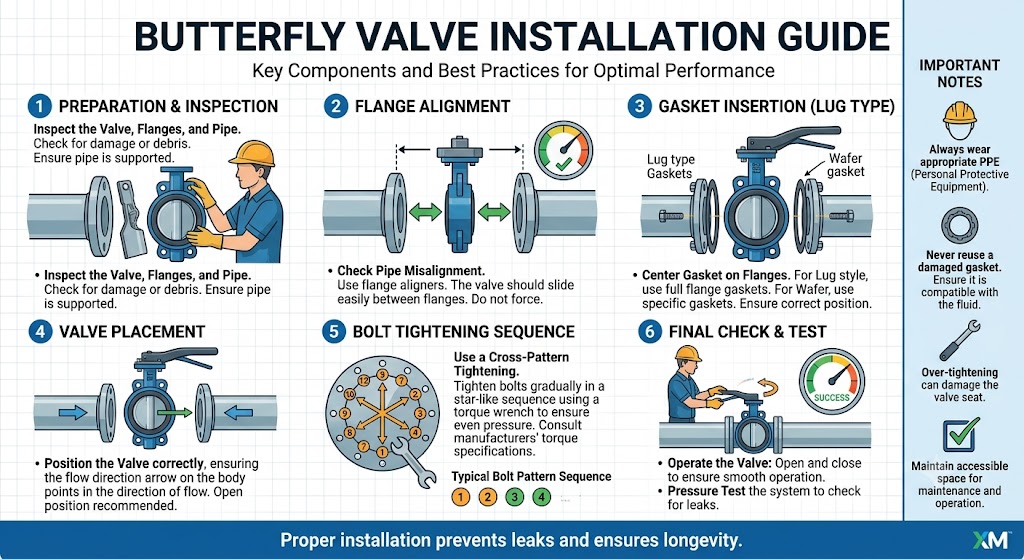
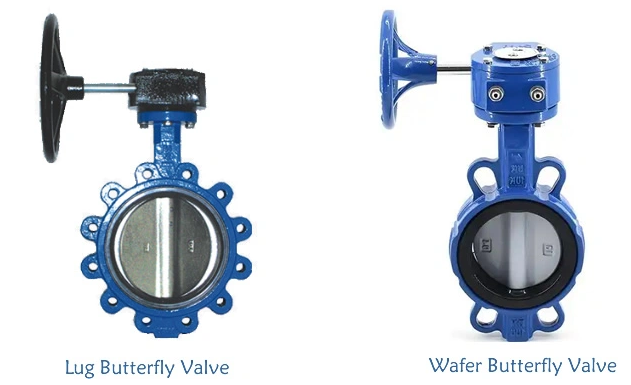
A wafer butterfly valve is designed to fit between two pipe flanges. It is held in place by long bolts that pass through both flanges and the valve body.
Key Characteristics
- Installed between two flanges
- Bolts run through the entire assembly
- Typically lighter and more compact
- Usually more cost-effective
Installation Method
The wafer valve is sandwiched between flanges, and bolts from one flange extend to the other flange, securing the valve in place.
Advantages of Wafer Butterfly Valves
- Lower cost
- Compact and lightweight design
- Easy installation
- Suitable for space-limited systems
Typical Applications
Wafer butterfly valves are commonly used in:
- Water supply systems
- HVAC systems
- Chemical pipelines
- Irrigation systems
- Low to medium pressure applications
What Is a Lug Butterfly Valve?
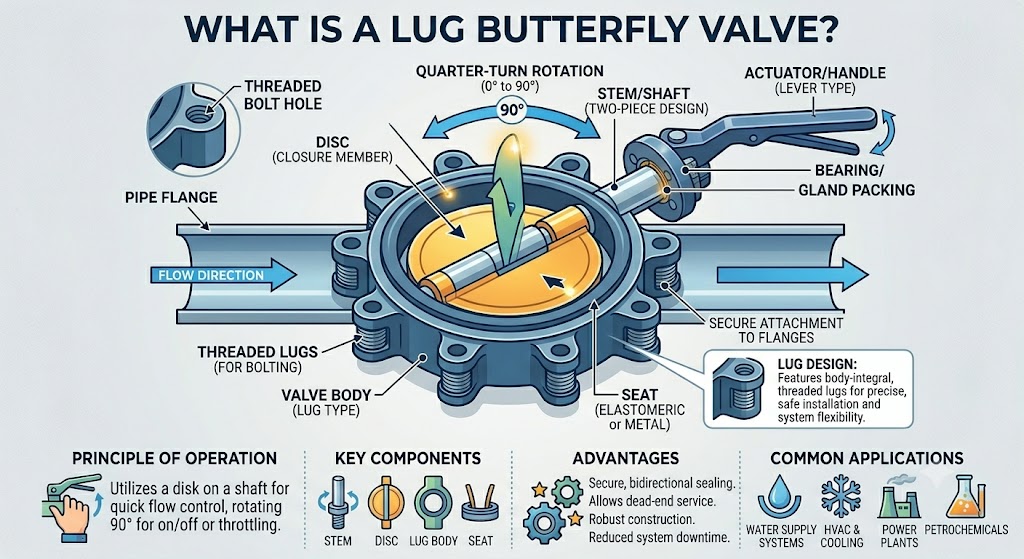
A lug butterfly valve features threaded inserts (lugs) on the valve body. These lugs allow the valve to be bolted directly to each flange independently.
Key Characteristics
- Threaded lug holes around the valve body
- Each flange is bolted separately
- Allows one side of the pipeline to be removed without disturbing the other
Installation Method
Each pipe flange is connected using separate bolts that screw directly into the valve body lugs, instead of passing through both flanges.
Advantages of Lug Butterfly Valves
- Pipeline section can be isolated
- Easier maintenance
- Better for end-of-line service
- More stable installation
Typical Applications
Lug butterfly valves are commonly used in:
- Industrial process pipelines
- Oil and gas systems
- Chemical processing plants
- High-maintenance systems
- Applications requiring frequent valve removal
Lug vs Wafer Butterfly Valve: Key Differences
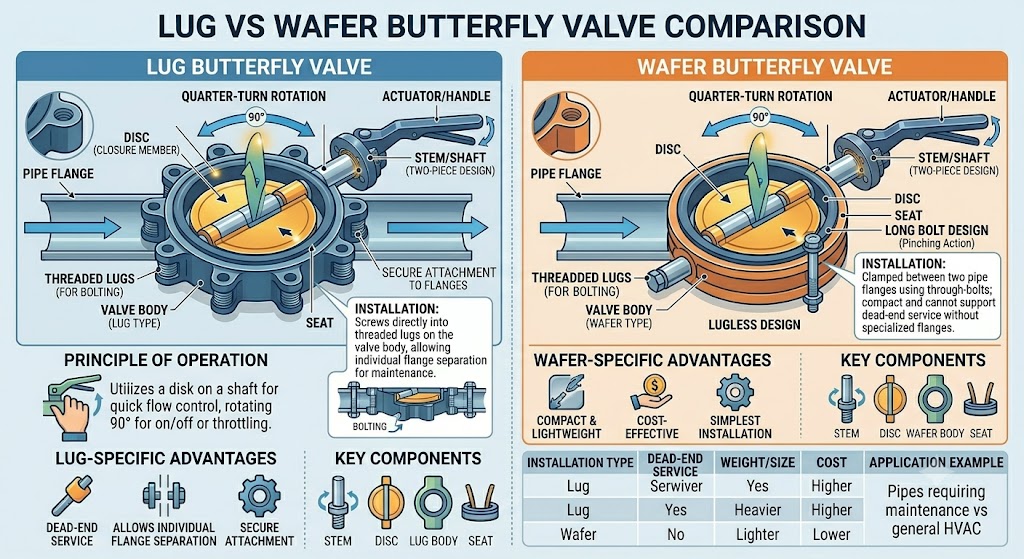
The main differences between lug and wafer butterfly valves lie in installation design, maintenance flexibility, and cost.
| Feature | Wafer Butterfly Valve | Lug Butterfly Valve |
|---|---|---|
| Installation | Sandwiched between two flanges | Bolted directly to each flange |
| Bolt Design | Bolts pass through both flanges | Bolts screw into valve body lugs |
| Maintenance | Both sides must be disconnected | One side can be removed independently |
| Weight | Lighter | Slightly heavier |
| Cost | Lower | Higher |
| End-of-Line Service | Not recommended | Suitable |
| Structural Strength | Moderate | Higher |
Which One Should You Choose?
Choosing between a lug vs wafer butterfly valve depends on your system requirements, maintenance needs, and budget.
Choose a Wafer Butterfly Valve If:
- Cost reduction is important
- Space is limited
- The pipeline does not require frequent disassembly
- The system operates under moderate pressure
Choose a Lug Butterfly Valve If:
- The pipeline requires regular maintenance
- One side of the pipe may need to be removed or isolated
- The valve is used for end-of-line service
- Stronger mechanical connection is required
Pressure Rating and Performance
Both lug and wafer butterfly valves can be manufactured with similar pressure ratings and materials, including:
- Cast iron
- Ductile iron
- Stainless steel
- Carbon steel
Common sealing materials include:
- EPDM
- PTFE
- NBR
- Viton
Performance depends more on the seat design and materials rather than the connection type.
Actuation Options
Both valve types can be operated manually or automatically. Common actuation options include:
- Manual lever
- Gear operator
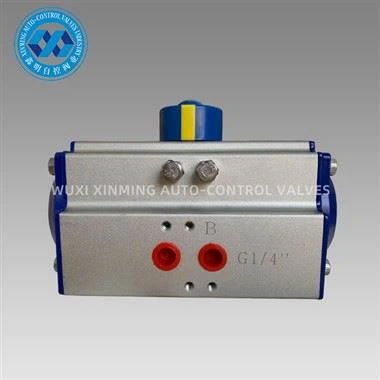
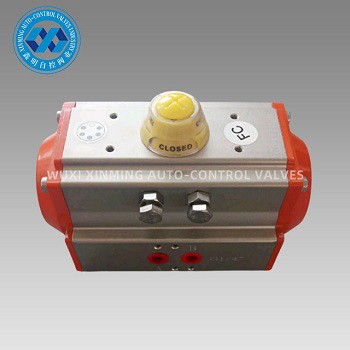
- Pneumatic actuator
- Electric actuator
- Hydraulic actuator
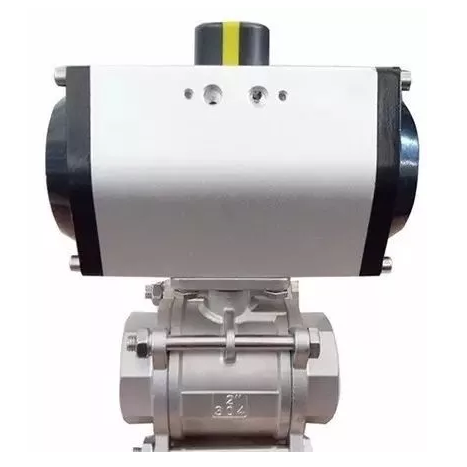
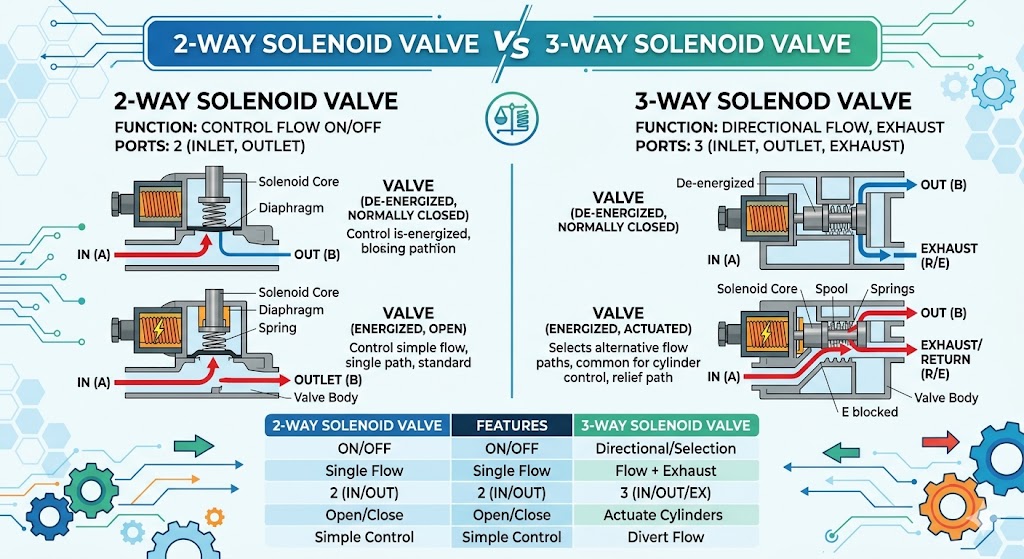
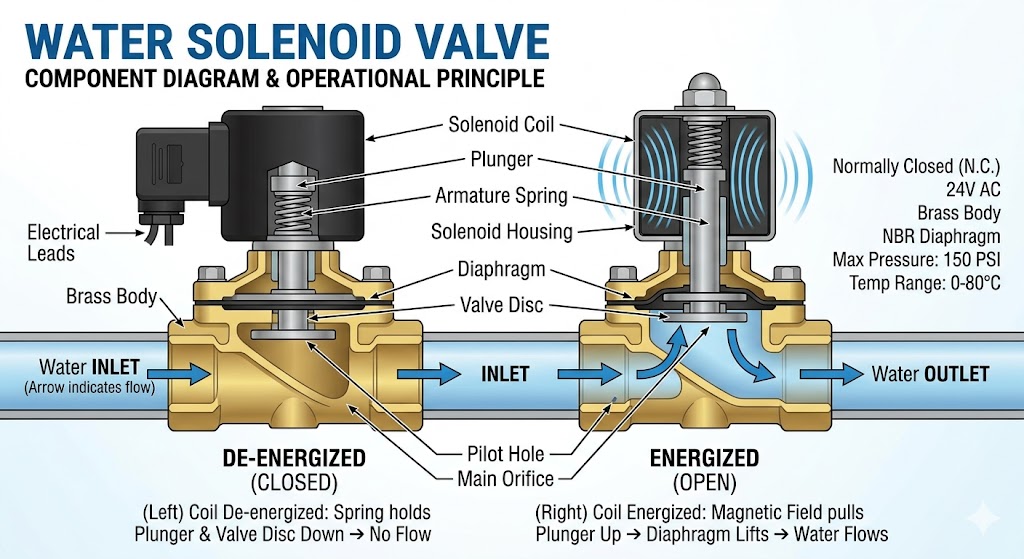
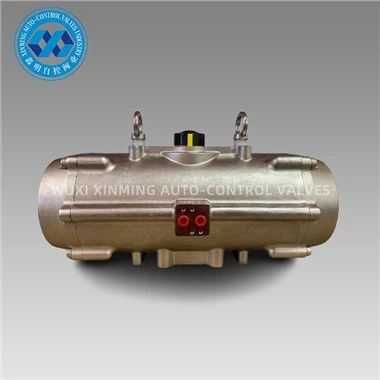
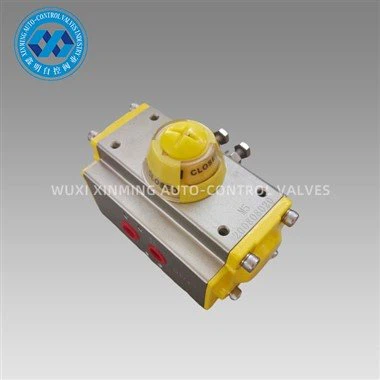
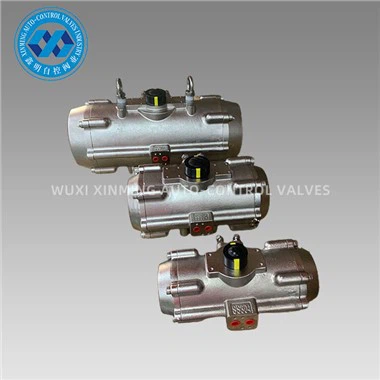
In automated systems, butterfly valves are often paired with pneumatic actuators or electric actuators to enable remote control and process automation.
Common Industries Using Lug and Wafer Butterfly Valves
These valves are widely used across many industries due to their versatility and reliability.
Key industries include:
- Water treatment plants
- Oil and gas
- Chemical processing
- Power generation
- Marine systems
- Food and beverage
- Pharmaceutical manufacturing
Their compact structure makes them ideal for large-diameter pipelines where space and weight are critical factors.
Maintenance Considerations
Proper maintenance helps extend the lifespan of butterfly valves.
Recommended Maintenance Practices
- Regularly inspect seals and seats
- Check for shaft wear or leakage
- Verify actuator performance
- Clean the valve to prevent debris buildup
Lug butterfly valves generally offer easier maintenance, because one side of the pipeline can be removed without shutting down the entire system.
Conclusion
Both lug butterfly valves and wafer butterfly valves serve the same basic function but differ significantly in installation structure and maintenance flexibility.
- Wafer butterfly valves are lightweight, compact, and cost-effective, making them ideal for standard pipeline installations.
- Lug butterfly valves provide stronger connections and allow for easier pipeline maintenance, making them suitable for more demanding industrial environments.
When selecting between the two, consider factors such as pipeline design, service conditions, maintenance requirements, and budget. Choosing the right butterfly valve type will ensure reliable performance and long-term operational efficiency.
If you want to learn more about low-priced products, please visit the following website: www.xm-valveactuator.com