In the world of fluid dynamics and industrial piping, valves are the unsung heroes that dictate the "where," "when," and "how much" of flow. Choosing between a Two-Way and a Three-Way valve isn't just a matter of counting ports; it's about understanding the specific logic of your system's architecture.
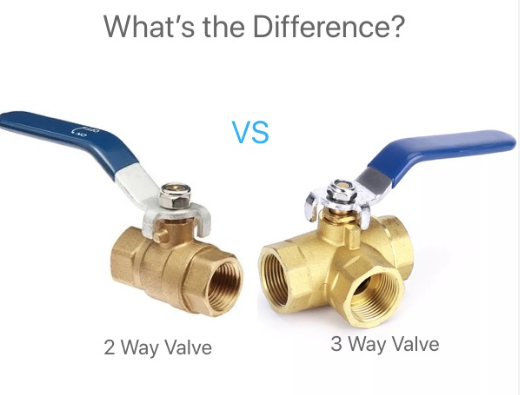
1. Two-Way Valves: The Precision of Binary Control
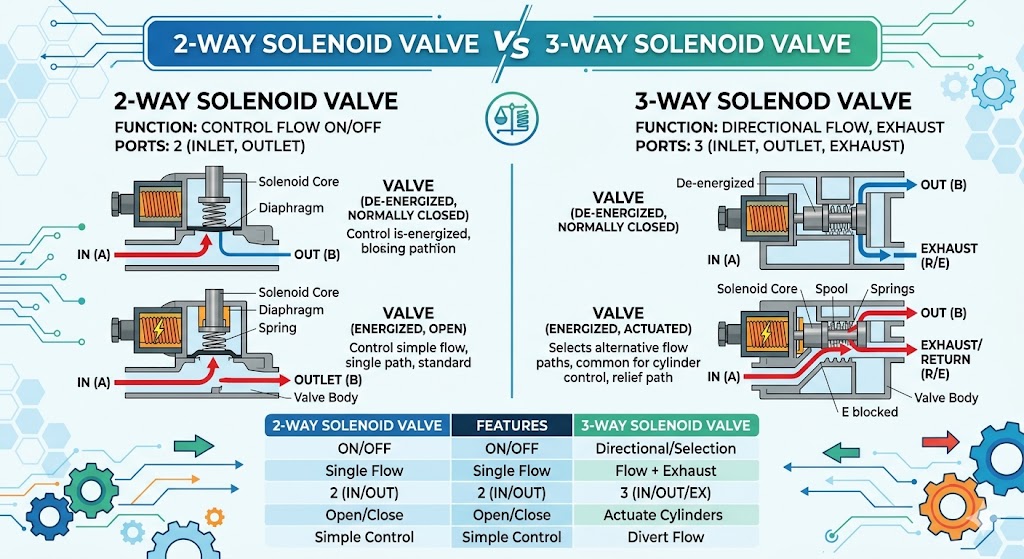
A two way valve is the most fundamental component in fluid handling. It features two ports—an inlet and an outlet. Its primary function is simple: Isolation. It is either open to allow flow or closed to stop it.
-
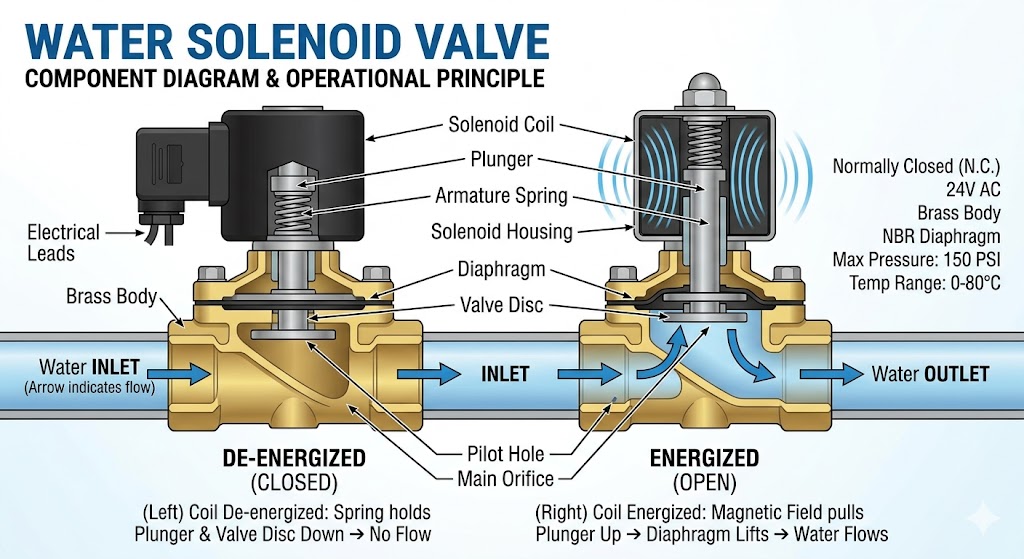
Operation: These valves are typically "on/off." In automated systems, they are often designated as Normally Open (NO) or Normally Closed (NC).
-
Common Types: Ball valves, gate valves, and globe valves.
-
Best Use Cases:
-
Safety shut-off systems.
-
Simple liquid transfer lines.
-
Variable flow systems where a pump's speed handles the pressure, and the valve simply acts as a gatekeeper.
-
Key Takeaway: If your goal is simply to start or stop a process, the two-way valve is your most cost-effective and reliable friend.
2. Three-Way Valves: The Architects of Directional Flow
While two-way valves handle "if" flow happens, three-way valves handle "where" it goes. With three ports, these valves offer multi-directional control that can replace multiple two-way valves and complex piping.
Mixing vs. Diverting
Three-way valves generally operate in two distinct modes:
-
Mixing: Two inlet streams are combined into one outlet stream. This is common in HVAC systems to reach a specific water temperature.
-
Diverting: One inlet stream is directed to one of two different outlets. This is used to bypass a piece of equipment (like a heat exchanger) or to switch between different processing tanks.
Internal Configurations: L-Port vs. T-Port
-
L-Port (Divertor): The internal ball is drilled in an "L" shape. It connects the center port to either the left or right port, but never all three at once.
-
T-Port (Multi-port): The internal ball has a "T" shape. This allows for mixing or even allowing flow to all three ports simultaneously, providing maximum flexibility.
3. Comparison at a Glance
| Feature | Two-Way Valve | Three-Way Valve |
|---|---|---|
| Port Count | 2 (Inlet/Outlet) | 3 (Inlet/Outlet/Bypass) |
| Primary Function | Shut-off / Throttling | Mixing / Diverting / Bypassing |
| Complexity | Low | Moderate to High |
| Cost | Generally lower | Higher, but reduces pipe fittings |
| System Footprint | Small | Replaces multiple valves/tees |
4. Selection Criteria: Which One Do You Need?
Choosing the right valve requires more than just looking at your blueprints. Consider the following professional benchmarks:
-
System Pressure: Three-way valves can sometimes cause a higher pressure drop across the valve compared to a straight-through two-way valve.
-
Control Logic: If you need to maintain a constant flow in a primary loop while bypassing a secondary loop (common in boiler systems), a Three-Way Diverting Valve is essential.
-
Budget vs. Complexity: A three-way valve is more expensive upfront. However, it often eliminates the need for extra T-junctions, elbows, and additional two-way actuators, which can lower the Total Cost of Ownership (TCO).
Conclusion
Understanding the distinction between these two valve types is critical for efficient system design. The Two-Way valve provides the reliability of simple isolation, while the Three-Way valve provides the sophistication of fluid routing and temperature modulation. In modern engineering, the goal is rarely just "moving fluid"—it's about managing energy and pressure with the least amount of hardware possible.
If you want to learn more about low-priced products, please visit the following website: www.xm-valveactuator.com