In the world of flow control, the butterfly valve is often celebrated as the "workhorse." Its compact design, quarter-turn operation, and cost-effectiveness make it a go-to choice across industries ranging from water treatment to oil and gas.
However, not all butterfly valves are created equal. Choosing the wrong type can lead to premature wear, leakage, or even catastrophic system failure. This guide breaks down the essential butterfly valve types and provides a side-by-side comparison to help you make an informed decision.
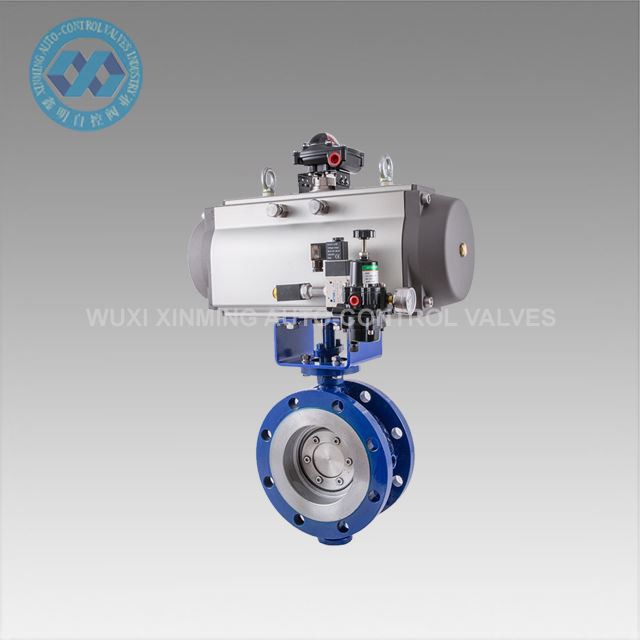
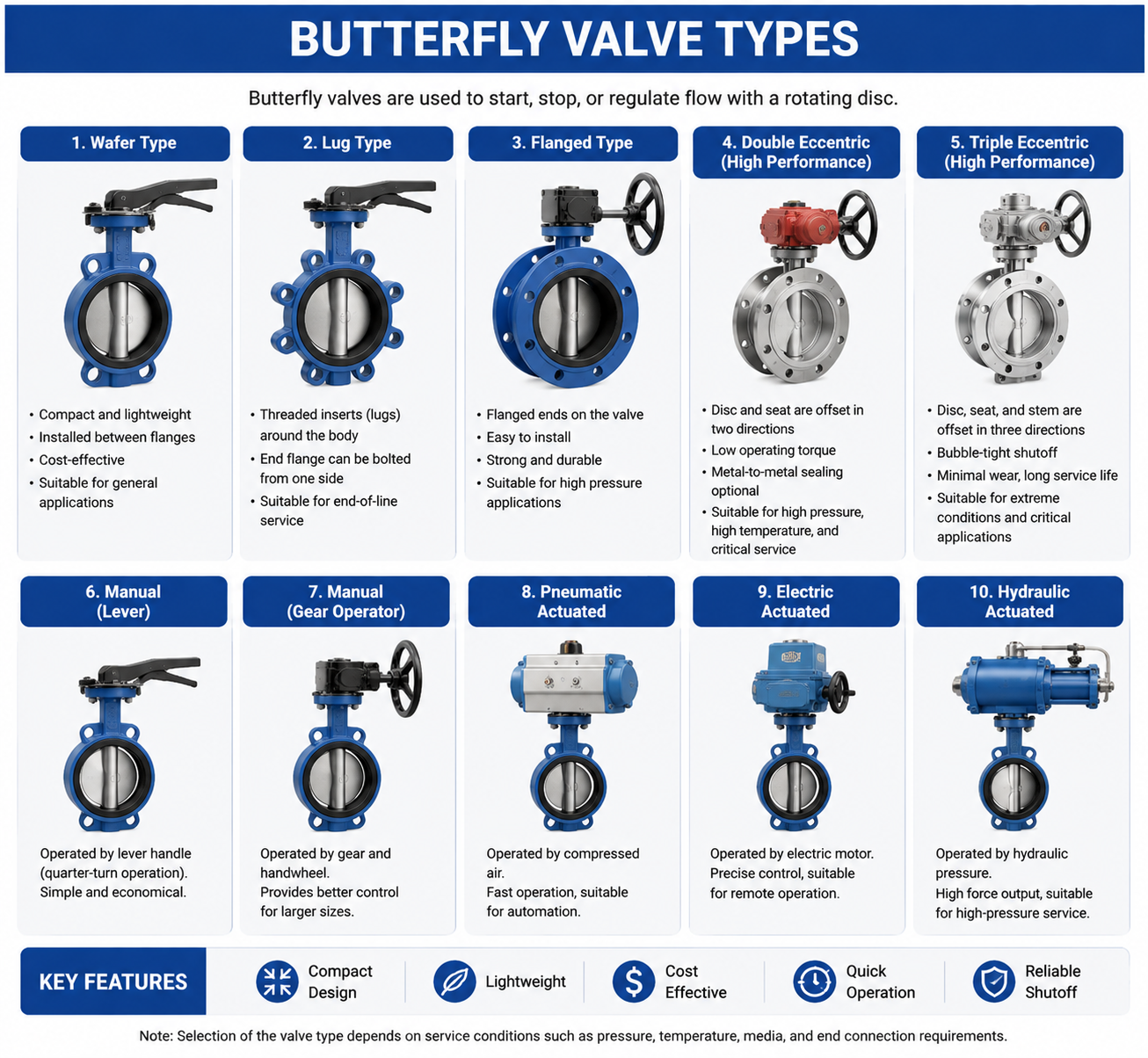
1. Classification by Design Configuration
The most critical way to categorize butterfly valves is by the orientation of the stem relative to the disc and the seat.
Concentric Butterfly Valves (Resilient-Seated)
The most common and basic type. The stem passes through the centerline of the disc and the center of the pipe. It typically features a rubber (resilient) seat.
-
Best for: Low-pressure, non-critical applications like HVAC or water distribution.
-
Pros: Most affordable; easy to maintain.
-
Cons: High friction between disc and seat leads to faster wear.
Double Offset Butterfly Valves (High-Performance)
These valves have two offsets: one for the shaft relative to the centerline of the seat, and another relative to the centerline of the pipe. This creates a "camming" action, lifting the disc off the seat almost immediately upon opening.
-
Best for: Industrial applications involving higher pressures and temperatures.
-
Pros: Reduced friction/wear; longer service life.
Triple Offset Butterfly Valves (TOV)
The TOV adds a third offset—the axis of the seat cone angle. This allows for a metal-to-metal seal that is virtually frictionless until the final point of closure.
-
Best for: High-pressure steam, oil and gas, and abrasive media.
-
Pros: Zero leakage; fire-safe design; handles extreme temperatures.
2. Classification by Connection Type
How a valve fits into your piping system is just as important as how it operates.
Wafer Type
Designed to be sandwiched between two pipe flanges. The bolts pass around the valve body.
-
Advantage: Lightest and most economical.
-
Limitation: Cannot be used for end-of-line service (dead-end service).
Lug Type
Features threaded "lugs" on the outside of the valve body. This allows it to be bolted to each flange independently.
-
Advantage: Supports dead-end service, allowing for downstream piping removal while the valve remains in place.
Flanged Type
Common in larger sizes, these have raised or flat faces that bolt directly to pipe flanges.
3. Comparison Table: At a Glance
| Feature | Concentric (Resilient) | Double Offset | Triple Offset |
|---|---|---|---|
| Seating Material | Soft (EPDM, NBR, PTFE) | Soft or Metal | Metal-to-Metal |
| Pressure Class | Low (PN10/16) | Mid-to-High (Class 150/300) | High (Class 600+) |
| Temperature Range | Limited (< 200°C) | Moderate (< 400°C) | Extreme (> 600°C) |
| Cycle Life | Moderate | High | Very High |
| Typical Cost | $ (Low) | $$ (Medium) | $$$ (High) |
4. How to Choose the Right Valve
When comparing these types for your specific project, consider the following "Big Three" factors:
-
The Media: Is it corrosive, abrasive, or a clean liquid? Resilient seats handle chemicals well but fail under high heat. Metal seats in TOVs handle abrasives better.
-
Pressure & Temperature: If your system exceeds 150 PSI or 120°C, you should transition from concentric to high-performance (double or triple offset) valves.
-
Frequency of Operation: If the valve will be cycled frequently, the offset designs are worth the investment because they minimize seal wear.
Pro Tip: Don't just look at the purchase price. A Concentric valve is cheaper upfront, but if you have to replace it every six months due to high-cycle wear, a Double Offset valve will actually have a lower Total Cost of Ownership (TCO).
Final Thoughts
Butterfly valves are essential for efficient flow control, but "standard" doesn't mean "one size fits all." By understanding the differences between concentric and offset designs, and wafer versus lug connections, you can optimize your system for safety and longevity.
If you want to learn more about low-priced products, please visit the following website: www.xm-valveactuator.com