In the world of industrial automation, blueprints are the language of efficiency. For engineers and technicians, Pneumatic and Solenoid Valve Symbols and Diagrams are the "sheet music" that allows a complex system of air and electricity to perform in perfect harmony.
Understanding these symbols is not just a academic exercise—it is a critical skill for troubleshooting, system design, and ensuring workplace safety. This guide breaks down the international standards (ISO 1219) used to represent these essential components.
1. The Anatomy of a Valve Symbol
Every pneumatic valve symbol is built using a logical "grid" system. Once you understand the building blocks, you can decode even the most complex manifold.
The "Positions" (Boxes)
The number of square boxes in a symbol represents the number of positions (states) the valve can take.
-
Two Boxes: A 2-position valve (e.g., On/Off).
-
Three Boxes: A 3-position valve (e.g., Open, Closed, and a "Center" or Neutral state).
The "Ports" (Lines)
The lines meeting the boxes represent the ports (inlets, outlets, and exhausts). To determine the valve type, you count the ports in the active box only. For example, a "5/2 valve" has 5 ports and 2 positions.
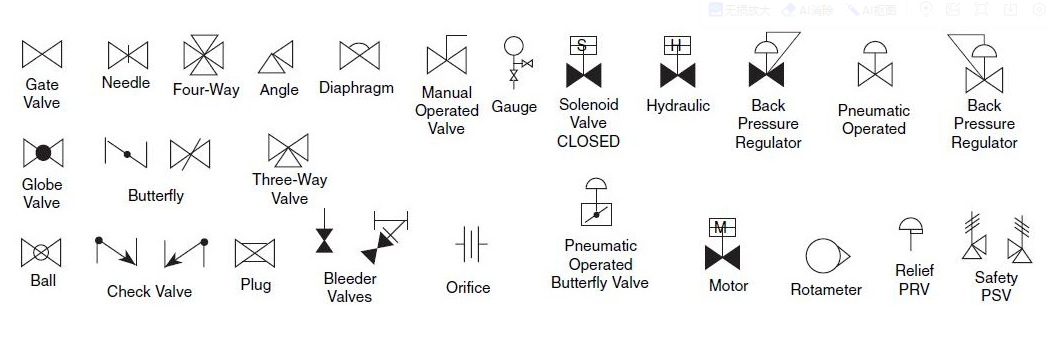
2. Common Directional Control Valve Symbols
Directional control valves are defined by their flow paths. Here are the most frequent symbols you will encounter in a schematic:
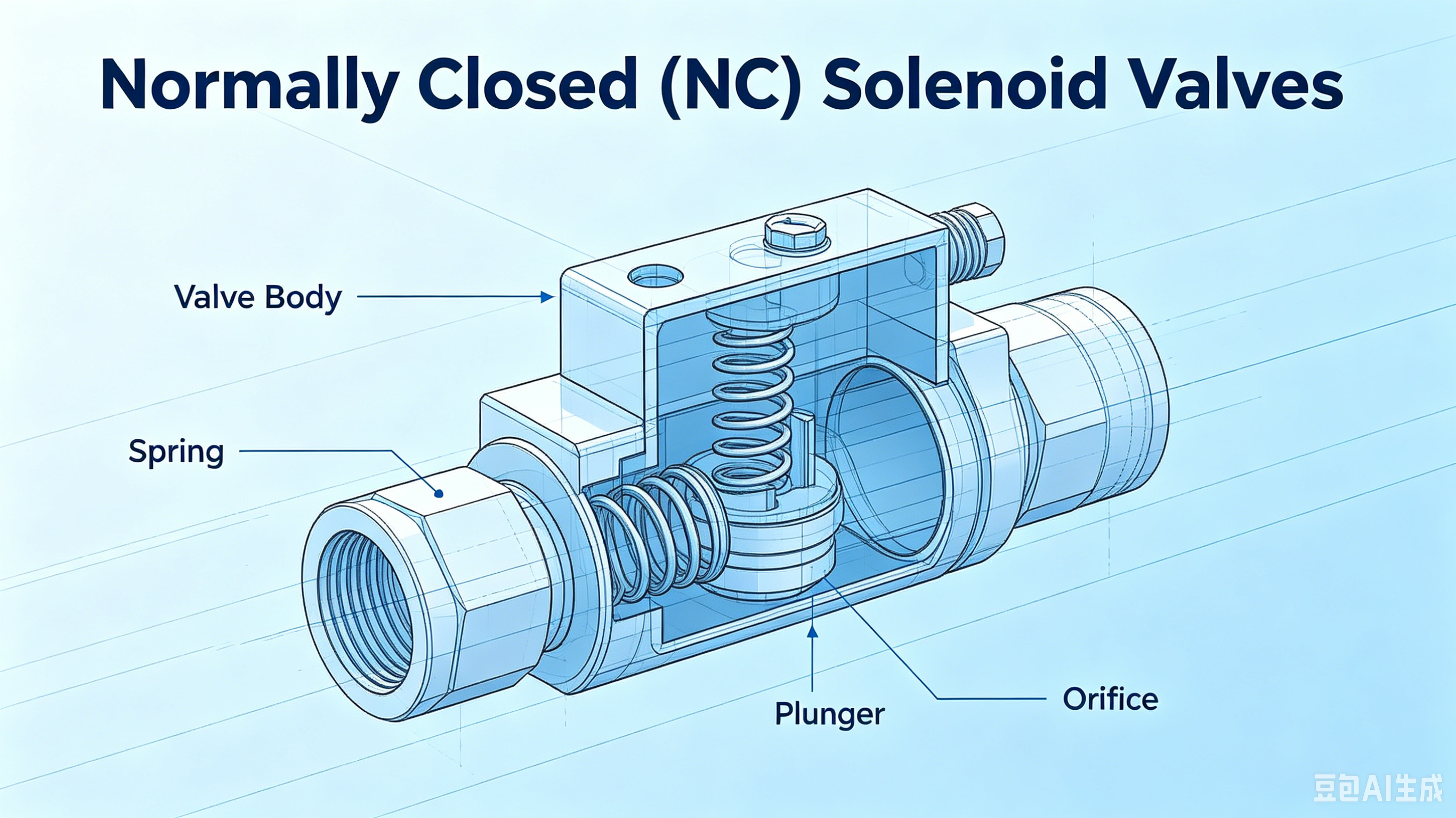
2/2-Way Valve (Normally Closed)
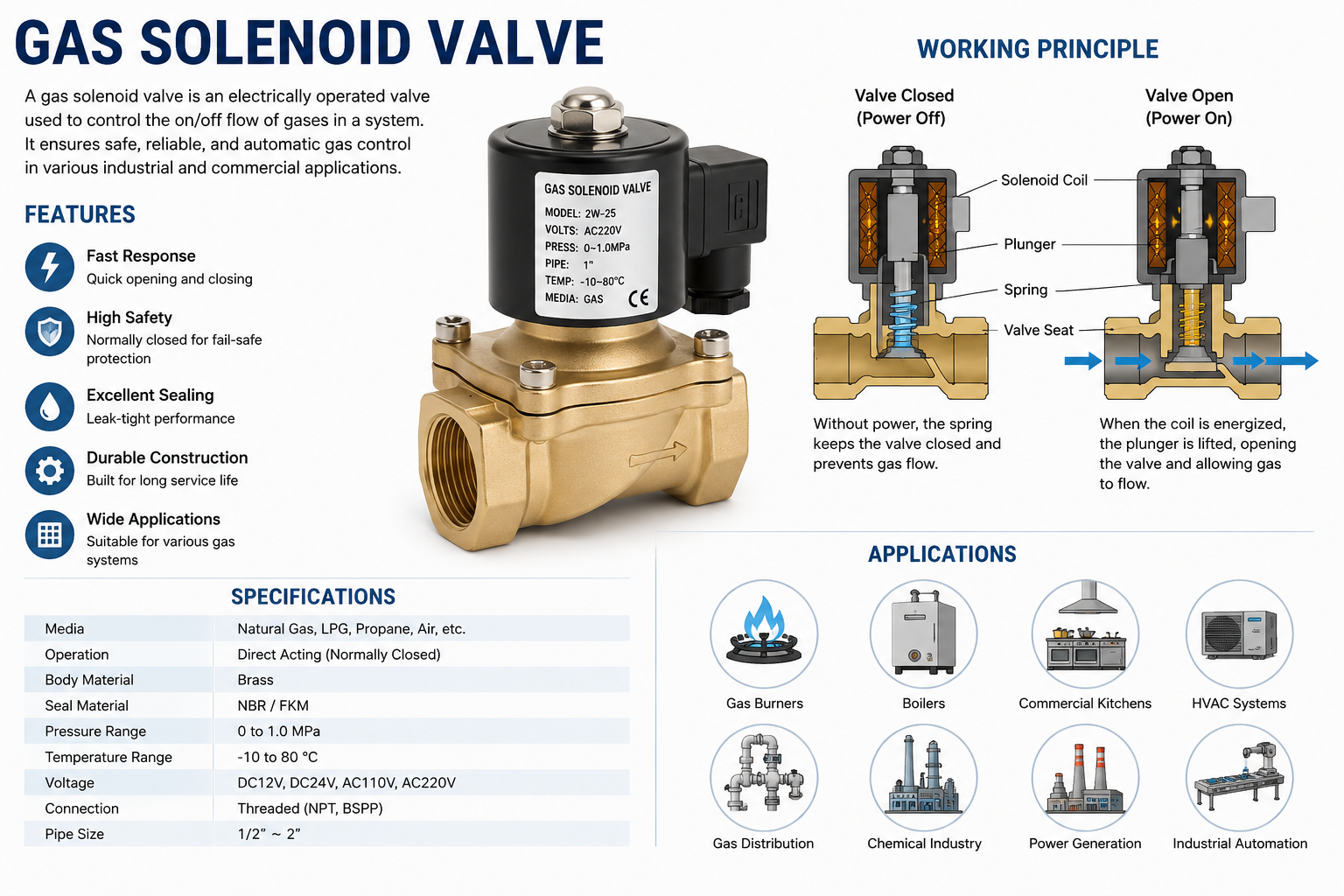
Used for simple start/stop functions. In its resting state, the flow is blocked. When actuated, the arrow indicates the path is open.
3/2-Way Valve
Commonly used to control single-acting cylinders.
-
Port 1: Pressure inlet.
-
Port 2: Outlet to the cylinder.
-
Port 3: Exhaust.
5/2-Way Valve
The standard for double-acting cylinders. It has one pressure inlet, two ports for the cylinder, and two separate exhausts to allow for high-speed switching.
3. Actuation Methods: How the Valve Moves
The "actuator" symbol is attached to the side of the boxes. This tells you what triggers the valve to change position.
-
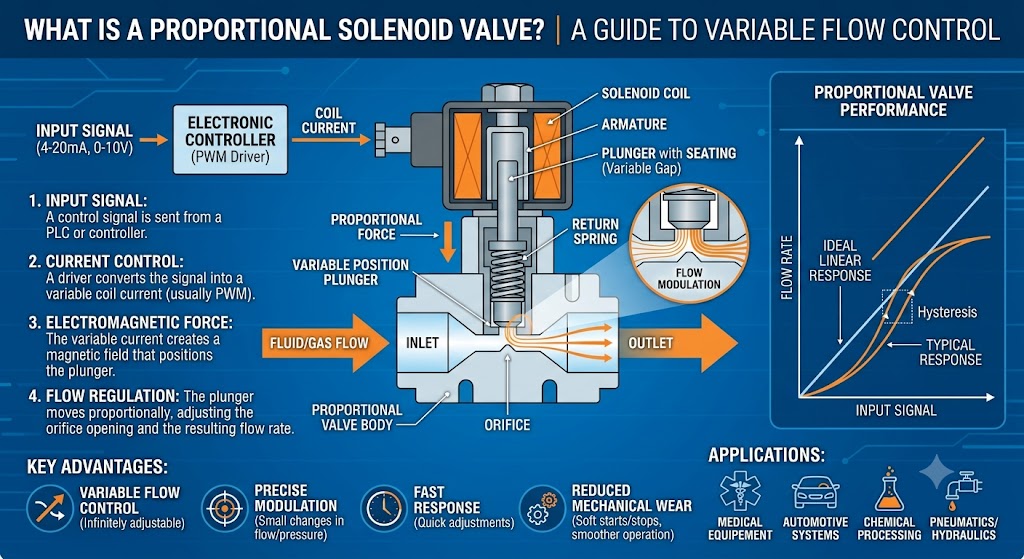
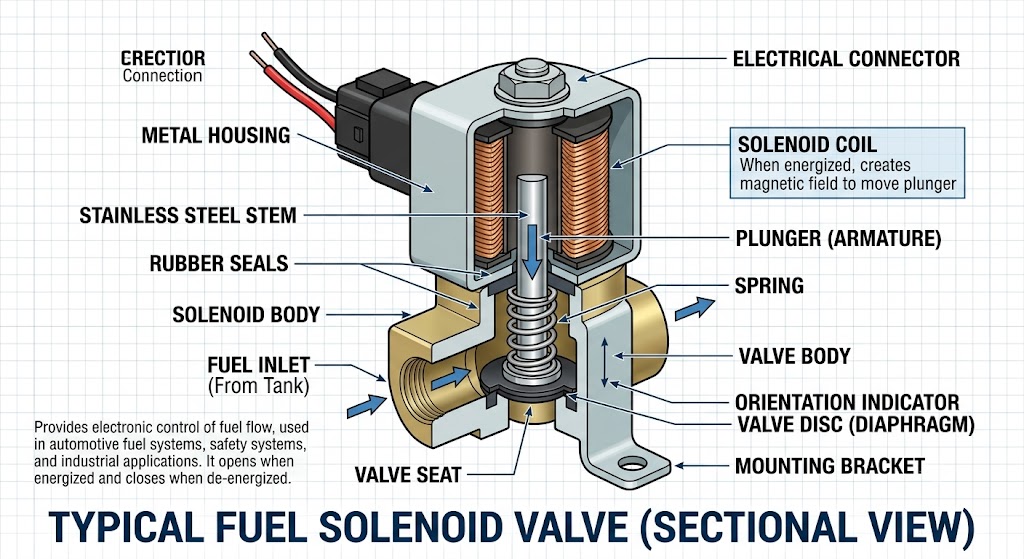
Solenoid (Electric): Represented by a diagonal slash inside a small rectangle. This indicates an electromagnetic coil is used.
-
Spring Return: A zigzag line. This means that once power or pressure is removed, the valve automatically snaps back to its default state.
-
Manual: Symbols like buttons, levers, or foot pedals.
-
Pilot (Pneumatic): A dashed line leading to a small triangle, indicating that air pressure itself is "tripping" the valve.
4. Understanding Port Numbering (ISO 5599-1)
To ensure global compatibility, ports are numbered according to a specific logic. If you see numbers on a physical valve body, they correspond directly to the diagram:
| Number | Function | Description |
|---|---|---|
| 1 | Inlet | The primary compressed air supply. |
| 2 & 4 | Working Ports | Connections leading to the actuator or cylinder. |
| 3 & 5 | Exhaust | Where air is vented to the atmosphere. |
| 12 & 14 | Pilot Ports | Signal ports that shift the valve's position. |
5. Reading a Complete Circuit Diagram
When looking at a full pneumatic schematic, remember this golden rule: Valves are always drawn in their "de-energized" or resting state.
-
Locate the Air Source: Look for a small triangle (simplified) or an FRL (Filter, Regulator, Lubricator) symbol at the bottom.
-
Follow the Pressure: Trace the solid lines from Port 1.
-
Identify the Actuator: Determine if the cylinder is single-acting (one line) or double-acting (two lines).
-
Check the Exhaust: Look for "inverted triangles" or lines leading away from the valve to ensure air has a path to leave the system.
Conclusion
Mastering Pneumatic and Solenoid Valve Symbols and Diagrams transforms a confusing "spaghetti" of lines into a clear roadmap for your machinery. Whether you are dealing with a simple 2/2-way solenoid valve or a complex 5/3-way proportional system, these symbols provide the universal clarity needed for modern industrial success.
If you want to learn more about low-priced products, please visit the following website: www.xm-valveactuator.com