In the world of fluid dynamics and industrial piping, choosing the right valve isn't just a technicality—it's the difference between a system that runs like a Swiss watch and one that's a maintenance nightmare.
The debate usually boils down to two heavyweights: the Gate Valve and the Ball Valve. While they both serve the primary purpose of starting or stopping flow, their internal mechanics and performance profiles are worlds apart.
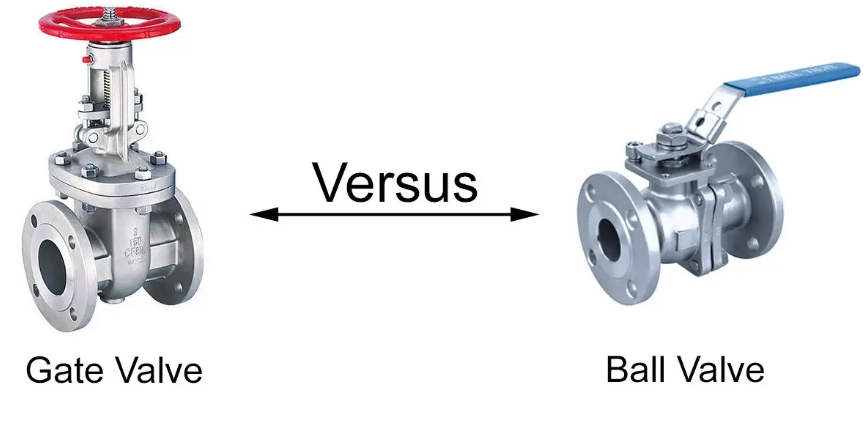
Gate Valve vs. Ball Valve: At a Glance
If you're in a hurry, here is the "cheat sheet" to help you decide.
| Feature | Gate Valve | Ball Valve |
| Operation | Multi-turn (Linear) | Quarter-turn (Rotational) |
| Sealing | Metal-to-metal (usually) | Soft seats (Teflon/PTFE) |
| Flow Resistance | Extremely Low | Low |
| Speed | Slow | Fast |
| Durability | Prone to seat wear | Highly durable |
| Cost | Lower (especially for large sizes) | Higher (initially) |
What is a Gate Valve?
A gate valve operates by lifting a "gate" (usually a rectangular or wedge-shaped disc) out of the path of the fluid. Think of it like a sliding guillotine. When fully open, the gate is pulled entirely into the bonnet, leaving the flow path completely unobstructed.
Pros:
-
Minimal Pressure Drop: Because the flow is straight-through, there's almost zero resistance when open.
-
Bi-directional: It can handle flow from either direction.
-
Affordability: Generally more cost-effective for large-diameter pipes.
Cons:
-
Slow Operation: It takes multiple turns of the handwheel to open or close, making it useless for emergencies.
-
Wear and Tear: The friction between the gate and the seat can cause erosion over time.
-
Not for Throttling: Using a gate valve to partially regulate flow leads to vibration and "chatter," which will eventually destroy the valve.
What is a Ball Valve?
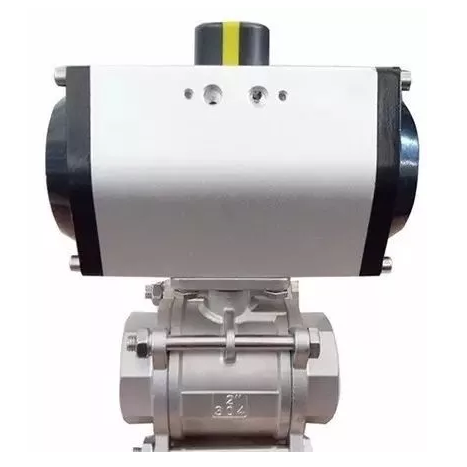
A ball valve uses a hollow, perforated ball that rotates 90 degrees to control flow. When the hole is aligned with the pipe, fluid flows; when the handle is turned a quarter-turn, the solid side of the ball blocks the flow.
Pros:
-
Speed: The quarter-turn operation allows for near-instant shut-off.
-
Superior Sealing: They provide a "bubble-tight" seal, even after years of use.
-
Low Maintenance: They are less prone to leaks and can handle high-pressure applications with ease.
Cons:
-
Water Hammer: Because they close so fast, they can cause a pressure surge (water hammer) that may damage pipes.
-
Trapped Pressure: Fluid can get trapped inside the ball center when closed, which can be an issue in certain chemical or cryogenic applications.
Key Differences: Which One Should You Choose?
1. Operation & Speed
If your application requires fast, frequent switching, the ball valve wins by a landslide. If the valve will stay open or closed for months at a time (isolation service), a gate valve is a perfectly valid, traditional choice.
2. Sealing Reliability
Ball valves generally offer a tighter seal over a longer period. Gate valves rely on the gate "wedging" into the seat; if even a tiny bit of sediment or scale gets in the way, the seal is compromised.
3. Cost vs. Value
For large-scale industrial projects (think 12-inch pipes and larger), Gate Valves are significantly cheaper. However, for smaller residential or commercial plumbing, Ball Valves are the industry standard because their longevity far outweighs the slightly higher upfront cost.
4. Space Constraints
Gate valves require a "bonnet" to house the gate when it's open, meaning they take up more vertical space. Ball valves are more compact but require horizontal "swing room" for the lever handle.
Pro Tip: Never use either of these for "throttling" (regulating flow volume). If you need to precisely control how much fluid passes through, look into Globe Valves or Butterfly Valves.
The Verdict
-
Choose a Ball Valve if: You need a reliable, leak-proof seal, fast operation, and a valve that will last for years with zero maintenance. Perfect for gas lines and small-to-medium liquid pipes.
-
Choose a Gate Valve if: You are working with large-diameter pipes, have a tight budget, and only need to shut the system down occasionally for maintenance.
If you want to learn more about low-priced products, please visit the following website: www.xm-valveactuator.com