Selecting the right seat material is one of the most critical decisions in valve specification. The seat is the primary interface between the flow media and the moving parts of the valve; choosing an incompatible material can lead to premature leakage, mechanical failure, or even catastrophic system downtime.
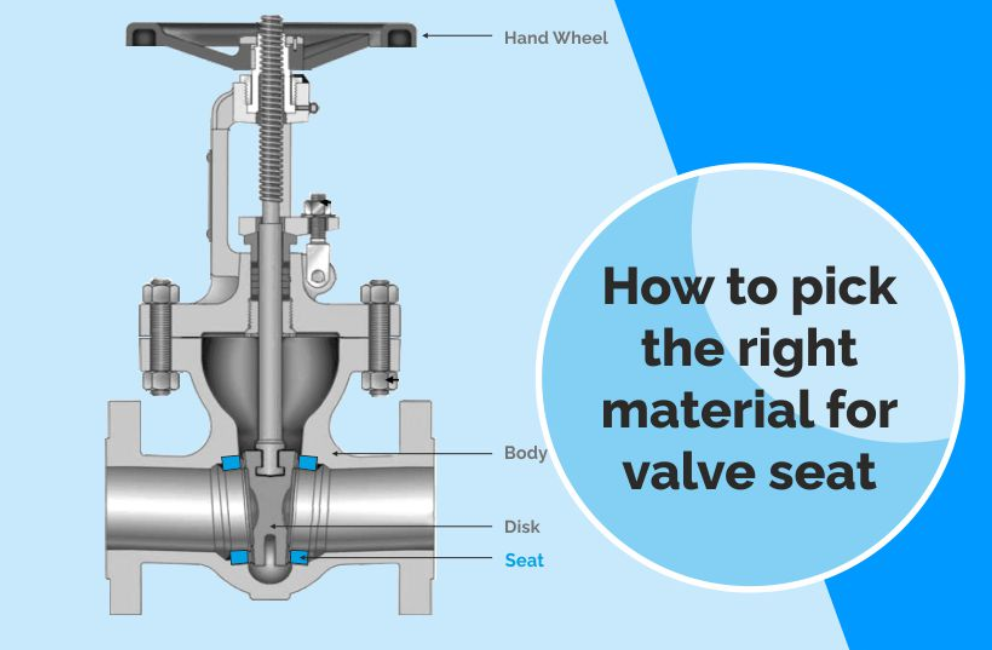
This guide breaks down the essential factors and materials you should consider to ensure long-term performance and reliability.
1. Key Factors Influencing Material Selection
Before choosing a material, you must define the operating environment of your application. The "Big Four" variables are:
- Temperature: Materials behave differently at cryogenic versus high-heat extremes. Soft seats may melt or deform, while metal seats may expand and seize.
- Pressure: High-pressure applications require materials with high compressive strength to prevent "cold flow" or permanent deformation.
- Media Compatibility: Is the fluid corrosive, abrasive, or chemically reactive? The seat must be inert to the media to avoid degradation.
- Cycle Frequency: For valves that open and close frequently, low-friction and high-wear-resistance materials are mandatory to prevent erosion.
2. Common Soft Seat Materials
Soft seats are generally used when a "Bubble Tight" (Class VI) shut-off is required. They are typically made of polymers or elastomers.
PTFE (Teflon™)
- Best for: General chemical resistance and low-friction applications.
- Pros: Exceptional chemical inertness and a very low coefficient of friction.
- Cons: Limited to lower pressures and temperatures (typically up to 200°C). It is prone to "cold flow" under heavy loads.
RPTFE (Reinforced PTFE)
- Best for: Applications requiring slightly higher mechanical strength than pure PTFE.
- Composition: PTFE reinforced with glass fiber or carbon.
- Pros: Better wear resistance and higher pressure ratings than standard PTFE while maintaining chemical resistance.
PEEK (Polyetheretherketone)
- Best for: High-pressure, high-temperature (HPHT) environments.
- Pros: Extremely robust, handles temperatures up to 250°C+, and offers excellent chemical resistance.
- Cons: Much harder and more expensive than PTFE; requires higher torque to achieve a seal.
3. Metal-to-Metal Seats
When the application involves extreme temperatures (above 300°C) or highly abrasive slurries (like mining or pulp and paper), soft seats will fail. Metal seats are the industry standard for these "severe service" conditions.
- Stellite (Cobalt Alloy): Often used as a hard-facing material for seat rings to provide excellent resistance to erosion and galling.
- Tungsten Carbide: Used in extremely abrasive environments due to its incredible hardness.
- Stainless Steel (316SS): Often used for standard industrial metal seats where chemical compatibility is needed but abrasion is moderate.
4. Material Comparison Table
| Material | Temp Range | Chemical Resistance | Sealing Class | Best Use Case |
|---|---|---|---|---|
| PTFE | -100°C to 200°C | Excellent | Class VI | Low-pressure chemicals |
| RPTFE | -100°C to 230°C | Very Good | Class VI | Industrial steam/water |
| PEEK | -70°C to 260°C | Excellent | Class V/VI | HPHT Oil & Gas |
| Metal | -200°C to 600°C+ | Good to Excellent | Class IV/V | Abrasive slurries/High heat |
5. Summary Checklist for Selection
- Identify the Media: Check a chemical compatibility chart for the specific fluid.
- Check the Pressure/Temperature (P/T) Curve: Ensure the material stays within its rated envelope.
- Evaluate Abrasives: If the fluid contains solids, prioritize metal seats or hardened PEEK.
- Consider Torque: Harder materials require more powerful actuators to achieve a seal.
Choosing the right material is a balance between cost, safety, and longevity. While PTFE is a cost-effective "all-rounder," modern high-performance alloys and thermoplastics like PEEK are often more economical in the long run for demanding industrial B2B applications.